Monday, November 2, 2020

Why Today's Options Will Save Homeowners from Foreclosure


Many housing experts originally voiced concern that the mortgage forbearance program (which allows families impacted financially by COVID to delay mortgage payments to a later date) could lead to an increase in foreclosures when forbearances end.

Some originally forecasted that up to 30% of homeowners would choose to enter forbearance. Less than 10% actually did, and that percentage has been dropping steadily. Black Knight recently reported that the national forbearance rate has decreased to 5.6%, with active forbearances falling below 3 million for the first time since mid-April.

Many of those still in forbearance are actually making timely payments. Christopher Maloney of Bloomberg Wealth recently explained:

“Almost one quarter of all homeowners who have demanded forbearance are still current on their mortgages…according to the latest MBA data.”

However, since over two million homeowners are still in forbearance, some experts are concerned that this might lead to another wave of foreclosures like we saw a little over a decade ago during the Great Recession. Here is why this time is different.

There Will Be Very Few Strategic Defaults

During the housing crash twelve years ago, many homeowners owned a house that was worth less than the mortgage they had on that home (called negative equity or being underwater). Many decided they would just stop making their payments and walk away from the house, which then resulted in the bank foreclosing on the property. These foreclosures were known as strategic defaults. Today, the vast majority of homeowners have significant equity in their homes. This dramatically decreases the possibility of strategic defaults.

Aspen Grove Solutions, a business consulting firm, recently addressed the issue in a study titled Creating Positive Forbearance Outcomes:

“Unlike in 2008, strategic defaults have not emerged as a serious problem and seems unlikely to emerge given stronger expectations for property price increases, a record low inventory of homes, and stable residential underwriting standards leading up to the crisis which has reduced the number of owners who are underwater.”

There Are Other Options That Were Not Available the Last Time

A decade ago, there wasn’t a forbearance option, and most banks did not put in other programs, like modifications and short sales, until very late in the crisis.

Today, homeowners have several options because banks understand the three fundamental differences in today’s real estate market as compared to 2008:

1. Most homeowners have substantial equity in their homes.

2. The real estate market has a shortage of listings for sale. In 2008, homes for sale flooded the market.

3. Prices are appreciating. In 2008, prices were depreciating dramatically.

These differences allow banks to feel comfortable giving options to homeowners when exiting forbearance. Aspen Grove broke down some of these options in the study mentioned above:

  • Refinance Repay: Capitalize forbearance amount – For borrowers who have strong credit, have good or improved equity in their homes, possibly had a higher interest rate on their original loan, have steady employment/no significant wage loss, and income.
  • Repayment Plan: Pay it back in higher monthly payments – For people who cannot reinstate using savings, but have increased monthly income, and do not want to use a deferral program.
  • Deferral ProgramShift payments to the end of the loan term – For borrowers who lost income temporarily and regained most or all of their income but are not in a position to refinance due to credit score, home equity, low total loan value relative to closing costs, or simple apathy.
  • ModificationFlex modification or other mod – For households that permanently lost 20% to 30% of their income, but not all of their income, and want to remain in their home.

Each one of these programs enables the homeowner to remain in the home.

What about Those Who Don’t Qualify for These Programs?

Homeowners who can’t catch up on past payments and don’t qualify for the programs mentioned have two options: sell the house or let it go to foreclosure. Some experts think most will be forced to take the foreclosure route. However, an examination of the data shows that probably won’t be the case.

A decade ago, homeowners had very little equity in their homes. Therefore, selling was not an option unless they were willing to tap into limited savings to cover the cost of selling, like real estate commission, closing costs, and attorney fees. Without any other option, many just decided to stay in the house until they were served a foreclosure notice.

As mentioned above, today is different. Most homeowners now have a large amount of equity in their homes. They will most likely decide to sell their home and take that equity rather than wait for the bank to foreclose.

In a separate reportBlack Knight highlighted this issue:

“In total, an estimated 172K loans are in forbearance, have missed three or more payments under their plans and have less than 10% equity in their homes.”

In other words, of the millions currently in a forbearance plan, there are few that likely will become a foreclosure.

Bottom Line

Some analysts are talking about future foreclosures reaching 500,000 to over 1 million. With the options today’s homeowners have, that doesn’t seem likely.

Thursday, October 29, 2020

Three Ways Low Inventory Is a Win for Sellers


The number of houses for sale today is significantly lower than the high buyer activity in the current housing market. According to Lawrence Yun, Chief Economist for the National Association of Realtors (NAR):

“There is no shortage of hopeful, potential buyers, but inventory is historically low.”

When the demand for homes is higher than what’s available for sale, it’s a great time for homeowners to sell their house. Here are three ways low inventory can help you win if you’re ready to make a move this fall.

1. Higher Prices

With so many more buyers in the market than homes available for sale, homebuyers are frequently entering into bidding wars for the houses they want to purchase. This buyer competition drives home prices up. As a seller, this can definitely work to your advantage, potentially netting you more for your house when you close the deal.

2. Greater Return on Your Investment

Rising prices mean homes are also gaining value, which drives an increase in the equity you have in your home. In the latest Homeowner Equity Insights ReportCoreLogic explains:

“In the second quarter of 2020, the average homeowner gained approximately $9,800 in equity.”

This year-over-year growth in equity gives you the ability to put that money toward a down payment on your next home or to keep it as extra savings.

3. Better Terms

When we’re in a sellers’ market like we are today, you’re in the driver’s seat if you sell your house. You have the power to sell on your terms, and buyers are more likely to work with you if it means they can finally move into their dream home.

So, is low housing inventory a big deal?

Yes, especially if you want to sell your house at the perfect time. Today’s market gives sellers immense negotiating power. However, it won’t last forever, especially as more sellers return to the housing market next year. If you’re considering selling your house, the best time to do so is now.

Bottom Line

If you’re interested in taking advantage of the current sellers’ market, contact a local real estate professional today to determine your best move.

Monday, October 19, 2020

Why Pricing Your House Right Is Essential


In today’s real estate market, setting the right price for your house is one of the most valuable things you can do.

According to the U.S. Economic Outlook by the National Association of Realtors (NAR), existing home prices nationwide are forecasted to increase 4.7% in 2020 and 4.1% in 2021. This means experts anticipate home values will continue climbing into next year. Today, low inventory is largely keeping prices from depreciating. Danielle Hale, Chief Economist at realtor.comnotes:

“Looking at the sheer number of buyers, low mortgage rates, and limited sellers, the strength of home prices–which are now growing at the highest pace since January 2018–makes sense.”

When it comes to pricing your home, the goal is to increase visibility and drive more buyers your way. Instead of trying to win the negotiation with one buyer, you should price your house so that demand is maximized and more buyers want to take a look.

How to Price Your Home

As a seller, you might be thinking about pricing your house on the high end while so many of today’s buyers are searching harder than ever just to find a home to purchase. You’re thinking, higher price, greater profit, right? But here’s the thing – a high price tag does not mean you’re going to cash in big on the sale. It’s actually more likely to deter buyers and have them looking at the houses your neighbors are selling instead.

Even today, when the advantage tips toward sellers because there are so few houses for sale, your house is more likely to sit on the market longer or require a price drop that can send buyers running in the other direction if it isn’t priced just right.Why Pricing Your House Right Is Essential | Keeping Current Matters

A Trusted Real Estate Professional Will Help

It’s important to make sure your house is priced correctly by working in partnership with a trusted real estate professional. When you price it competitively, you won’t be negotiating with one buyer over the price. Instead, you’ll have multiple buyers competing for the home, and that’s what ultimately increases the final sale price.

The key is making sure your house is priced to sell immediately. That way, it will be seen by the most buyers. More than one of them may be interested, and your house will be more likely to sell at a competitive price.

Bottom Line

If you’re thinking about listing your house this fall, contact a local real estate professional to help you price it right so you can maximize your exposure and your return.

Friday, October 16, 2020

The #1 Reason Not to Wait to List Your House for Sale


Many industries have been devastated by the economic shutdown caused by the COVID-19 virus. Real estate is not one of them.

Mark Fleming, Chief Economist for First American, just reported:

“Since hitting a low point during the initial stages of the pandemic, the only major industry to display immunity to the economic impacts of the coronavirus is the housing market. Housing has experienced a strong V-shaped recovery and is now exceeding pre-pandemic levels.”

Buyer demand is still strong heading into the fall. ShowingTime, which tracks the average number of buyer showings on residential properties, just announced that buyer showings are up 61.9% compared to the same time last year. They went on to say:

“Normally, real estate activity begins to slow down in the late summer, but this year it peaked in July, August and into September.”

There Is One Big Challenge

Purchaser demand is so high, the market is running out of available homes for sale. Just last week, realtor.com reported:

“Since the beginning of the COVID pandemic in March, nearly 400,000 fewer homes have been listed compared to last year, leaving a gaping hole in the U.S. housing inventory.”

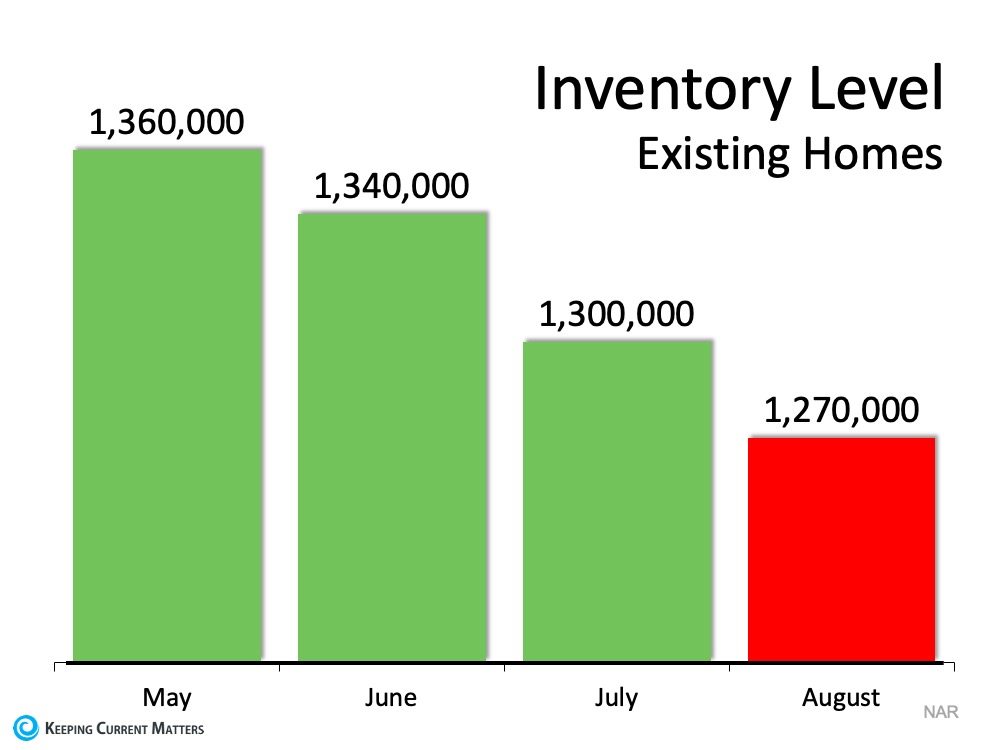
The National Association of Realtors (NAR) revealed that, while home sales are skyrocketing, the inventory of existing homes for sale is dropping dramatically. Below is a graph of existing inventory (September numbers are not yet available):The #1 Reason Not to Wait to List Your House for Sale | Keeping Current MattersHomebuilders are increasing construction, but they cannot keep up with the high demand. Bill McBride, founder of the Calculated Risk blog, in discussing inventory of newly constructed houses, notes:

“The months of supply decreased to 3.3 months…This is the all-time record low months of supply.”

What does this mean for sellers?

Anyone thinking of putting their home on the market should not wait. A seller will always negotiate the best deal when demand is high and supply is limited. That’s exactly the situation in the real estate market today.

Next year, when the pandemic is hopefully behind us, there will be many more properties coming to the market. Don’t wait for that increase in competition in your neighborhood. Now is the time to sell.

Bottom Line

Reach out to a local real estate professional today to get your house on the market at this optimal time to sell.

Thursday, October 15, 2020

Is it Time to Move into a Single-Story Home?


Once the kids have left the nest, you may be wondering what to do with all of the extra space in your home. Chances are, you don’t need four bedrooms anymore, and it may be a great time to sell your house and downsize, maybe even into a single-story home. You’ve likely gained significant equity if you’ve lived in your home for a while, so making a move while demand for your current house is high could be your best step forward toward the retirement goals you set out to achieve several years ago.

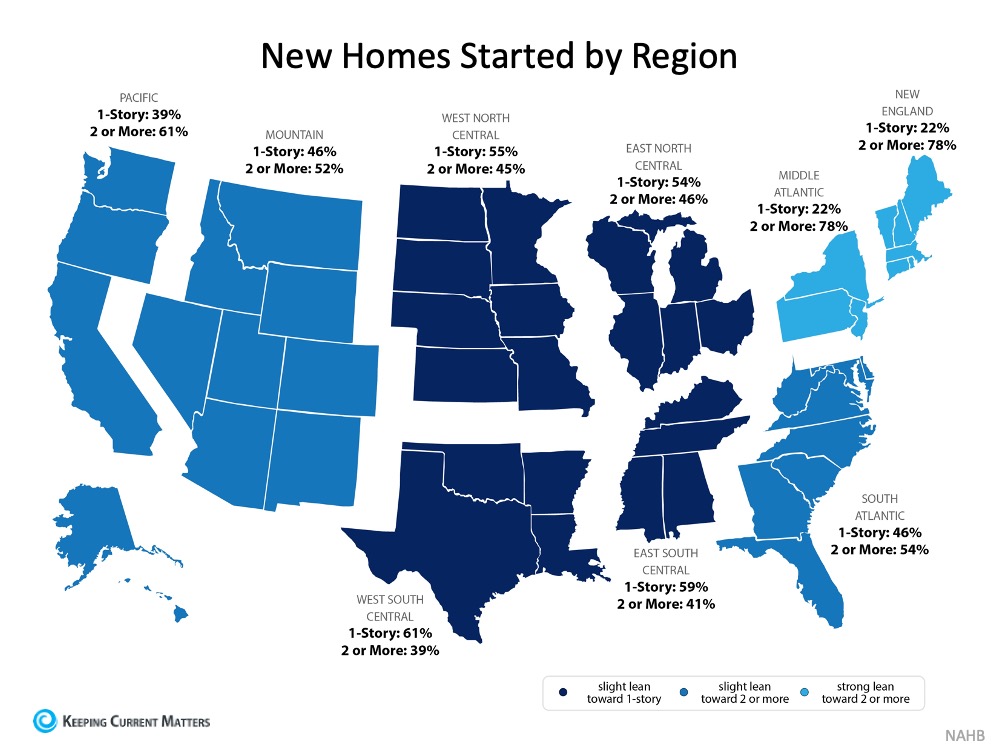
The dilemma, though, is where to go next. A big concern for many homeowners who are ready to sell is finding a home to move into, given today’s lack of houses available for sale. There is, however, some good news: the number of single-family 1-story homes being built today is on the rise, improving your odds of finding the right home for your changing needs. In a recent article, The National Association of Home Builders (NAHB) explains:

“Nationwide, the share of new homes with two or more stories fell from 53% in 2018 to 52% in 2019, while the share of new homes with one story grew from 47% to 48%.”

Here’s a map showing the breakdown of newly constructed homes being built by region, and the percentage of 1-story and 2-story homes in that mix:Is it Time to Move into a Single-Story Home? | Keeping Current Matters

What are the benefits of buying a one-story home?

Still not sure about buying a single-story home? An article from Home Talk covers several advantages of switching from two floors to one:

1. Energy Efficient

“It is easier to heat and cool a single-story house [than] it would be to regulate the temperatures of a multi-story house.”

Most single-story homes only need one heating or cooling unit, and they typically stay cooler than a two-story home, both of which can lead to significant savings.

2. Easier to Maintain

“Doing a general cleaning in a single story requires less effort and you will be able to see all areas that need cleaning and the areas are easily accessible.”

Cleaning and maintenance of a single-story home can take less time and effort, and better upkeep helps improve the overall value of the home.

3. Accessible for Everyone

“A single-story house can be accessed by anyone, whether they are young children or the senior citizens.”

If you’re looking for a house that provides a safe and easily accessible environment at any age, a single-story home may be optimal.

4. Good Resell Potential

“When buying a single-story house, you should consider the resale value should you think of reselling it in case of a circumstance that can happen. Look at the growth rate of that area. Due to the high demand of these types of houses it is [easy] to resell them and depending on the growth rate of an area, it increases in value significantly.”

Single-story homes have a lot of benefits and are often in higher demand. This bodes well for future resale opportunities.

Bottom Line

There are many benefits to downsizing into a one-story home. Doing so while demand for your current house is high might make it easier than ever to make a move. Talk to your local real estate professional if you’re ready to purchase the single-story home you need while homes are so affordable today.