Monday, February 26, 2018

Where Are Mortgage Interest Rates Headed in 2018?

Where Are Mortgage Interest Rates Headed in 2018? | Keeping Current Matters
The interest rate you pay on your home mortgage has a direct impact on your monthly payment. The higher the rate the greater the payment will be. That is why it is important to know where rates are headed when deciding to start your home search.
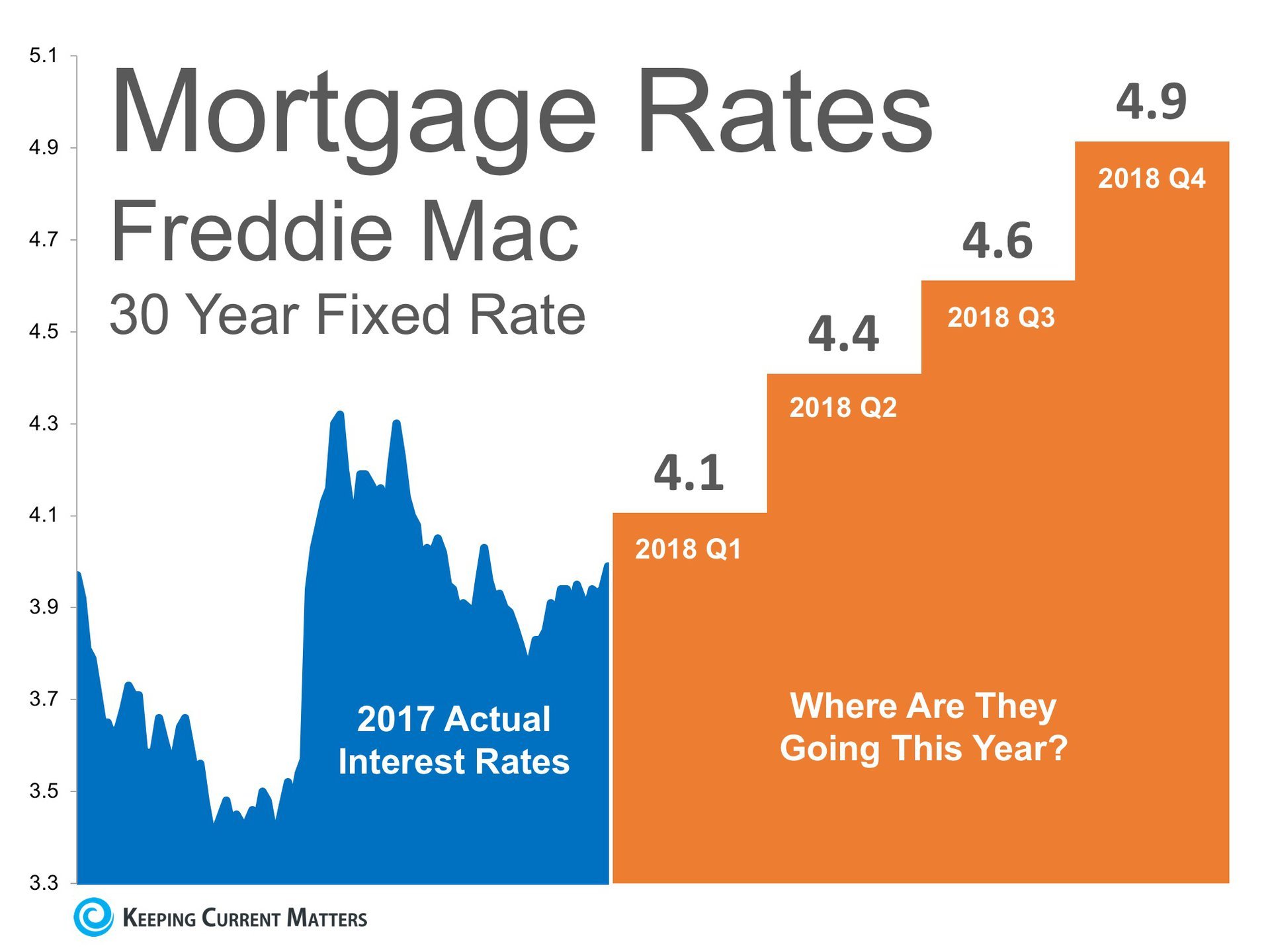
Below is a chart created using Freddie Mac’s U.S. Economic & Housing Marketing Outlook. As you can see, interest rates are projected to increase steadily over the course of the next 12 months.

Where Are Interest Rates Headed? | Keeping Current Matters

How Will This Impact Your Mortgage Payment?

Depending on the amount of the loan that you secure, a half of a percent (.5%) increase in interest rate can increase your monthly mortgage payment significantly.
According to CoreLogic’s latest Home Price Index, national home prices have appreciated 7.0% from this time last year and are predicted to be 4.2% higher next year.
If both the predictions of home price and interest rate increases become reality, families would wind up paying considerably more for their next home.

Bottom Line

Even a small increase in interest rate can impact your family’s wealth. Meet with a local real estate professional to evaluate your ability to purchase your dream home.

Friday, February 23, 2018

Top 5 Single-Family Home Trends to Watch Out for in 2018

home trendsBy Yuka Kato
Trends are an excellent way to predict things like homebuyer behavior over the coming months or years. Unlike a fad, which ends quickly, a trend is something that may continue on for 10 or more years.
Each year, Fixr conducts a survey of influencerswithin the building and design industry—those professionals who are helping to shape the trends that impact homeowners and homebuyers alike. This year’s survey results have shown some surprising (and not so surprising) trends that real estate professionals can use to help sell homes more quickly and influence homebuyer behavior.
Pay close attention to these five trends to help make the most of all your real estate transactions in 2018:
Smart Home Technology
The No. 1 trend influencers say homebuyers are going to be looking for in 2018 is smart home technology. Smart homes have taken off in the last few years with the introduction of systems like Apple Home and Amazon’s Alexa. Adding smart home features to a home makes it much more attractive to younger homebuyers who currently make up the largest population of buyers.
Adding smart home technology to a home costs around $5,000 to $9,000 on average, but can increase the value of a home by about 5 percent. Keep in mind that this is only true if the upgrades were made in the last five years; after that, the technology becomes outdated. The most sought-after items include smart lights and thermostats—which can reduce energy consumption—and security features like locks and cameras.
Open Floor Plans
The second most popular trend is a continuation from years past: the open floor plan. Particularly on single-story homes, open floor plans continue to be one of the most requested options among homebuyers, possibly because of the flexibility this type of floor plan offers. An open floor plan allows you to configure the space in ways that work for you, rather than working around what’s already there.
As long as you aren’t removing load-bearing walls in the structure, opening up rooms and removing walls can bring up to 60 percent ROI at time of resale, while also making the home much more attractive to today’s buyers.
Solar Energy
Solar energy isn’t a new trend, but it's one that’s making big gains in today’s market. In fact, homebuyers are much more likely to want to invest in a home with solar power today than they were just a few years ago. As energy costs continue to soar, having solar power available can be a very enticing option.
The national average cost to install solar panels on a home is between $20,000 and $25,000. The ROI on solar power does vary by state, but because the cost is usually offset over time by reduced energy costs, most people find the investment worth it in terms of decreased energy bills and how much more attractive it makes the home to younger buyers.
Tiny Houses
Wondering where to steer your potential buyers? Consider showing them tiny houses. First-time homebuyers, as well as minimalists, are showing considerable interest in the tiny house movement, making this a trend that can’t be ignored by home builders or real estate professionals alike.
More than half of the influencers surveyed believe that the tiny house trend is growing. Tiny houses can be built for anywhere between $10,000 and $40,000, which makes purchasing land and building a more attractive option than finding one already for sale.
Voice Control Systems
Artificial intelligence (AI) and voice control systems round out the top five growing trends in the home-building and design industry. Nearly all influencers agree that smart home systems that are controlled via AI or voice will be one of the biggest trends of 2018. While the controller may be personal to the user—Google, Alexa and Apple Home are just a few of the offerings—the systems they can control (lights, thermostat, door locks and appliances) can all be added to the home and ready to use in a timely manner, making the property very attractive to new homebuyers.
Get Ready for the Year Ahead
By encouraging sellers to make these changes to their homes, and steering buyers in the direction of homes that contain these trends, you will find it more likely to make quicker and easier sales in 2018. Not only are many of these investments quick, but they don’t require a lot of invasive procedures to incorporate into existing properties. Watch for these trends to start getting more attention from buyers and sellers alike in 2018.


Wednesday, February 21, 2018

Low Inventory Pushes Home Prices Higher

Low Inventory Pushes Home Prices Higher | Keeping Current Matters
According to CoreLogic’s latest Home Price Index, prices appreciated by 6.9% year-over-year from December 2016 to December 2017 on a national level. This marks the fifth month in a row with at least a 6.9% increase.
Dr. Frank Nothaft, Chief Economist for CoreLogic, gave insight into the reason behind the large appreciation,
“The number of homes for sale has remained very low. Job growth lowered the unemployment rate to 4.1 percent by year’s end, the lowest level in 17 years. Rising income and consumer confidence has increased the number of prospective homebuyers. The net result of rising demand and limited for-sale inventory is a continued appreciation in home prices.”
This is great news for homeowners who have gained nearly $15,000 in equity (on average) in their homes over the last year! Those homeowners who had been on the fence as to whether or not to sell will be pleasantly surprised to find out that they now have an even larger profit to help cover a down payment on their dream homes.
As we near the traditionally busy spring buyers season, there is still hope for buyers as mortgage rates remain low compared to recent decades. The report also predicted that home price appreciation will slow slightly, rising by 4.3% by this time next year.

Bottom Line

If you are looking to enter the housing market, as either a buyer or a seller, meet with a local real estate professional who can explain exactly what’s going on in your neighborhood and discuss your options!

Monday, February 19, 2018

The #1 Reason to Sell Now Before Spring

The #1 Reason to Sell Now Before Spring | Keeping Current Matters
The price of any item (including residential real estate) is determined by ‘supply and demand.’ If many people are looking to buy an item and the supply of that item is limited, the price of that item increases.
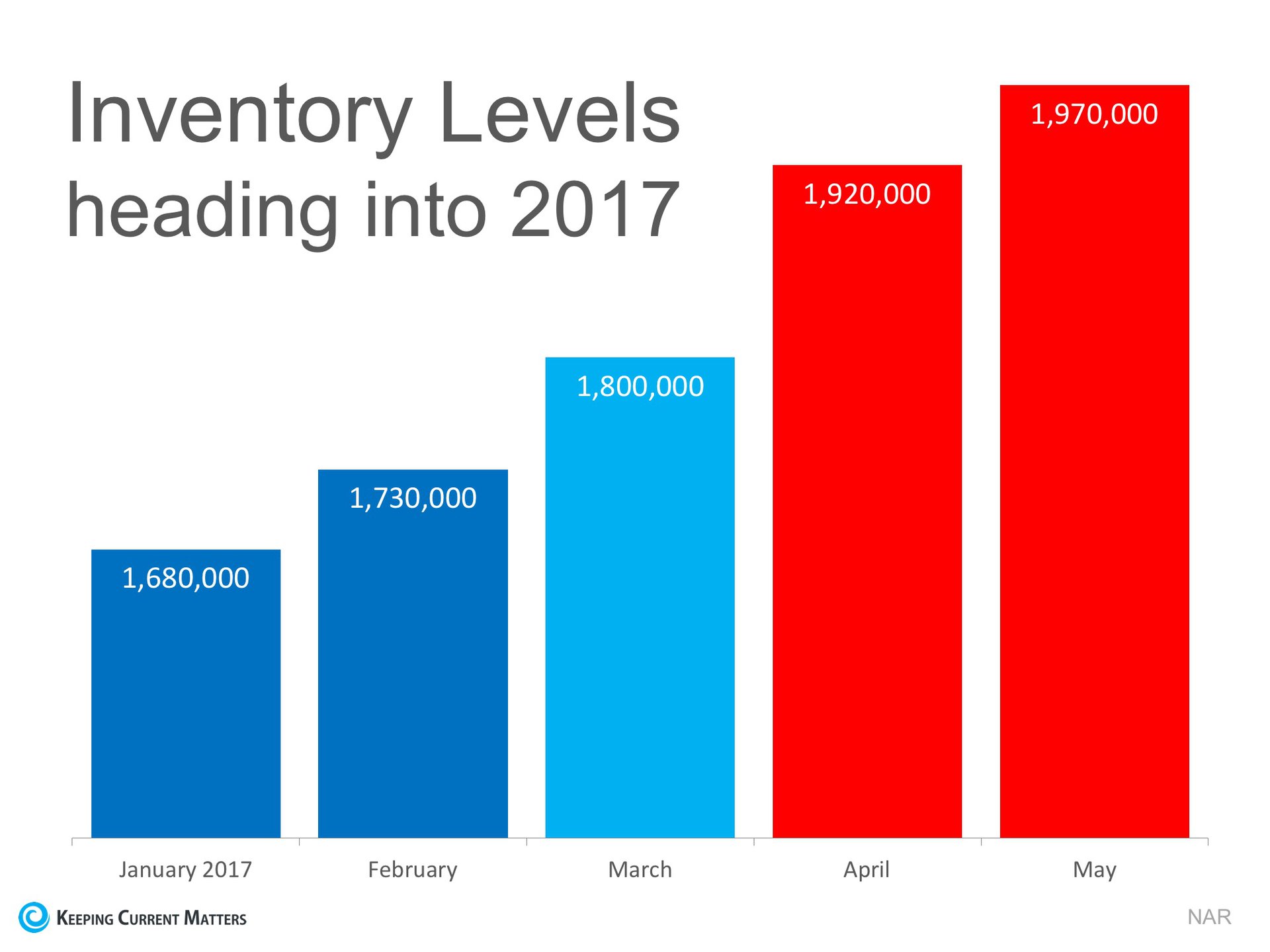
According to the National Association of Realtors (NAR), the supply of homes for sale dramatically increases every spring. As an example, here is what happened to housing inventory at the beginning of 2017:
The #1 Reason to Sell Now Before Spring | Keeping Current Matters
Putting your home on the market now instead of waiting for increased competition in the spring might make a lot of sense.

Bottom Line

Buyers in the market during the winter months are truly motivated purchasers. They want to buy now. With limited inventory currently available in most markets, sellers are in a great position to negotiate.

Monday, February 12, 2018

Study Shows "Millennials Deserve More Credit"

Study Shows "Millennials Deserve More Credit" | Keeping Current Matters
When it comes to talking about millennials, there are many stereotypes out there that have influenced the way the public feels about the generation. Whether it’s the assumption that millennials are irresponsible with money and would rather buy avocado toast than save for a down payment, or that millennials jump from job to job, the majority of these stereotypes paint the generation in a negative light.
A new study by Bank of America entitled Better Money Habits Millennial Report recently came to the defense of the generation when it reported that:
“Millennials deserve more credit – both from themselves and from others – for their mindfulness when it comes to money and their lives.”
Here are some key takeaways from the study proving that millennials deserve more credit for what they are already doing:
  • 63% are saving – (47% have $15,000 or more in savings)
  • 54% are budgeting – (73% who have a budget stick to it every month)
  • 57% have a savings goal – (67% who have a goal stick to it every month)
  • 46% have asked for a raise in the past 2 years – (80% who asked for a raise got one)
  • 59% feel financially secure – (16% have $100,000 or more in savings)
Many have wondered if millennials even want to own their own homes or if they would choose to rent instead. Well, not only do they want to own their own homes, but many already do and are looking to trade up! A recent study by realtor.com shows that 49% of Americans who plan to sell their home in the next 12 months are millennials!
Danielle Hale, realtor.com’s Chief Economist, gave some insight into why millennials are looking to sell,
“The housing shortage forced many first-time homebuyers to consider smaller homes and condos as a way to literally get their foot in the door. Our survey data reveals that we may see more of these homes hitting the market in the next year.”

Bottom Line

Not every millennial fits into the stereotypes that are so prominent in our society. Those who have risen above the stereotype are ready and willing to buy a home of their own, and many others already have!

Friday, February 9, 2018

2 Major Myths Holding Back Home Buyers

Urban Institute recently released a report entitled, “Barriers to Accessing Homeownership,” which revealed that eighty percent of consumers either are unaware of how much lenders require for a down payment or believe all lenders require a down payment above 5 percent.”

Myth #1: “I Need a 20% Down Payment”

Buyers often overestimate the down payment funds needed to qualify for a home loan. According to the same report:
Consumers are often unaware of the option to take out low-down-payment mortgages. Only 19% of consumers believe lenders would make loans with a down payment of 5% or less… While 15% believe lenders require a 20% down payment, and 30% believe lenders expect a 20% down payment.”
These numbers do not differ much between non-owners and homeowners; 39% of non-owners believe they need more than 20% for a down payment and 30% of homeowners believe they need more than 20% for a down payment.
While many believe that they need at least 20% down to buy their dream home, they do not realize that programs are available that allow them to put down as little as 3%. Many renters may actually be able to enter the housing market sooner than they ever imagined with programs that have emerged allowing less cash out of pocket.

Myth #2: “I Need a 780 FICO® Score or Higher to Buy”

Similar to the down payment, many either don’t know or are misinformed about what FICO® score is necessary to qualify.
Many Americans believe a ‘good’ credit score is 780 or higher.
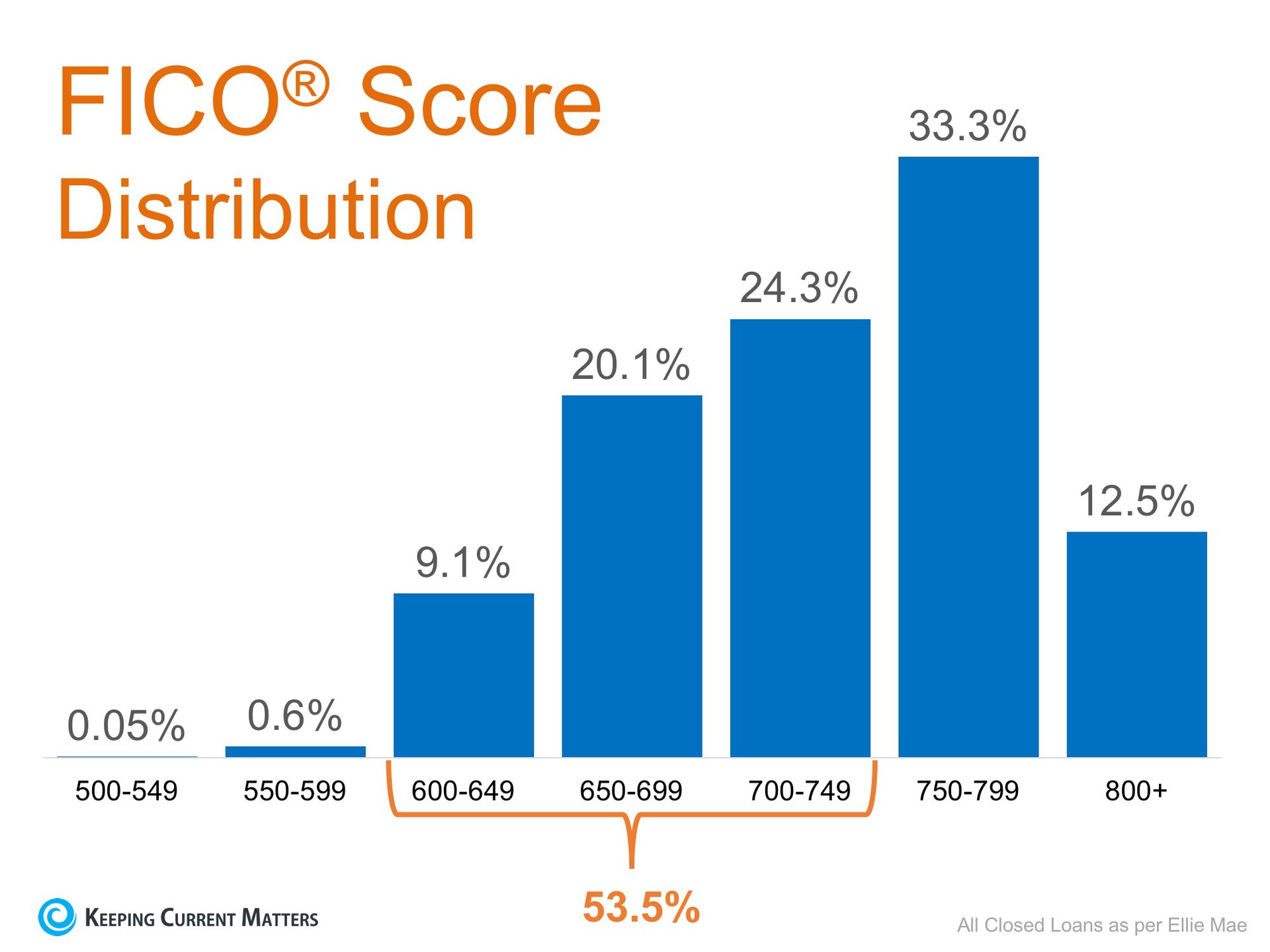
To help debunk this myth, let’s take a look at Ellie Mae’s latest Origination Insight Report, which focuses on recently closed (approved) loans.
2 Major Myths Holding Back Home Buyers | Keeping Current Matters
As you can see in the chart above, 53.5% of approved mortgages had a credit score of 600-749.

Bottom Line

Whether buying your first home or moving up to your dream home, knowing your options will make the mortgage process easier. Your dream home may already be within your reach.