Thursday, December 29, 2016

Top 5 Reasons You Should Not For Sale By Owner

Top 5 Reasons You Should Not For Sale By Owner | Keeping Current Matters In today's market, with home prices rising and a lack of inventory, some homeowners may consider trying to sell their home on their own, known in the industry as a For Sale by Owner (FSBO). There are several reasons why this might not be a good idea for the vast majority of sellers. Here are the top five reasons:

1. Exposure to Prospective Buyers

Recent studies have shown that 94% of buyers search online for a home. That is in comparison to only 17% looking at print newspaper ads. Most real estate agents have an internet strategy to promote the sale of your home. Do you?

2. Results Come from the Internet

Where did buyers find the home they actually purchased?
  • 51% on the internet
  • 34% from a Real Estate Agent
  • 9% from a yard sign
  • 1% from newspapers
The days of selling your house by just putting up a sign and putting it in the paper are long gone. Having a strong internet strategy is crucial.

3. There Are Too Many People to Negotiate With

Here is a list of some of the people with whom you must be prepared to negotiate if you decide to For Sale By Owner:
  • The buyer who wants the best deal possible
  • The buyer's agent who solely represents the best interest of the buyer
  • The buyer's attorney (in some parts of the country)
  • The home inspection companies, which work for the buyer and will almost always find some problems with the house
  • The appraiser if there is a question of value

4. FSBOing Has Become More And More Difficult

The paperwork involved in selling and buying a home has increased dramatically as industry disclosures and regulations have become mandatory. This is one of the reasons that the percentage of people FSBOing has dropped from 19% to 8% over the last 20+ years.

The 8% share represents the lowest recorded figure since NAR began collecting data in 1981.

5. You Net More Money When Using an Agent

Many homeowners believe that they will save the real estate commission by selling on their own. Realize that the main reason buyers look at FSBOs is because they also believe they can save the real estate agent's commission. The seller and buyer can't both save the commission. Studies have shown that the typical house sold by the homeowner sells for $185,000, while the typical house sold by an agent sells for $245,000. This doesn't mean that an agent can get $60,000 more for your home, as studies have shown that people are more likely to FSBO in markets with lower price points. However, it does show that selling on your own might not make sense.

Bottom Line

Before you decide to take on the challenges of selling your house on your own, sit with a real estate professional in your marketplace and see what they have to offer.

Wednesday, December 28, 2016

2 Tips to Ensure You Get the Most Money When Selling Your House | Keeping Current Matters Every homeowner wants to make sure they get the best price when selling their home. But how do you guarantee that you receive maximum value for your house? Here are two keys to ensuring you get the highest price possible.

1. Price it a LITTLE LOW

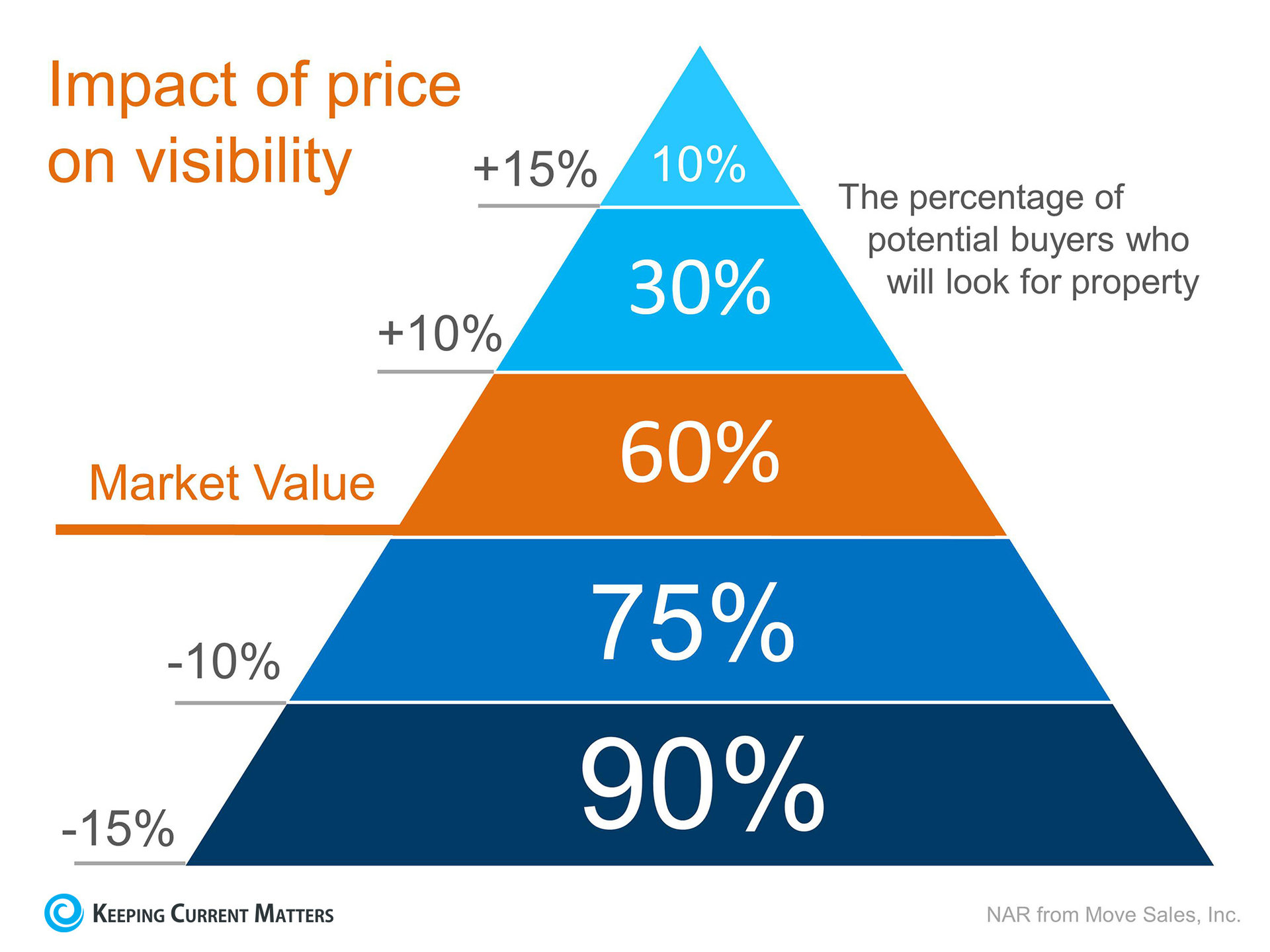
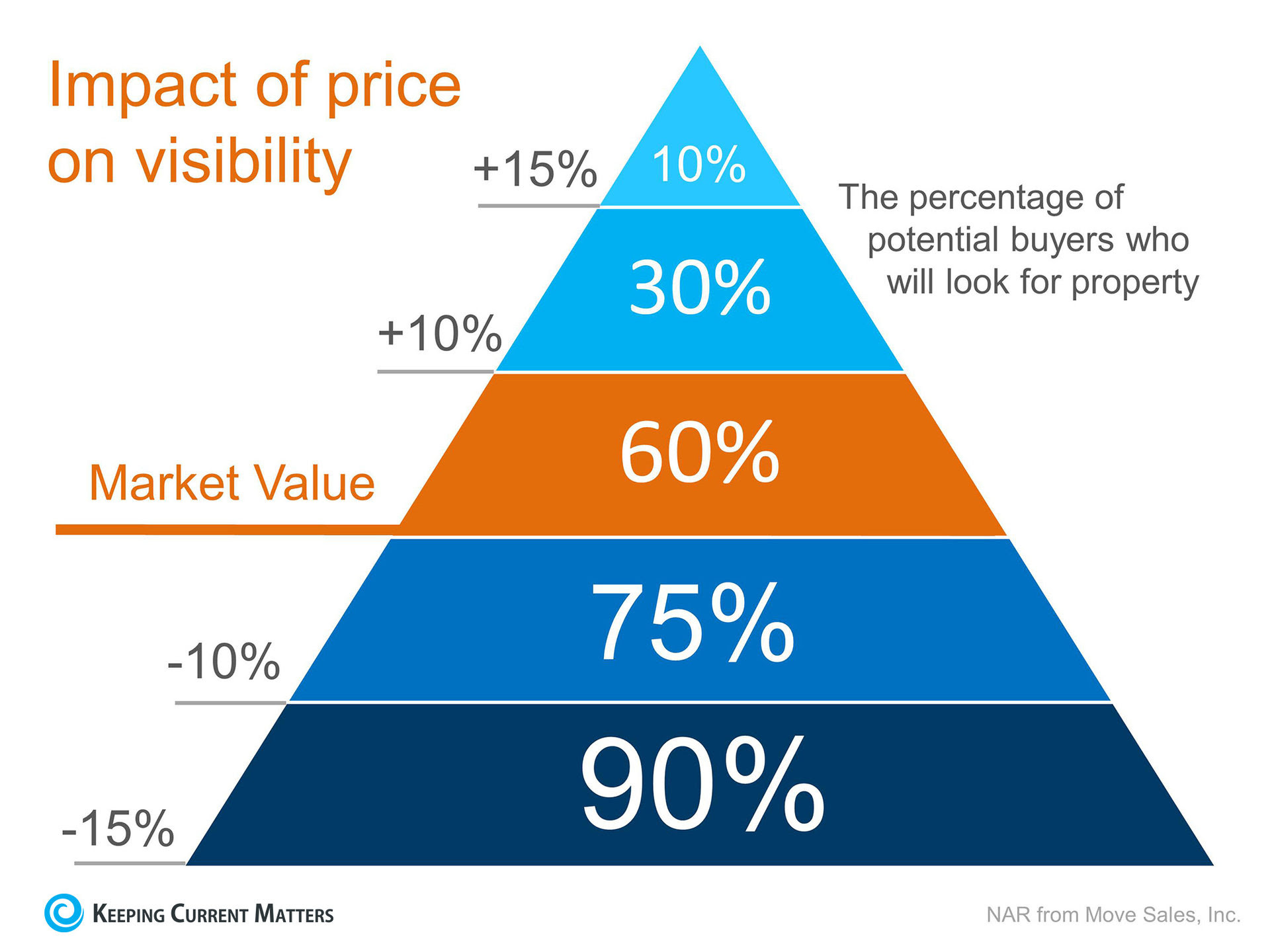
This may seem counterintuitive. However, let's look at this concept for a moment. Many homeowners think that pricing their home a little OVER market value will leave them room for negotiation. In actuality, this just dramatically lessens the demand for your house (see chart below). 2 Tips to Ensure You Get the Most Money When Selling Your House | Keeping Current Matters Instead of the seller trying to 'win' the negotiation with one buyer, they should price it so that demand for the home is maximized. By doing this, the seller will not be fighting with a buyer over the price, but will instead have multiple buyers fighting with each other over the house. Realtor.com, gives this advice:
"Aim to price your property at or just slightly below the going rate. Today's buyers are highly informed, so if they sense they're getting a deal, they're likely to bid up a property that's slightly underpriced, especially in areas with low inventory."

2. Use a Real Estate Professional

This too may seem counterintuitive. The seller may think they would net more money if they didn't have to pay a real estate commission. With that being said, studies have shown that homes typically sell for more money when handled by a real estate professional. Research posted by the National Association of Realtors revealed that:
"The median selling price for all FSBO homes was $185,000 last year. When the buyer knew the seller in FSBO sales, the number sinks to the median selling price of $163,800. However, homes that were sold with the assistance of an agent had a median selling price of $245,000 - nearly $60,000 more for the typical home sale."

Bottom Line

Price your house at or slightly below the current market value and hire a professional. That will guarantee you maximize the price you get for your house.

Tuesday, December 27, 2016

Student Loans = Higher Credit Scores

Student Loans = Higher Credit Scores | Keeping Current Matters According to a recent analysis by CoreLogic, Millennial renters (aged 20-34) who have student loan debt also have higher credit scores than those who do not have student loans. This may come as a surprise, as there is so much talk about student loans burdening Millennials and holding them back from many milestones that previous generations have been able to achieve (i.e. homeownership, investing for retirement). CoreLogic used the information provided on rental applications and the applicants' credit history from credit bureaus to determine if there was a correlation between student loan debt and credit scores. The analysis concluded that:
"Student loan debt did not prevent millennials from access to credit even though it may delay their homebuying decisions."
In fact, those with a higher amount of debt actually had higher credit scores.
"Renters with student loan debt have higher average credit scores than those without; and those with higher debt amounts have higher average credit scores than those with lower student loan debt amounts."

Bottom Line

Millennials are on pace to become the most educated generation in our nation's history, with that comes a pretty big bill for education. But there is a light at the end of the tunnel:
"Despite the fact that student loan debt has grown into the nation's second largest consumer debt, following mortgage, and has created a significant financial burden for millennials, it does not appear to prevent millennials from accessing credit."

Monday, December 26, 2016

Home Prices: Where Will They Be in 5 Years?

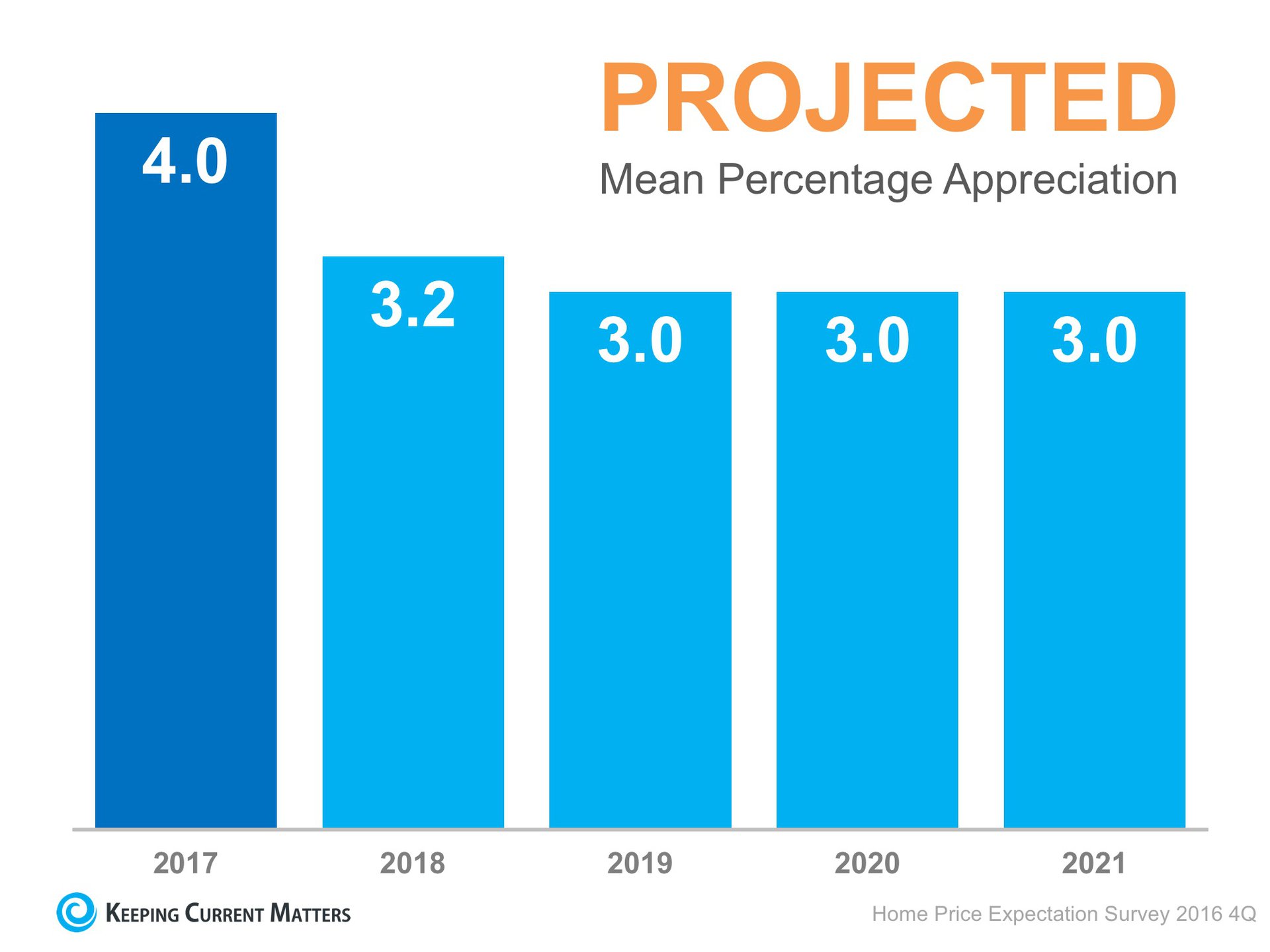
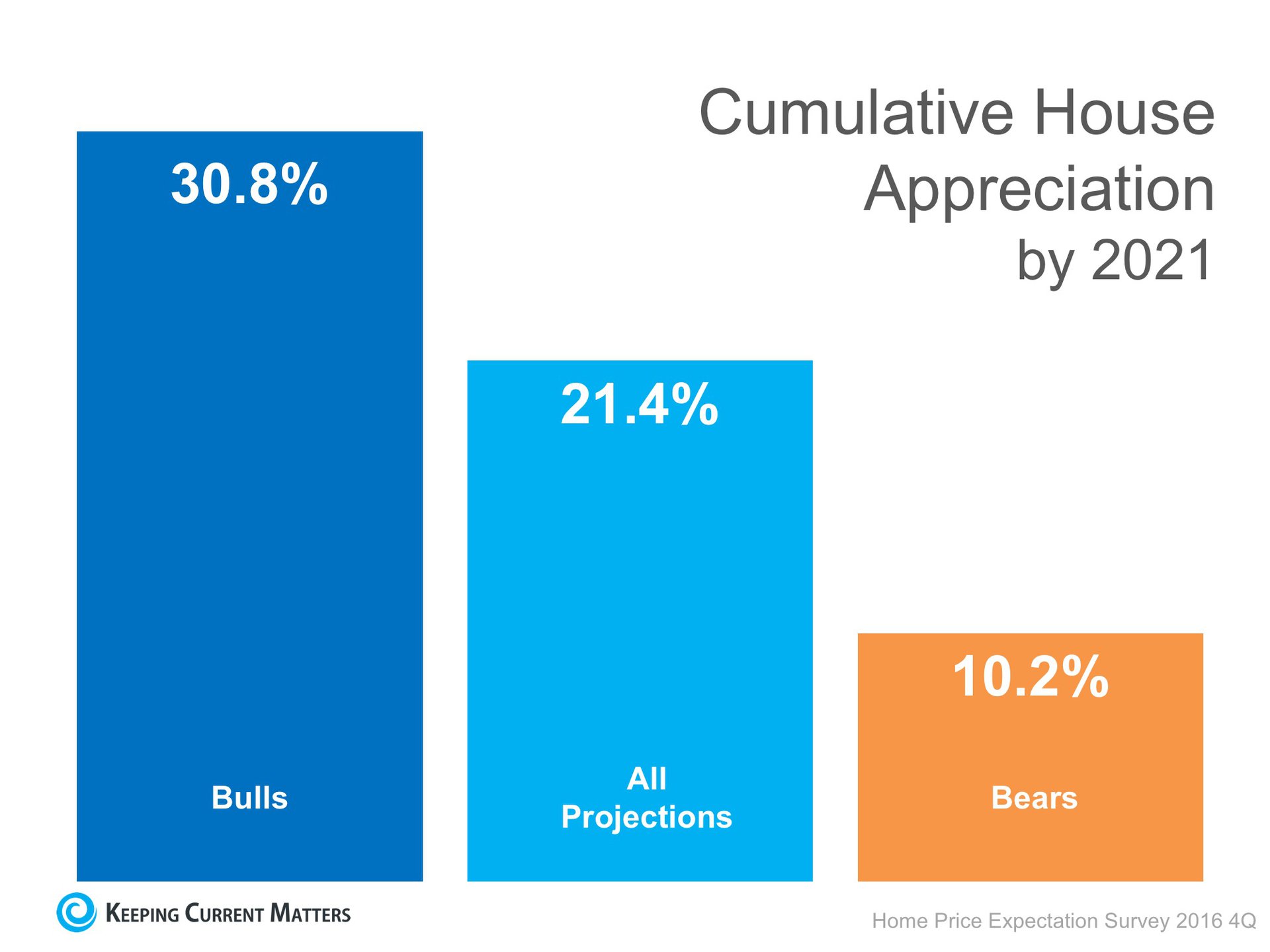
Home Prices: Where Will They Be in 5 Years? | Keeping Current Matters Today, many real estate conversations center on housing prices and where they may be headed. That is why we like the Home Price Expectation Survey. Every quarter, Pulsenomics surveys a nationwide panel of over one hundred economists, real estate experts, and investment & market strategists about where they believe prices are headed over the next five years. They then average the projections of all 100+ experts into a single number. The results of their latest survey: Home values will appreciate by 4.0% over the course of 2017, 3.2% in 2018 and 3.0% the next three years (as shown below). That means the average annual appreciation will be 3.24% over the next 5 years. Home Prices: Where Will They Be in 5 Years? | Keeping Current Matters The prediction for cumulative appreciation ticked up from 18.7% to 21.4% by 2021. The experts making up the most bearish quartile of the survey are projecting a cumulative appreciation of 10.2%. Home Prices: Where Will They Be in 5 Years? | Keeping Current MattersBottom Line Individual opinions make headlines. We believe this survey is a fairer depiction of future values

Thursday, December 22, 2016

2 Tips to Ensure You Get the Most Money When Selling Your House

2 Tips to Ensure You Get the Most Money When Selling Your House | Keeping Current Matters Every homeowner wants to make sure they get the best price when selling their home. But how do you guarantee that you receive maximum value for your house? Here are two keys to ensuring you get the highest price possible.

1. Price it a LITTLE LOW

This may seem counterintuitive. However, let's look at this concept for a moment. Many homeowners think that pricing their home a little OVER market value will leave them room for negotiation. In actuality, this just dramatically lessens the demand for your house (see chart below). 2 Tips to Ensure You Get the Most Money When Selling Your House | Keeping Current Matters Instead of the seller trying to 'win' the negotiation with one buyer, they should price it so that demand for the home is maximized. By doing this, the seller will not be fighting with a buyer over the price, but will instead have multiple buyers fighting with each other over the house. Realtor.com, gives this advice:
"Aim to price your property at or just slightly below the going rate. Today's buyers are highly informed, so if they sense they're getting a deal, they're likely to bid up a property that's slightly underpriced, especially in areas with low inventory."

2. Use a Real Estate Professional

This too may seem counterintuitive. The seller may think they would net more money if they didn't have to pay a real estate commission. With that being said, studies have shown that homes typically sell for more money when handled by a real estate professional. Research posted by the National Association of Realtors revealed that:
"The median selling price for all FSBO homes was $185,000 last year. When the buyer knew the seller in FSBO sales, the number sinks to the median selling price of $163,800. However, homes that were sold with the assistance of an agent had a median selling price of $245,000 - nearly $60,000 more for the typical home sale."

Bottom Line

Price your house at or slightly below the current market value and hire a professional. That will guarantee you maximize the price you get for your house.

Wednesday, December 21, 2016

The #1 Reason to Sell Now... Not Next Spring

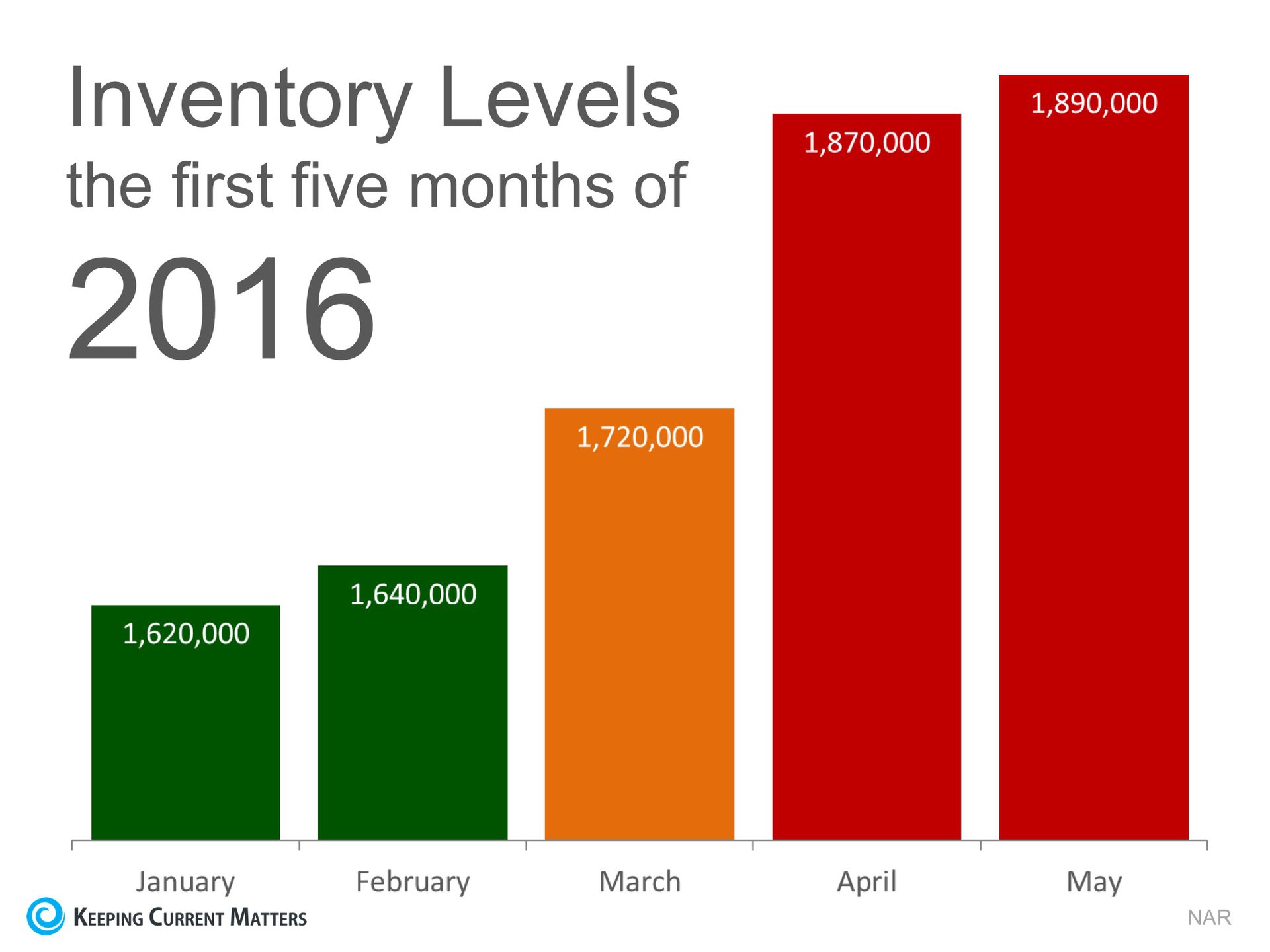
The #1 Reason to Sell Now... Not Next Spring | Keeping Current Matters The price of any item (including residential real estate) is determined by 'supply and demand'. If many people are looking to buy an item and the supply of that item is limited, the price of that item increases. According to the National Association of Realtors (NAR), the supply of homes for sale dramatically increases every spring. As an example, here is what happened to housing inventory at the beginning of 2016: The #1 Reason to Sell Now... Not Next Spring | Keeping Current Matters Putting your home on the market now instead of waiting for increased competition in the spring might make a lot of sense.
Bottom Line

Buyers in the market during the winter months are truly motivated purchasers. They want to buy now. With limited inventory currently available in most markets, sellers are in a great position to negotiate.

Tuesday, December 20, 2016

Will Increasing Mortgage Rates Impact Home Prices?

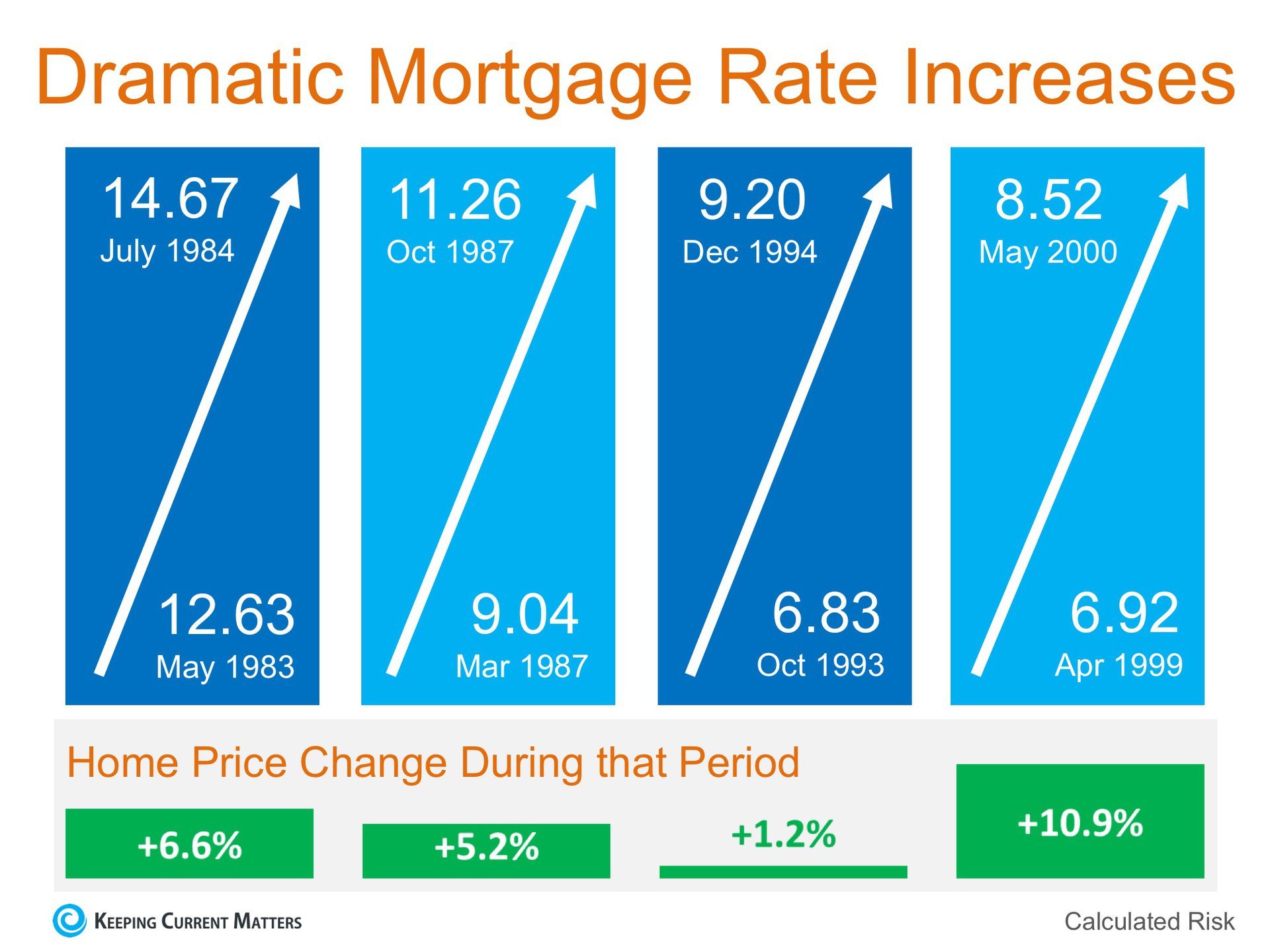
Will Increasing Mortgage Rates Impact Home Prices? | Keeping Current Matters There are some who are calling for a decrease in home prices should mortgage interest rates begin to rise rapidly. Intuitively, this makes sense as the cost of a home is determined by the price of the home, plus the cost of financing that home. If mortgage interest rates increase, fewer people will be able to buy, and logic says prices will fall if demand decreases. However, history shows us that this has not been the case the last four times mortgage interest rates dramatically increased. Here is a graph showing what actually happened: Will Increasing Mortgage Rates Impact Home Prices? | Keeping Current Matters Last week, in an article titled "Higher Rates Don't Mean Lower House Prices After All," the Wall Street Journal revealed that a recent study by John Burns Real Estate Consulting Inc. found that:
"[P]rices weren't especially sensitive to rising rates, particularly in the presence of other positive economic factors, such as strong job growth, rising wages and improving consumer confidence."
Last week's jobs report was strong and the Conference Board just reported that the Consumer Confidence Index was back to pre-recession levels.