Wednesday, June 15, 2022

What Does the Rest of the Year Hold for the Housing Market?

 If you’re thinking of buying or selling a house, you’re at an exciting decision point. And anytime you make a big decision like that, one thing you should always consider is timing. So, what does the rest of the year hold for the housing market? Here’s what experts have to say.

The Number of Homes Available for Sale Is Likely To Grow

There are early signs housing inventory is starting to grow and experts say that should continue in the months ahead. According to Danielle Hale, Chief Economist at realtor.com:

“The gap between this year’s homes for sale and last year’s is one-fifth the size that it was at the beginning of the year. The catch up is likely to continue, . . . This growth will mean more options for shoppers than they’ve had in a while, even though inventory continues to lag pre-pandemic normal.”

  • As a buyer, having more options is welcome news. Just remember, housing supply is still low, so be ready to act fast and put in your best offer up front.
  • As a seller, your house may soon face more competition when other sellers list their homes. But the good news is, if you’re also buying your next home, having more options to choose from should make that move-up process easier.

Mortgage Rates Will Likely Continue To Respond to Inflationary Pressures

Experts also agree inflation should continue to drive up mortgage rates, albeit more moderately. Odeta Kushi, Deputy Chief Economist at First Americansays:

“… ongoing inflationary pressure remains likely to push mortgage rates even higher in the months to come.”  

  • As a buyer, work with trusted real estate professionals, including your lender, so you can learn how rising mortgage rate environments impact your purchasing power. It may make sense to buy now before it costs more to do so, if you’re ready.
  • As a seller, rising mortgage rates are motivating some homeowners to make a move up sooner rather than later. If you’re planning to buy your next home, talk to a trusted real estate advisor to decide how to time your move.

Home Prices Are Projected To Continue To Climb

Home prices are forecast to keep appreciating because there are still fewer homes for sale than there are buyers in the market. That said, experts agree the pace of that appreciation should moderate – but home prices won’t fall. Lawrence Yun, Chief Economist at the National Association of Realtors (NAR), explains:

“Prices throughout the country have surged for the better part of two years, including in the first quarter of 2022. . . Given the extremely low inventory, we’re unlikely to see price declines, but appreciation should slow in the coming months.” 

  • As a buyer, continued home price appreciation means it’ll cost you more to buy the longer you wait. But it also gives you peace of mind that, once you do buy a home, it will likely grow in value. That makes it historically a good investment and a strong hedge against inflation.
  • As a seller, price appreciation is great news for the value of your home. Again, lean on a professional to strike the right balance of the best conditions possible for both selling your house and buying your next one.

Bottom Line

Whether you’re a homebuyer or seller, you need to know what’s happening in the housing market, so you can make the most informed decision possible. Connect with a real estate advisor to discuss your goals and what lies ahead, so you can pick your best time to make a move.

Tuesday, June 7, 2022

How Homeownership Impacts You


June is National Homeownership Month, and it’s the perfect time to reflect on how impactful owning a home can truly be. When you purchase a house, it becomes more than just a space you occupy. It’s your stake in the community, an investment, and a place you can put your stamp on.

If you’re thinking about buying a home this year, here are some of the benefits you’ll experience when you do.

The Emotional Benefits of Homeownership

Because it’s a place that’s uniquely yours, owning a home can give you a sense of pride and happiness in several ways.

Your Home Can Reflect Your Tastes and Personality

Investopedia puts it like this:

“One often-cited benefit of homeownership is the knowledge that you own your little corner of the world.

That knowledge can lead to a powerful, emotional connection to the place where you live. But so can the realization that your home will grow with you. Because it’s yours, you have the freedom to make updates to it as your needs and tastes change. As Logan Mohtashami, Lead Analyst for HousingWiresays:

“The psychology is that this is yours and you’re going to make it as good as possible because you’re in for a long time, . . . “

And that can create a greater sense of ownership, pride, and connection with your home and your community.

It Can Enhance Your Neighborhood and Civic Engagement

Homeownership can lead you to get even more involved with your local area. After all, you’re putting your roots down in a location and will want to do what you can to help improve it, much like your home. In a recent report, the National Association of Realtors (NAR) says:

Living in one place for a longer amount of time creates and [sic] obvious sense of community pride, which may lead to more investment in said community.”

The Financial Benefits of Homeownership

When you choose to become a homeowner, you’re making a financial decision as well. That’s because your home is also an investment.

It Can Help You Feel Financially Stable

Homeownership is truly one of the best ways to improve your long-term financial position. Not only will you have a predictable monthly housing expense that can benefit your budget in the short term, but you’ll also gain equity as your home appreciates in value and you make your monthly mortgage payment. As Freddie Mac says:

“Building equity through your monthly principal payments and appreciation is a critical part of homeownership that can help you create financial stability.”

It Can Grow Your Wealth

Because of your growing equity, you can build your net worth as a homeowner. And when you compare the difference in net worth between a renter and a homeowner, it’s clear that owning a home truly offers a great way to build your long-term financial position.

According to the latest data from NAR, the median household net worth of a homeowner is roughly $300,000, while the median net worth of renters is only about $8,000. That means a homeowner’s net worth is nearly 40 times that of a renter.

Bottom Line

Homeownership is truly a way to find greater satisfaction and happiness and to build financial freedom. If National Homeownership Month has you dreaming about purchasing a home, contact a local real estate professional to begin the process today.

Friday, June 3, 2022

How Buying or Selling a Home Benefits the Economy and Your Community

 If you’re thinking of buying or selling a home, chances are you’re focusing on the many extraordinary ways it’ll change your life. But do you know it has a large impact on your community too?

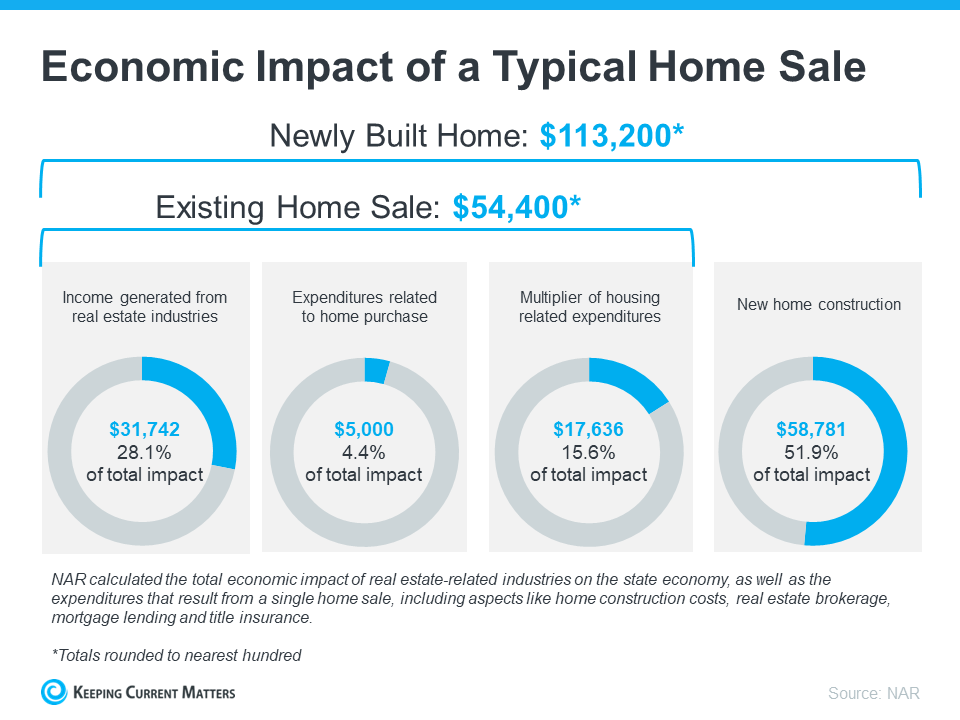
To measure that impact, the National Association of Realtors (NAR) releases a report each year to highlight just how much economic activity a home sale generates. The chart below shows how the sale of both a newly built home and an existing home impact the economy:

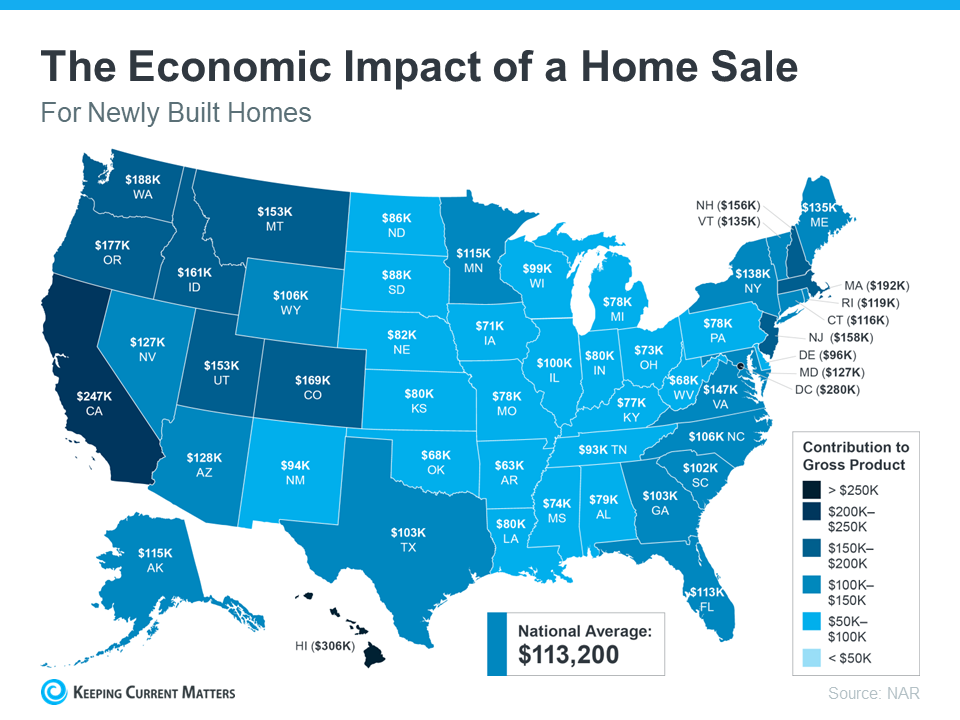
How Buying or Selling a Home Benefits the Economy and Your Community | Keeping Current MattersAs the visual shows, a single home sale can have a significant effect on the overall economy. To dive a level deeper, NAR also provides a detailed look at how that varies state-by-state for newly built homes (see map below):

How Buying or Selling a Home Benefits the Economy and Your Community | Keeping Current MattersYou may be wondering: how can a single home sale have such a major effect on the economy?

For starters, there are multiple industries that play a role in the process. Numerous contractors, specialists, lawyers, town and city officials, and so many other professionals are all necessary at various stages during the transaction. Every individual you work with, like your trusted real estate advisor, has a team of professionals involved behind the scenes.

That means when you buy or sell a home, you’re leaving a lasting impression on the community at large. Let the knowledge that you’re contributing to those around you while also meeting your own needs help you feel even more empowered when you decide to make your move this year.

Bottom Line

Homebuyers and sellers are economic drivers in their community and beyond. Reach out to your trusted real estate advisor today if you’re ready to get started. It won’t just change your life; it’ll make a powerful impact on your entire community.

Friday, May 27, 2022

The One Thing Every Homeowner Needs To Know About a Recession


A recession does not equal a housing crisis. That’s the one thing that every homeowner today needs to know. Everywhere you look, experts are warning we could be heading toward a recession, and if true, an economic slowdown doesn’t mean homes will lose value.

The National Bureau of Economic Research (NBER) defines a recession this way:

“A recession is a significant decline in economic activity spread across the economy, normally visible in production, employment, and other indicators. A recession begins when the economy reaches a peak of economic activity and ends when the economy reaches its trough. Between trough and peak, the economy is in an expansion.”

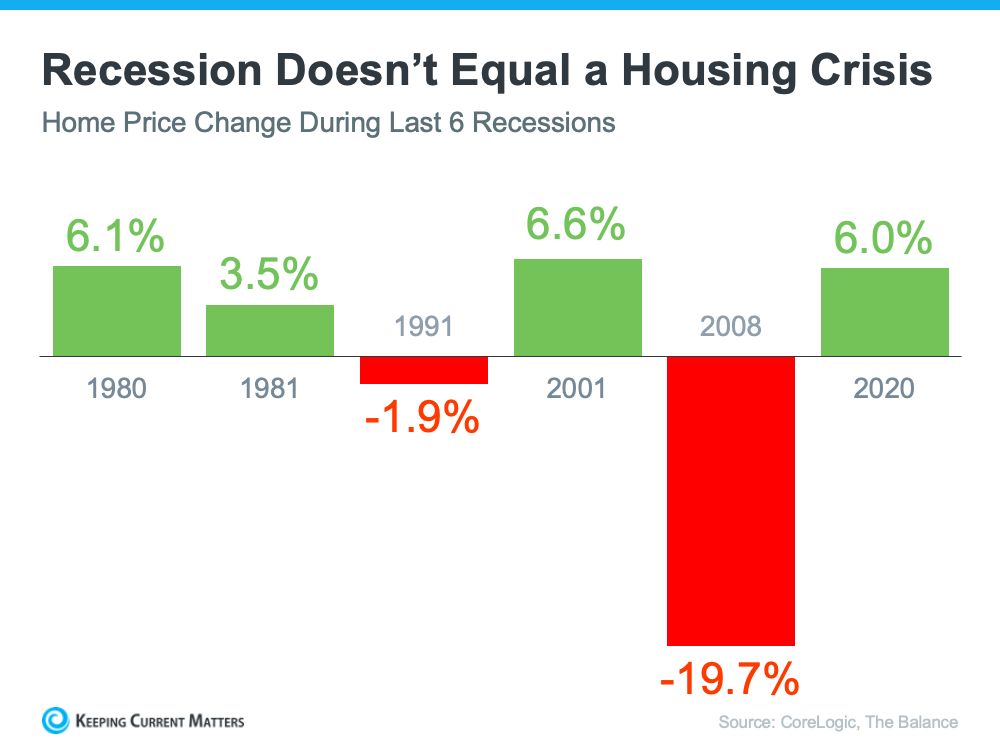
To help show that home prices don’t fall every time there’s a recession, take a look at the historical data. There have been six recessions in this country over the past four decades. As the graph below shows, looking at the recessions going all the way back to the 1980s, home prices appreciated four times and depreciated only two times. So, historically, there’s proof that when the economy slows down, it doesn’t mean home values will fall or depreciate.

The One Thing Every Homeowner Needs To Know About a Recession | Keeping Current Matters

The first occasion on the graph when home values depreciated was in the early 1990s when home prices dropped by less than 2%. It happened again during the housing crisis in 2008 when home values declined by almost 20%. Most people vividly remember the housing crisis in 2008 and think if we were to fall into a recession that we’d repeat what happened then. But this housing market isn’t a bubble that’s about to burst. The fundamentals are very different today than they were in 2008. So, we shouldn’t assume we’re heading down the same path.

Bottom Line

We’re not in a recession in this country, but if one is coming, it doesn’t mean homes will lose value. History proves a recession doesn’t equal a housing crisis.

Tuesday, May 24, 2022

Work With a Real Estate Professional if You Want the Best Advice


Because buying or selling a home is such a big decision in our lives, the need for clear, trustworthy information and guidance is crucial. And while no one can give you perfect advice, when you align yourself with an expert, you’ll get the best advice for your situation.

An Expert Will Give You the Best Advice Possible

Let’s say you need an attorney, so you seek out an expert in the type of law required for your case. When you go to their office, they won’t immediately tell you how the case is going to end or how the judge or jury will rule. What a good attorney can do, though, is discuss the most effective strategies you can take. They may recommend one or two approaches they believe will work well for your case.

Then, they’ll leave you to make the decision on which option you want to pursue. Once you decide, they can help you put a plan together based on the facts at hand. They’ll use their expert knowledge to work toward the resolution you want and make whatever modifications in the strategy necessary to try and achieve that outcome.

Similarly, the job of a trusted real estate professional is to give you the best advice for your situation. Just like you can’t find a lawyer to give you perfect advice, you won’t find a real estate professional who can either. They can’t because it’s impossible to know exactly what’s going to happen throughout your transaction. They also can’t predict exactly what will happen with conditions in today’s housing market.

But an expert real estate advisor is knowledgeable about market trends and the ins and outs of the homebuying and selling process. With that knowledge, they can anticipate what could happen based on your situation and help you put together a solid plan. And they’ll guide you through the process, helping you make decisions along the way.

That’s the very definition of getting the best – not perfect – advice. And that’s the power of working with an expert real estate advisor.

Bottom Line

If you want trustworthy advice when buying or selling a home, contact a local real estate professional.

Friday, May 20, 2022

On the Fence of Whether or Not To Move This Spring? Consider This.


If you’re thinking of selling your house, it may be because you’ve heard prices are rising, listings are going fast, and sellers are getting multiple offers on their homes. But why are conditions so good for sellers today? And what can you expect when you move? To help answer both of those questions, let’s turn to the data.

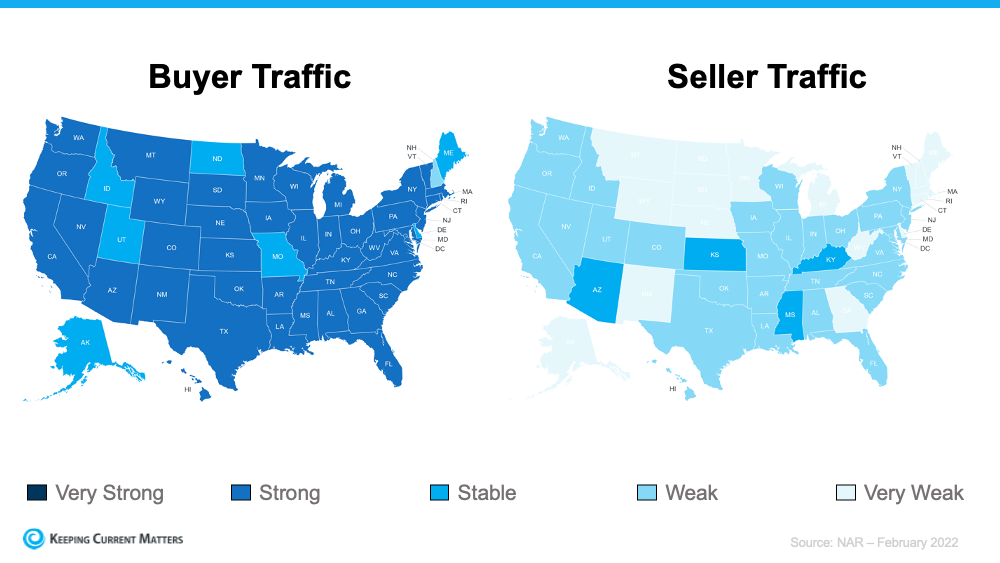
Today, there are far more buyers looking for homes than sellers listing their houses. Here are the maps of the latest buyer and seller traffic from the National Association of Realtors (NAR) to help paint the picture of what this looks like:

On the Fence of Whether or Not To Move This Spring? Consider This. | Keeping Current Matters

Notice how much darker the blues are on the left. This shows buyer traffic is strong today. In contrast, the much lighter blues on the right indicate weak or very weak seller traffic. In a nutshell, the demand for homes is significantly greater than what’s available to purchase.

What That Means for You

You have an incredible advantage when you sell your house under these conditions. Since buyer demand is so high at a time when seller traffic is so low, there’s a good chance buyers will be competing for your house.

According to NAR, in February, the average home sold got 4.8 offersWhen buyers have to compete with one another like this, they’ll do everything they can to make their offer stand out. This could play to your favor and mean you’ll see things like waived contingencies, offers over asking price, earnest money deposits, and more. Selling when demand is high and supply is low sets you up for a big win.

If you’re also looking to buy a house, you may be tempted to focus more on just the seller traffic map and wonder if it means you’ll have trouble finding your next home. But remember this: perspective is key. As Danielle Hale, Chief Economist at realtor.comsays:

The limited number of homes for sale is a lesson in perspective. This same stat that frustrates would-be homebuyers also means that today’s home sellers enjoy more limited competition than last year’s home sellers.”

If you look at the big picture, the opportunity you have as a seller today is unprecedented. Last year was a hot sellers’ market. This year, inventory is even lower, and that means an even bigger opportunity for you. Even though finding your next home in a market with low inventory can be challenging, is that concern worth passing on some of the best conditions sellers have ever seen?

As added peace of mind, remember real estate professionals have been juggling this imbalance of supply and demand for nearly two years, and they know how to help both buyers and sellers find success when they move. A skilled agent can help you capitalize on the great opportunity you have as a seller today and guide you through the buying process until you find the perfect place to call your next home.

Bottom Line

If you’re ready to move, you have an incredible opportunity in front of you today. Place your trust in a real estate professional and lean on their experience to help you win when you sell and when you buy.