Wednesday, May 18, 2022

Are There More Homes Coming to the Market?


According to a recent survey from the National Association of Realtors (NAR), one of the top challenges buyers face in today’s housing market is finding a home that meets their needs. That’s largely because the inventory of homes for sale is so low today.

If you’re looking to buy a home, you may have noticed this yourself. But there is good news. Recent data shows more sellers are listing their houses this season, which may give you more options for your home search.

Early Signs Inventory May Be Growing

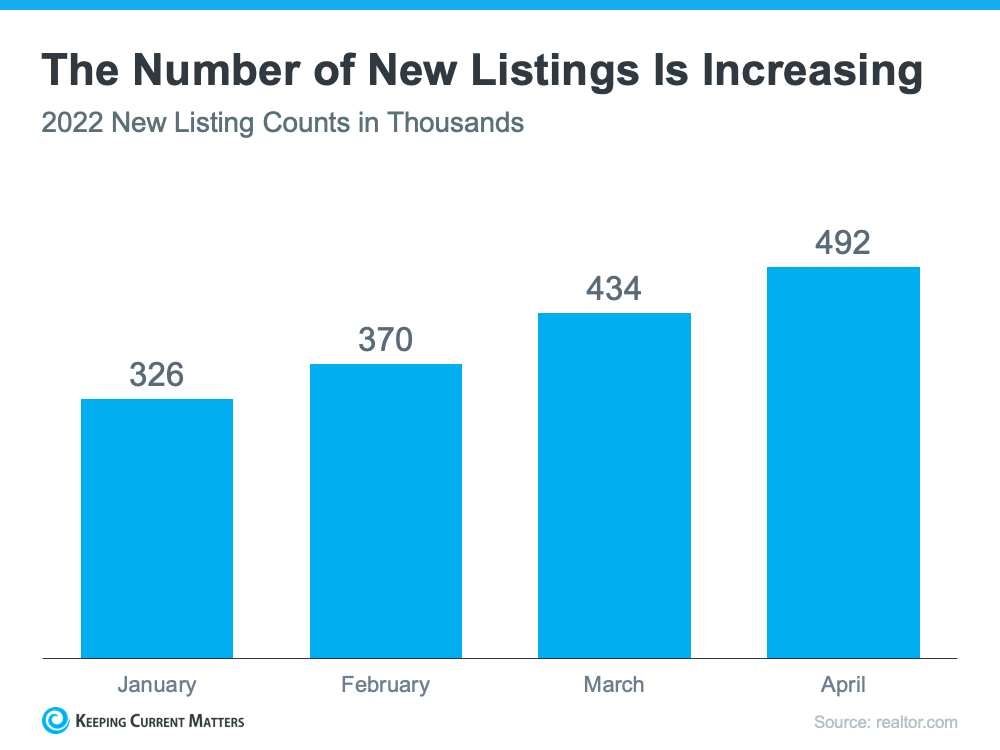
The latest data from realtor.com shows the number of listings coming onto the market, known in the industry as “new listings,” has increased since the start of the year (see graph below):
Are There More Homes Coming to the Market? | Keeping Current Matters

This indicates more sellers are listing their homes for sale each month this year. And according to realtor.com, this growth is expected to continue. Their research finds the majority of potential sellers plan to list their homes over the next six months. Realtor.com says:

“. . . markets may see a noticeable bump in the number of homes for sale as we move through spring and into summer. A majority of homeowners planning to sell this year indicated that they aim to list in the next six months, with almost 10% having already placed their properties on the market.”

Homes Are Still Selling Quickly

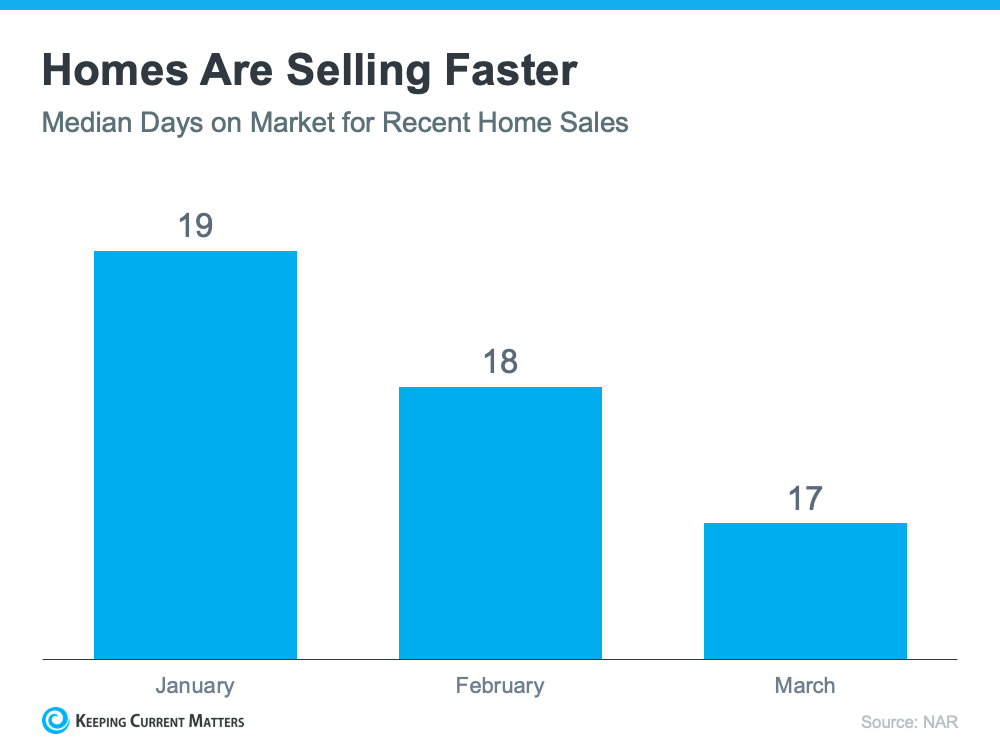
But while new listings are increasing, it’s important to know they’re also selling quickly. The latest Realtors Confidence Index from NAR shows the median days on market for recently sold homes since the beginning of the year (see chart below). The time on market has decreased month-over-month. That means homes are selling even faster than they did the previous month.
Are There More Homes Coming to the Market? | Keeping Current Matters

What That Means for You

While a low-inventory market is difficult to navigate as a buyer, there is hope. The growing number of new listings and the expectation more sellers will list their homes in the coming months is great news if you’ve had a hard time finding a home that fits your needs. Just remember, those new listings are going fast. That means you’ll want to keep your foot on the gas and be ready to act if you find a home you love this season.

Your agent can help you stay on top of the latest listings in your area so you can find the home that’s right for you and submit your strongest offer as quickly as possible.

Bottom Line

If you’ve been having a hard time finding your dream home, stick with your search. More options are coming to market and your ideal home could be one of them. Partner with a real estate professional to stay up to date on the latest listings in your market, so you can be ready to move fast when you find the one that’s right for you.

Monday, May 16, 2022

Your House Could Be Closer to List-Ready Than You Think


One of the biggest concerns for a homeowner looking to sell is the time they’ll have to put in before listing their house. If that’s the case for you, you should know – your home might be closer to list-ready than you think in today’s housing market. A survey of recent sellers from realtor.com finds that many were able to get their house ready in less than a month. It says:

“With many homeowners expecting a quick sale, and in many cases a lack of contingencies, the preparation process took less than a month for over 50% of home sellers this past year, with 20% completing it in less than two weeks.

Those sellers expecting to sell quickly are following recent buyer trends. With mortgage rates and home prices rising, buyers in today’s market are serious about finding a home quickly. But with the limited number of homes for sale, there are very few options for those buyers to choose from. That means many may be willing to take on projects after they purchase.

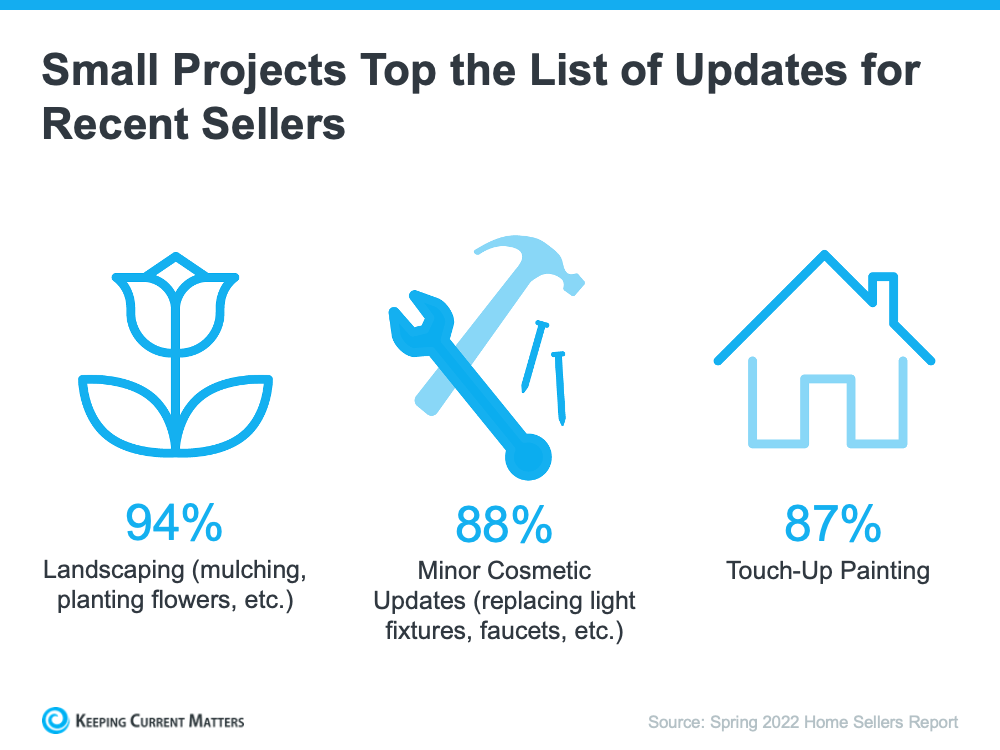
Because of this, you may be able to focus on less time-consuming tasks before putting your house on the market. According to the survey mentioned above, some of the top things recent sellers completed before listing over the past year include landscaping, making minor cosmetic updates, and touching-up paint (see image below):

Your House Could Be Closer to List-Ready Than You Think | Keeping Current Matters

A Real Estate Advisor Will Help Streamline the Process and Keep You Focused

Of course, each situation is different, and knowing what repairs or updates your house needs to stand out in your local area is critical. That’s where a trusted real estate professional comes in. In a recent article, NextAdvisor explains:

“. . . Real estate can be hyper-local, and demand can vary from one neighborhood to the next. It’s a good idea to work with a local real estate professional to determine an ideal listing price and if any improvements or repairs need to be completed before putting your home on the market.”

Your trusted real estate advisor knows the ins and outs of the market in your specific area. They’ll help you identify the places where you should and shouldn’t spend your time and money – and that can enable you to list quickly.

Bottom Line

If you’re ready to take advantage of the incredible conditions for sellers in today’s real estate market but are worried about the time it’ll take to get your home ready, you might be closer than you think. Partner with a local real estate advisor to see what you need to do before listing your house today.

Thursday, May 12, 2022

Three Tips for First-Time Homebuyers


Buying your first home is a major decision and an exciting milestone. Even though it can feel daunting at times, it has the power to change your life for the better. If you’re looking to purchase your first home, you may be wondering what’s happening in the housing market today, how much you need to save, and where to start.

Here are three things that can help give you the information you need to confidently pursue your dream of homeownership.

1. Consider All Options When the Number of Homes for Sale Is Low

Today, there are far more buyers in the market than there are homes available for sale. When that happens, it’s a good idea to do what you can to increase your pool of options. That could mean expanding your search to include additional housing types. For first-time buyers, considering condominiums (condos) and townhomes can be an excellent way to increase your choices. According to Bankrate:

“Townhomes often cost less than single-family homes of a similar size in the same location.”

In another article, Bankrate also says:

“Buying a condo can be a great way to dive into homeownership without worrying about the upkeep that comes with single-family homes and townhouses.”

Condos and townhomes are both great entryways into homeownership. When you buy either one, you can start building equity which increases your net worth and can fuel a future move.

2. Know Your Down Payment Could Be More Within Reach Than You Think

Saving for a down payment can feel like one of the biggest obstacles for homebuyers, but that doesn’t have to be the case. As the National Association of Realtors (NAR) says:

One of the biggest misconceptions among housing consumers is what the typical down payment is and what amount is needed to enter homeownership.”

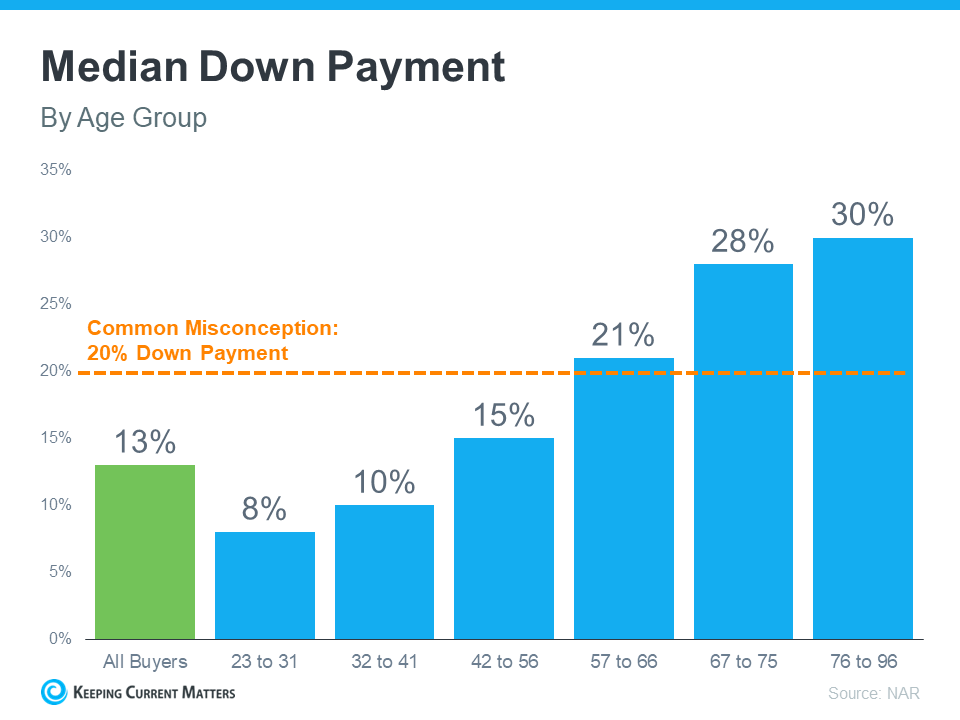
Data from NAR shows the median down payment hasn’t been over 20% since 2005. The graph below breaks down the median down payment by age group for recent homebuyers according to the 2022 Home Buyers and Sellers Generational Trends Report from NAR (see graph below):

Three Tips for First-Time Homebuyers | Keeping Current Matters

Based on the data above, the median down payment for all homebuyers is only 13%. That’s well below the common misconception of 20%, and it’s even lower for younger buyers. This could mean you may not need to save as much for a down payment as you initially thought.

There are also down payment assistance programs available for many buyers. Not to mention, some loan options require as little as 3.5% (or even 0%) down for buyers who qualify. While there are advantages to putting 20% down, especially in today’s competitive market, know that you have options.  To get more information on how much you may need to save and the help that’s available, talk with a professional.

3. Work with a Trusted Real Estate Advisor Throughout the Process

Finally, no matter where you’re at in your homeownership journey, the best way to make sure you’re set up for success is to work with a real estate professional.

If you’re just starting out, they can help you with the initial steps, like educating you on the process and connecting you with a trusted lender to get pre-approved. Once you’re ready to begin your search, a real estate professional can help you understand your local market and search for available homes. And when it’s time to make an offer, they’ll be an expert advisor and negotiator to help your offer stand out above the rest.

Bottom Line

Knowledge is key to succeeding on your homebuying journey. Knowing market trends, what you need for a down payment, and what options you have as a buyer today can give you the confidence you need to buy a home. Connect with a local real estate professional so you have an expert on your side who can help you navigate the homebuying process.

Wednesday, May 4, 2022

Why This Housing Market Is Not a Bubble Ready To Pop


Homeownership has become a major element in achieving the American Dream. A recent report from the National Association of Realtors (NAR) finds that over 86% of buyers agree homeownership is still the American Dream.

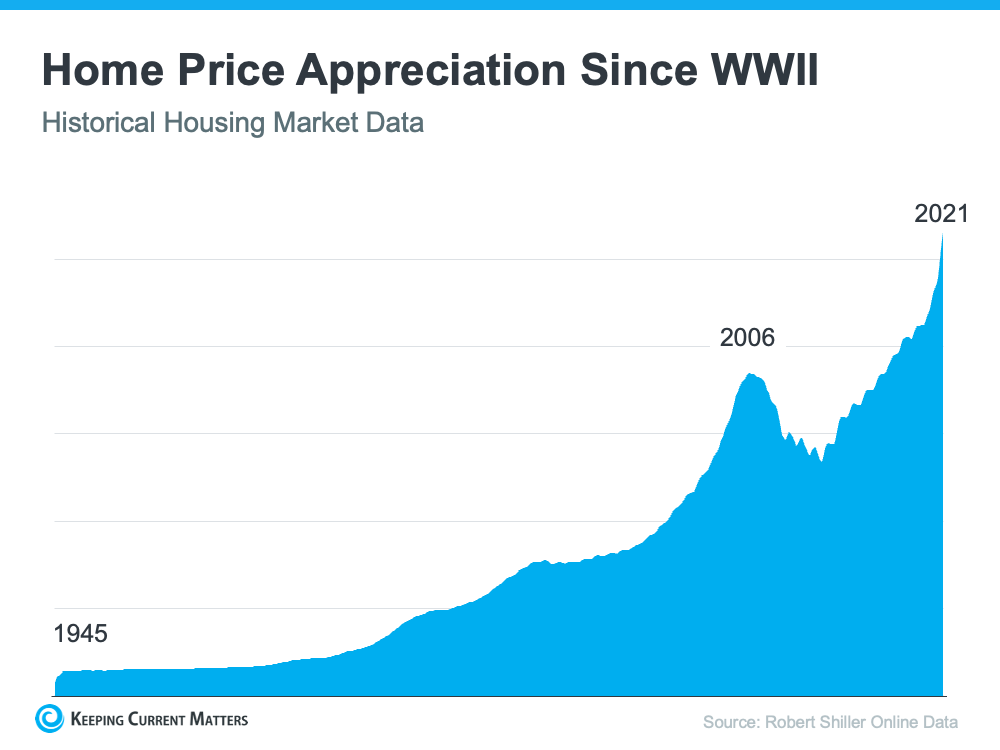
Prior to the 1950s, less than half of the country owned their own home. However, after World War II, many returning veterans used the benefits afforded by the GI Bill to purchase a home. Since then, the percentage of homeowners throughout the country has increased to the current rate of 65.5%. That strong desire for homeownership has kept home values appreciating ever since. The graph below tracks home price appreciation since the end of World War II:

Why This Housing Market Is Not a Bubble Ready To Pop | Keeping Current Matters

The graph shows the only time home values dropped significantly was during the housing boom and bust of 2006-2008. If you look at how prices spiked prior to 2006, it looks a bit like the current spike in prices over the past two years. That may lead some people to be concerned we’re about to see a similar fall in home values as we did when the bubble burst. To help alleviate those worries, let’s look at what happened last time and what’s happening today.

What Caused the Housing Crash 15 Years Ago?

Back in 2006, foreclosures flooded the market. That drove down home values dramatically. The two main reasons for the flood of foreclosures were:

  1. Many purchasers were not truly qualified for the mortgage they obtained, which led to more homes turning into foreclosures.
  2. A number of homeowners cashed in the equity on their homes. When prices dropped, they found themselves in an underwater situation (where the home was worth less than the mortgage on the house). Many of these homeowners walked away from their homes, leading to more foreclosures. This lowered neighboring home values even more.

This cycle continued for years.

Why Today’s Real Estate Market Is Different

Here are two reasons today’s market is nothing like the one we experienced 15 years ago.

1. Today, Demand for Homeownership Is Real (Not Artificially Generated)

Running up to 2006, banks were creating artificial demand by lowering lending standards and making it easy for just about anyone to qualify for a home loan or refinance their current home. Today, purchasers and those refinancing a home face much higher standards from mortgage companies.

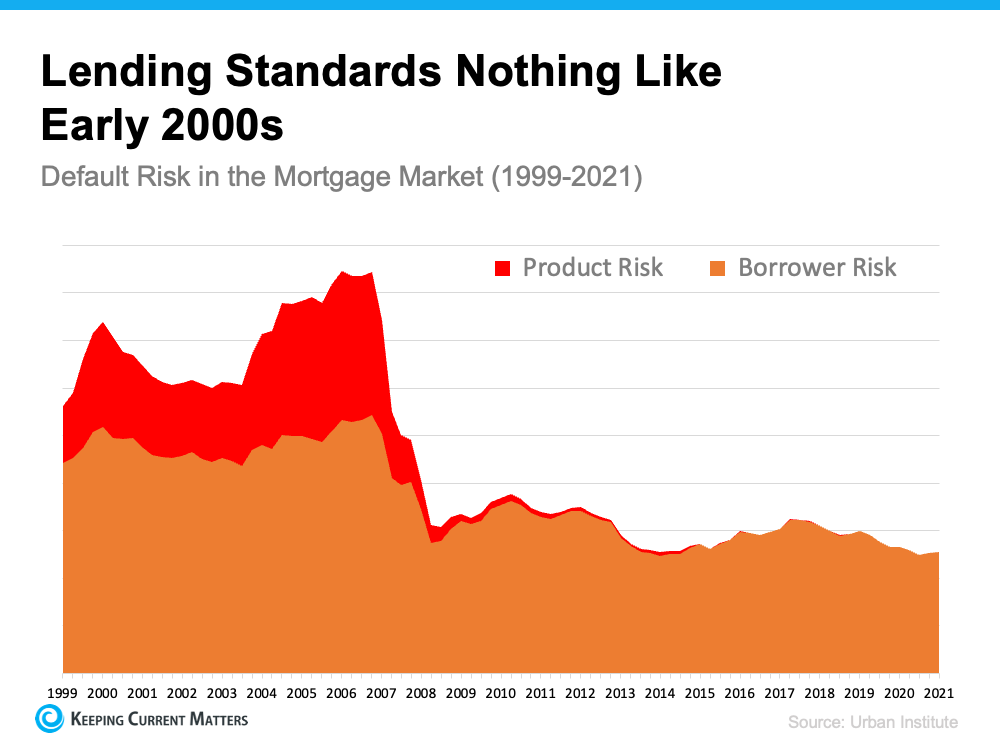
Data from the Urban Institute shows the amount of risk banks were willing to take on then as compared to now.

Why This Housing Market Is Not a Bubble Ready To Pop | Keeping Current Matters

There’s always risk when a bank loans money. However, leading up to the housing crash 15 years ago, lending institutions took on much greater risks in both the person and the mortgage product offered. That led to mass defaults, foreclosures, and falling prices.

Today, the demand for homeownership is real. It’s generated by a re-evaluation of the importance of home due to a worldwide pandemic. Additionally, lending standards are much stricter in the current lending environment. Purchasers can afford the mortgage they’re taking on, so there’s little concern about possible defaults.

And if you’re worried about the number of people still in forbearance, you should know there’s no risk of that causing an upheaval in the housing market today. There won’t be a flood of foreclosures.

2. People Are Not Using Their Homes as ATMs Like They Did in the Early 2000s

As mentioned above, when prices were rapidly escalating in the early 2000s, many thought it would never end. They started to borrow against the equity in their homes to finance new cars, boats, and vacations. When prices started to fall, many of these homeowners were underwater, leading some to abandon their homes. This increased the number of foreclosures.

Homeowners didn’t forget the lessons of the crash as prices skyrocketed over the last few years. Black Knight reports that tappable equity (the amount of equity available for homeowners to access before hitting a maximum 80% loan-to-value ratio, or LTV) has more than doubled compared to 2006 ($4.6 trillion to $9.9 trillion).

The latest Homeowner Equity Insights report from CoreLogic reveals that the average homeowner gained $55,300 in home equity over the past year alone. Odeta Kushi, Deputy Chief Economist at First Americanreports:

“Homeowners in Q4 2021 had an average of $307,000 in equity – a historic high.”

ATTOM Data Services also reveals that 41.9% of all mortgaged homes have at least 50% equity. These homeowners will not face an underwater situation even if prices dip slightly. Today, homeowners are much more cautious.

Bottom Line

The major reason for the housing crash 15 years ago was a tsunami of foreclosures. With much stricter mortgage standards and a historic level of homeowner equity, the fear of massive foreclosures impacting today’s market is not realistic.

Monday, May 2, 2022

Is It Time To Buy a Smaller Home?


Life events can have a major impact on what you need from your home, and retirement is one of the biggest changes many of us face. This period of your life can mean doing more of the things you enjoy, like traveling, visiting with loved ones, or taking on new hobbies. But what does that mean for your home?

If you’re looking for ways to focus more on the important things in your life, the answer could be downsizing. A recent article from The Balance talks about why it could be a great option, saying:

“There are many reasons to buy a smaller home—or to downsize from your present home—but sometimes, the idea that “less is more” is what propels homeowners to buy a smaller home.”

You Can Find the Right Home for Your Needs

The 2022 Home Buyers and Sellers Generational Trends from the National Association of Realtors (NAR) provides more information on why people of retirement age choose to move. It shows the need for a smaller home, the desire to be closer to loved ones, and retirement itself as three of the top reasons homebuyers over the age of 55 make a move.

If you’re in this group, changing priorities may be top of mind for you today, and that could be driving your decision to downsize. After all, as your lifestyle changes, what you need in your home likely changes, too.

Plus, as The Balance notes, moving into a smaller home can open your schedule up even more. When you downsize, you can spend less time maintaining your home and more time with the people you love or exploring newfound hobbies. That’s a recipe that can lead to less stress and increased happiness.

Your Equity Can Make a Big Impact When You Downsize

Home equity plays a big role when you sell your existing house and move. It could be a great tool to use to help you downsize. According to the latest Homeowner Equity Insights report from CoreLogic, the average homeowner gained about $55,300 in equity over the past 12 months. Dr. Frank Nothaft, Chief Economist at CoreLogicexplains how important price appreciation and equity gains are for existing homeowners:

Home prices rose 18% during 2021 in the CoreLogic Home Price Index, the largest annual gain recorded in its 45-year history, generating a big increase in home equity wealth, . . . For low- and moderate-income homeowners, home equity has historically been a major source of wealth.”

As home prices rise, your equity does, too. So, you may have more equity than you realize because of the record levels of home price appreciation over the past year. Those equity gains could allow you to make a larger down payment on your next home. And putting more money down can lead to a smaller monthly mortgage payment, which can give you greater financial freedom. It can also be a significant help in navigating today’s competitive housing market, since offering more money up front could help your offer stand out.

Whatever your homeownership goals are, a trusted real estate advisor can help you to find the best option for your situation. They’ll help you sell your current home and guide you as you buy your next one and enter this new phase of life.

Bottom Line

If you’ve recently retired or plan to soon, your needs are likely changing. That means now may be the perfect time to downsize. Talk to a local real estate professional to get a better sense of how to find a home that matches your situation.