Thursday, July 16, 2020

Mortgage Rates Hit Record Lows for Three Consecutive Weeks

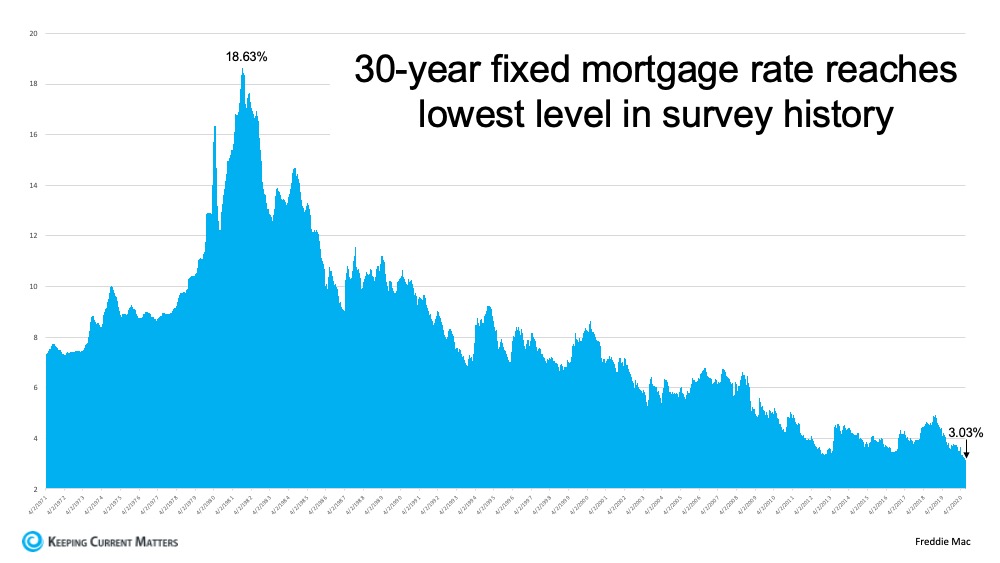
Over the past several weeks, Freddie Mac has reported the average 30-year fixed mortgage rate dropping to record lows, all the way down to 3.03%. Last week’s reported rate reached the lowest point in the history of the survey, which dates back to 1971 (See graph below):Mortgage Rates Hit Record Lows for Three Consecutive Weeks | Keeping Current Matters
What does this mean for buyers?

This is huge for homebuyers. Those currently taking advantage of the increasing affordability that comes with historically low interest rates are winning big. According to Sam Khater, Chief Economist at Freddie Mac:
“The summer is heating up as record low mortgage rates continue to spur homebuyer demand.”
In addition, move.com notes:
“Summer home buying season is off to a roaring start. As buyers flooded into the market, realtor.com® monthly traffic hit an all-time high of 86 million unique users in June 2020, breaking May’s record of 85 million unique users. Realtor.com® daily traffic also hit its highest level ever of 7 million unique users on June 25, signaling that despite the global pandemic buyers are ready to make a purchase.”
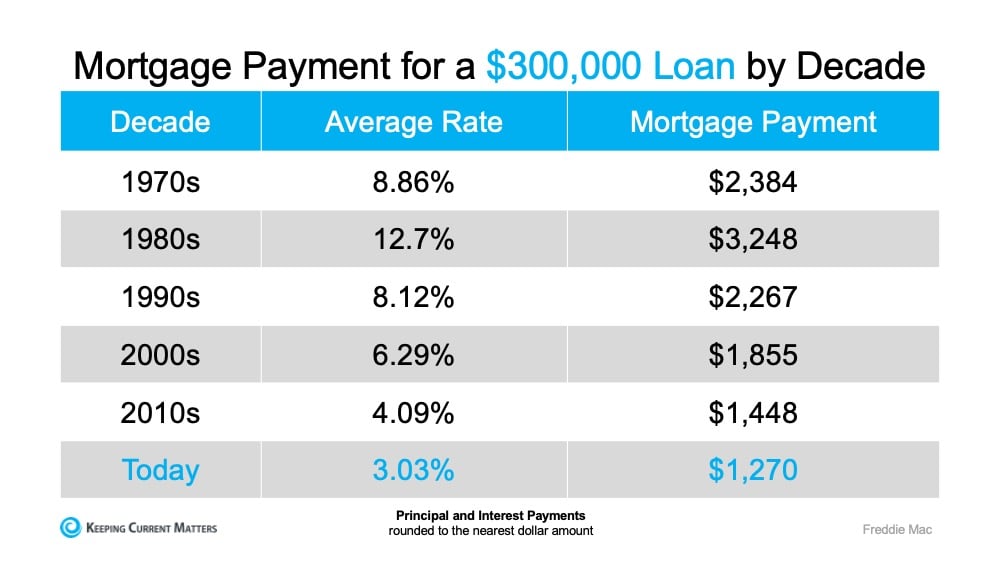
Clearly, buyers are capitalizing on today’s low rates. As shown in the chart below, the average monthly mortgage payment decreases significantly when rates are as low as they are today.Mortgage Rates Hit Record Lows for Three Consecutive Weeks | Keeping Current MattersA lower monthly payment means savings that can add up significantly over the life of a home loan. It also means that qualified buyers may be able to purchase more home for their money. Maybe that’s a bigger home than what they’d be able to afford at a higher rate, an increasingly desirable option considering the amount of time families are now spending at home given today’s health crisis.
Bottom Line

If you’re in a position to buy a home this year, it’s a great time to reach out to a local real estate professional to initiate the process while mortgage rates are historically low.

Wednesday, July 15, 2020

Real Estate Will Lead the Economic Recovery

With more U.S. states reopening for business this summer, and as people start to return to work, we can expect the economy to begin improving. Most expert forecasts indicate this economic recovery will start to happen in the second half of this year. As we get back to work and the financial landscape of the country begins to turn around, many experts also agree that real estate has the potential to lead the way in the recovery process.
According to Ivy Zelman of Zelman & Associates:
 “Housing will fare better than expected during this severe downturn.”
In addition, CNBC notes:
“Mortgage demand from home buyers shows unexpectedly strong and quick recovery…The quick recovery has surprised most forecasters.”
Robert Dietz, Chief Economist and Senior Vice President for Economics and Housing Policy of the National Association of Home Builders (NAHB) says:
“Overall, the data lend evidence to the NAHB forecast that housing will be a leading sector in an eventual economic recovery.”
One of the big reasons why housing has the potential to be such a driving force is the significant impact it has on the local economy. This impact is particularly strong when a newly constructed home is built and sold. According to a recent study by the National Association of Realtors (NAR), the average new home sale has a total economic impact of $88,416. As outlined in the graphic below, this is a combination of income generated from real estate industries, expenditures, and new home construction.Real Estate Will Lead the Economic Recovery | Keeping Current MattersWith so many unknowns today, especially in the wake of a worldwide pandemic, one known factor is the bright spark the housing market can play in local and national recovery. Buying and selling a home goes well beyond personal growth and satisfaction – it supports our economy as a whole

Tuesday, July 14, 2020

Buyers: Are You Ready for a Bidding War?

With businesses reopening throughout the country and some experts indicating early signs of a much-anticipated economic recovery, more homebuyers are actively entering the housing market this summer. Today, housing is truly driving the U.S. economy forward. With so many buyers looking for homes to purchase and so few houses for sale right now, there’s a disconnect between supply and demand. This imbalance is pushing home prices upward while driving more bidding wars and multiple-offer scenarios. Danielle Hale, Chief Economist at realtor.com explains:
“People are surprised that prices are rising, not falling, because in the last recession home prices fell, the difference this time is the severe shortage of homes for sale…We are seeing bigger price increases with [a limited] number of homes…That is likely to lead to more competition and potentially multiple offers and bidding wars.”
According to the recent Realtors Confidence Index (RCI) survey conducted by the National Association of Realtors (NAR), this trend is growing:
“On average, there were about three offers on a home that closed in May, up from just about two in April 2020 and in May 2019 (2.3 offers).”
HousingWire also indicates:
“42% of homeowners who made a purchase during the January to May time period ended up in a bidding war, demonstrating the strong demand for homes amid low inventory.”
With more people returning to work we’ll continue to see the number of interested buyers increase. So, if you’re among the many people looking for a home to buy this summer, it’s important to ensure you have the right guidance from the start. This way, you make sure your offer stands out from the crowd when it really counts. Here are two tips to follow.

1. Hire a Trusted Local Expert

A trusted local real estate professional matters more than ever right now, as noted in a recent survey shared by NAR. In fact, according to respondents, 54% of buyers and 62% of sellers indicated that “Particularly during the pandemic, a real estate agent’s guidance is especially valued.”
We’re not in a normal market. We are in one of the greatest health crises our nation has ever seen. The pandemic has had a dramatic impact on the journey consumers must take to purchase a home. To successfully navigate the landscape today, you need a true expert on your side.

2. Get Pre-Approved for a Mortgage

When there are more buyers than sellers on the market, the process to find a home becomes much more challenging. One way to show you’re serious about buying a home is to work with a lender to get pre-approved for a mortgage before starting your search. With a pre-approval letter, sellers will see your true desire to buy this year, potentially helping your offer rise to the top.

Bottom Line

If this is the year you’re ready to buy, contact a local real estate professional to get the process started so you can make sure your offer is a strong one when the competition heats up.

Monday, July 13, 2020

The pandemic has caused consumers to re-examine the components that make up the “perfect home.” Many families are no longer comfortable with the locations and layouts of their existing homes. The allure of city life (more congested) seems to be giving way to either suburban or rural life (less congested). The fascination with an open floor plan seems to be fading as people are finding a need for more privacy while working from home.
Recently, news.com released a report that revealed how buyers’ views of listings are leaning heavily to more suburban and rural properties. Here are the year-over-year percentage increases in views per property type:
  • Urban – 7%
  • Suburban – 13%
  • Rural – 16%
In the report, Javier Vivas, Director of Economic Research for realtor.com, gives these numbers some context:
“This migration to the suburbs is not a new trend, but it has become more pronounced. After several months of shelter-in-place orders, the desire to have more space and the potential for more people to work remotely are likely two of the factors contributing to the popularity of the burbs.”
Realtor Magazine also just reported that the desire to move is strongest in our city markets:
“Nearly 30% of respondents living in a high-density urban area say that the pandemic is prompting them to want to move by the end of the year…This is more than double the rate of those living in rural parts of the country, where residents are much more likely to stay put rather than to relocate.”

New Construction Also Seeing a Surge in Views

Since the pandemic has altered how consumers think about floor plans, builders are anticipating how future homes will change. In a recent press release by Zillow, it was explained that:
  • Builders believe as people spend more time at home during the pandemic, buyers are realizing which features of their homes are working and not working.
  • Homebuilders predict open-concept floor plans will be a thing of the past, as people now value more walls, doors, and overall privacy.
  • New construction, which offers the chance to personalize home features, saw its listing page views grow by 73% over last May.

The Virus is Even Impacting the Luxury Second-Home Market

It appears that COVID-19 is impacting the luxury market too. In an article released last week titled, Luxury Buyers Return to Market in Force, Danielle Hale, Chief Economist for realtor.com reported:
“Stay at home orders and social distancing have put a new value on the extra space. We’re seeing this in the luxury market as well, which could mean there is renewed interest from high-end buyers to find a second-home that is within driving distance from their primary residence.
Much like the suburbs are gaining favor with home shoppers, second home markets are seeing increased interest from luxury buyers…Views of luxury properties accelerated 56% in The Hamptons, 28% in Palm Springs and 24% in Greenwich compared to January trends.”

Bottom Line

It appears that a percentage of people are preparing to leave many American cities. Some of these moves will be permanent, while others will be temporary (such as a getaway to a second home). In either case, many consumers are on the move. Real estate professionals are ready and willing to help in any way they can.

Friday, July 10, 2020

Everyone is ready to buy a home at different times in their lives, and despite the health crisis, today is no exception. Understanding how affordability works and the main market factors that impact it may help those who are ready to buy a home narrow down their optimal window of time to make a purchase.
There are three main factors that go into determining how affordable homes are for buyers:
  1. Mortgage Rates
  2. Mortgage Payments as a Percentage of Income
  3. Home Prices
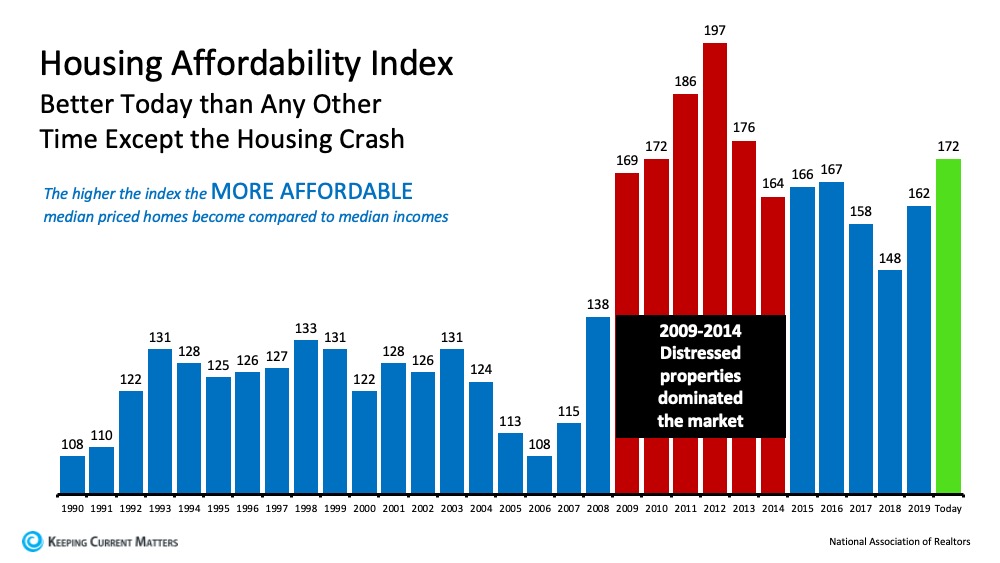
The National Association of Realtors (NAR), produces a Housing Affordability Index, which takes these three factors into account and determines an overall affordability score for housing. According to NAR, the index:
“…measures whether or not a typical family earns enough income to qualify for a mortgage loan on a typical home at the national and regional levels based on the most recent price and income data.”
Their methodology states:
“To interpret the indices, a value of 100 means that a family with the median income has exactly enough income to qualify for a mortgage on a median-priced home. An index above 100 signifies that family earning the median income has more than enough income to qualify for a mortgage loan on a median-priced home, assuming a 20 percent down payment.”
So, the higher the index, the more affordable it is to purchase a home. Here’s a graph of the index going back to 1990:Taking Advantage of Homebuying Affordability in Today’s Market | Keeping Current MattersThe green bar represents today’s affordability. We can see that homes are more affordable now than they have been at any point since the housing crash when distressed properties (foreclosures and short sales) dominated the market. Those properties were sold at large discounts not seen before in the housing market.

Why are homes so affordable today?

Although there are three factors that drive the overall equation, the one that’s playing the largest part in today’s homebuying affordability is historically low mortgage rates. Based on this primary factor, we can see that it is more affordable to buy a home today than at any time in the last seven years.
If you’re considering purchasing your first home or moving up to the one you’ve always hoped for, it’s important to understand how affordability plays into the overall cost of your home. With that in mind, buying while mortgage rates are as low as they are now may save you quite a bit of money over the life of your home loan.

Bottom Line

If you feel ready to buy, purchasing a home this season may save you significantly over time based on historic affordability trends. Reach out to a local real estate professional today to determine if now is the right time for you to make your move.

Wednesday, July 8, 2020

n a recent survey of home sellers by Qualtrics, 87% of respondents said they were concerned their home won’t sell because of the pandemic and resulting economic recession. Of the respondents, 51% said they are “seriously worried.” That concern seems reasonable considering the current condition of the economy. The data, however, is showing that home purchasers are still very active despite the disruptions American families have experienced this year.
The latest Existing Home Sales Report published by the National Association of Realtors (NAR) revealed that 340,000 single-family homes sold in this country last month. NAR’s most recent Pending Sales Report (homes going into contract) surpassed last month’s number by over 44%, which far exceeded analysts’ projections of 15%. ShowingTime reported that appointments to see homes (both virtually and in-person) have increased in every region of the country and are up 21.4% nationwide over the same time last year.
While buyer activity is surging, the number of listings has fallen to an all-time low. Zelman Associates, in their latest residential real estate report, revealed that housing inventory as a percentage of households has fallen to 1.2%, which is half of the long-term average and lower than any other time in our history.

Bidding Wars Heating Up Again

With buyer demand growing and the supply of available homes shrinking, purchasers are again finding themselves needing to outbid other buyers. NAR, in a recent blog post, revealed:
“On average, there were about three offers on a home that closed in May, up from just about two in April 2020 and in May 2019 (2.3 offers).”
Bidding wars guarantee houses sell quickly at a price near or even slightly over the listing price.

Bottom Line

If you’re thinking of selling, don’t be concerned about putting your house on the market right now. There’s no better time to sell an item than when demand for it is high and supply is low. It is exactly at that time when you will negotiate your best possible deal.