Tuesday, June 4, 2019

New Research Shows Housing Is Affordable For First-Time Buyers | Keeping Current MattersHome prices have been on the rise for the last seven years, leading many housing market analysts to conclude that first-time homebuyers are being shut out of the market due to affordability concerns.
The National Association of Realtors (NAR) reports on the percentage of First-Time Home Buyers (FTHB) on a monthly and yearly basis. Their latest report shows that FTHB’s made up 33% of buyers in March, which matches their reported share in 2018.
NAR uses survey data from their members to come up with this statistic, so their results do not include every transaction completed. Rather, they only show the transactions reported by members who complete the survey.
The other entity that reports on FTHB share is the American Enterprise Institute (AEI). The AEI uses data from mortgage applications that define an FTHB as “any borrower who did not have a mortgage for the preceding three years.”
This means the AEI measurement also includes former homeowners who transitioned out of a home they previously owned and re-entered the market after at least 3 years. The latest FTHB share data from AEI shows that first-time buyers made up 57.5% of all mortgages in August 2018. NAR’s data shows a 31% share for the same time period.
New research from the New York Federal Reserve shows that these traditional reports on FTHB share have been unable to give an accurate depiction of this group’s involvement in the market.
The NY Fed was able to take consumer credit data and identify when a mortgage payment entered a consumer’s credit report to determine when a first-time home purchase was made. Using this data, they were able to show that AEI’s reported FTHB share was consistently 10% higher. The NAR reports were right on par with their findings until 2010, when NAR’s share dropped to the 11% gap seen today.

So, what does this all mean?

First-time home buyers have not disappeared from the market as many analysts had believed. Buying a home is very much a part of the American Dream for younger generations, just like it had been for their parents and grandparents.
This also means that rising prices have not scared buyers away from the market. Many first-time buyers are making sacrifices to save their down payment and make their dream a reality.

Bottom Line

If you are one of the many renters who is scrolling through listings on your phone every night dreaming of buying your own home, there are opportunities in every market to make that dream a reality!

Monday, June 3, 2019

Let me help you find the magic in your new home! #wendyj4homes #realestate #whittier #realtor #glenbrook #realestateagent #socal #magic #newhome


Top Days to List Your Home for Sale [INFOGRAPHIC]

Top Days to List Your Home for Sale [INFOGRAPHIC] | Keeping Current Matters

Some Highlights:

  • ATTOM Data Solutions conducted an analysis of more than 29 million single family home and condo sales over the past eight years to determine the top days to list your home for sale.
  • The top five days to list your home brought in a 10% premium over market value and are all in either May or June!
  • “Families start their home search when they know their kids will be out of school and when the weather is ideal for home viewing and moving, giving home sellers an upper hand in price negotiations.”
  • There is still time to list your home before these dates pass you by!

Saturday, June 1, 2019

June! #wendyj4homes #realestate #whittier #realtor #glenbrook #realestateagent #socal #june


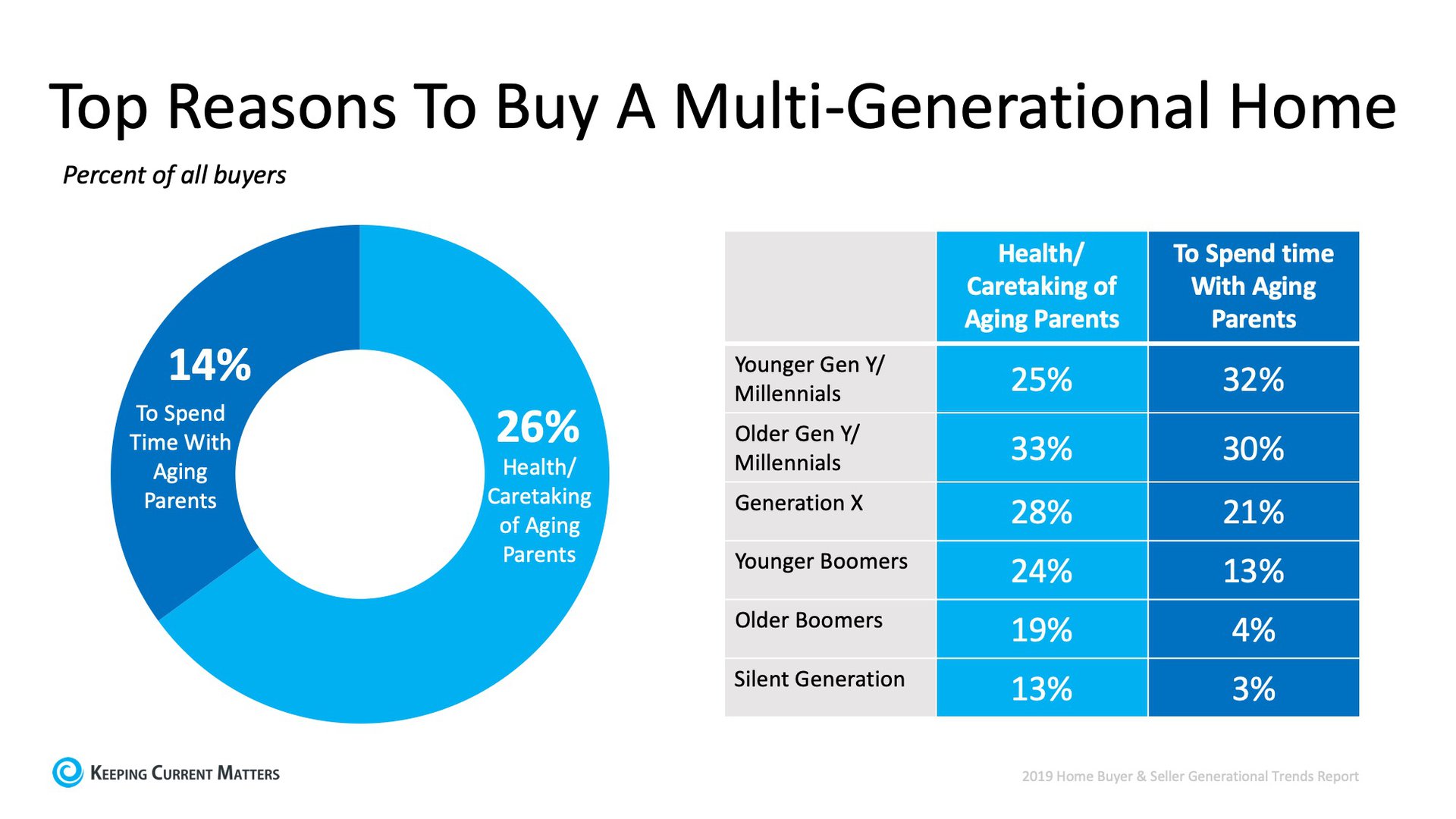
Multigenerational Homes Are on the Rise | Keeping Current MattersAs loved ones start to get older, we start to wonder: how long will they be able to live alone?  Will they need someone there to help them with daily life? There’s a reason to ask those questions now more than ever, as the average life expectancy in the U.S. is 78 years old!  As a result, 41% of Americans in the market are searching for a home that can accommodate a multigenerational family.
The graph below shows the number of people by generation that purchased a multigenerational home because they will either be taking care of an aging parent or they just want to spend time together.Multigenerational Homes Are on the Rise | Keeping Current Matters
Of those buyers, 26% indicated they will be taking care of an aging parent, and 14% said they want to spend time with an aging parent. These numbers do not come as a surprise. According to Pew Research Center, 64 million Americans (20% of the population) lived in a multigenerational household in 2016 (Last numbers available).Multigenerational Homes Are on the Rise | Keeping Current MattersAn increasing number of studies affirm the benefits of being part of a multigenerational household. These benefits aren’t just for the grandchildren, but for the grandparents as well. According to these two resources:

The University of Oxford

“Children who are close to their grandparents have fewer emotional and behavioral problems and are better able to cope with traumatic life events, like a divorce or bullying at school”.

Boston College

“Researchers found that emotionally close ties between grandparents and adult grandchildren reduced depressive symptoms in both groups”.
This research gives helpful insight into why 41% of Americans are in the market to buy a multigenerational home.

Bottom Line

If you have a home that could accommodate a multigenerational family and are thinking about selling, now is the perfect time to put it on the market! The number of buyers looking for this type of home will only continue to increase.
Why Access Is One of the Most Important Factors in Getting Your House Sold!So, you’ve decided to sell your house. You’ve hired a real estate professional to help you through the entire process, and they have asked you what level of access you want to provide to your potential buyers.
There are four elements to a quality listing. At the top of the list is access, followed by conditionfinancing, and price. There are many levels of access that you can provide to your agent so that he or she can show your home.

Here are five levels of access that you can give to buyers, along with a brief description:

  1. Lockbox on the Door – this allows buyers the ability to see the home as soon as they are aware of the listing, or at their convenience.
  2. Providing a Key to the Home – although the buyer’s agent may need to stop by an office to pick up the key, there is little delay in being able to show the home.
  3. Open Access with a Phone Call – the seller allows showings with just a phone call’s notice.
  4. By Appointment Only (example: 48-Hour Notice) – Many buyers who are relocating for a new career or promotion start working in that area prior to purchasing their home. They often like to take advantage of free time during business hours (such as their lunch break) to view potential homes. Because of this, they may not be able to plan their availability far in advance or may be unable to wait 48 hours to see the house.
  5. Limited Access (example: the home is only available on Mondays or Tuesdays at 2 pm or for only a couple of hours a day) – This is the most difficult way to be able to show your house to potential buyers.
With more competition coming to the market this spring, access can make or break your ability to get the price you are looking for, or even sell your house at all.