
Tuesday, July 3, 2018

Saturday, June 30, 2018
Top 5 Reasons You Shouldn't FSBO

In today’s market, with home prices rising and a lack of inventory, some homeowners may consider trying to sell their home on their own, known in the industry as a For Sale by Owner (FSBO). There are several reasons why this might not be a good idea for the vast majority of sellers.
Here are the top five reasons:
1. Exposure to Prospective Buyers
According to the 2017 Profile of Home Buyers and Sellers from NAR, last year 95% of buyers search online for a home. That is in comparison to only 15% looking at print newspaper ads. Most real estate agents have an internet strategy to promote the sale of your home. Do you?
2. Results Come from the Internet
Where did buyers find the home they actually purchased?
- 49% on the internet
- 31% from a Real Estate Agent
- 7% from a yard sign
- 1% from newspapers
The days of selling your house by just putting up a sign and putting it in the paper are long gone. Having a strong internet strategy is crucial.
3. There Are Too Many People to Negotiate With
Here is a list of some of the people with whom you must be prepared to negotiate if you decide to For Sale by Owner:
- The buyer who wants the best deal possible
- The buyer’s agent who solely represents the best interest of the buyer
- The buyer’s attorney (in some parts of the country)
- The home inspection companies, which work for the buyer and will almost always find some problems with the house
- The appraiser if there is a question of value
4. FSBOing Has Become More And More Difficult
The paperwork involved in selling and buying a home has increased dramatically as industry disclosures and regulations have become mandatory. This is one of the reasons that the percentage of people FSBOing has dropped from 19% to 8% over the last 20+ years.
5. You Net More Money When Using an Agent
Many homeowners believe that they will save the real estate commission by selling on their own. Realize that the main reason buyers look at FSBOs is because they also believe they can save the real estate agent’s commission. The seller and buyer can’t both save the commission.
A study by Collateral Analytics revealed that FSBOs don’t actually save anything, and in some cases, may be costing themselves more, by not listing with an agent. One of the main reasons for the price difference at the time of sale is:
“Properties listed with a broker that is a member of the local MLS will be listed online with all other participating broker websites, marketing the home to a much larger buyer population. And those MLS properties generally offer compensation to agents who represent buyers, incentivizing them to show and sell the property and again potentially enlarging the buyer pool.”
If more buyers see a home, the greater the chances are that there could be a bidding war for the property. The study showed that the difference in price between comparable homes of size and location is currently at an average of 6% this year.
Why would you choose to list on your own and manage the entire transaction when you can hire an agent and not have to pay anything more?
Bottom Line
Before you decide to take on the challenges of selling your house on your own, sit with a real estate professional in your marketplace and see what they have to offer.
Wednesday, June 27, 2018
Top 4 Home Renovations for Max ROI [INFOGRAPHIC]
![Top 4 Home Renovations for Max ROI [INFOGRAPHIC] | Keeping Current Matters](https://files.keepingcurrentmatters.com/wp-content/uploads/2018/06/04152432/20180615-Renovations-KCM.jpg)
Some Highlights:
- Whether you are selling your home, just purchased your first home or are a homeowner planning to stay put for a while, there is value in knowing which home improvement projects will net you the most Return On Investment (ROI).
- Minor bathroom renovations can go a long way toward improving the quality of your everyday life and/or impressing potential buyers.
- Upgrading your landscaping or curb appeal helps get buyers in the door. These upgrades rank as the 2nd and 4th renovations for returns on investment.
Monday, June 25, 2018
How A Lack of Inventory Impacts the Housing Market

The housing crisis is finally in the rear-view mirror as the real estate market moves down the road to a complete recovery. Home values are up, home sales are up, and distressed sales (foreclosures and short sales) have fallen to their lowest points in years. The market will continue to strengthen in 2018.
However, there is one thing that may cause the industry to tap the brakes: a lack of housing inventory. Buyer demand naturally increases during the summer months, but supply is not keeping up.
Here are the thoughts of a few industry experts on the subject:
Lawrence Yun, Chief Economist at National Association of Realtors
“The worsening inventory crunch through the first three months of the year inflicted even more upward pressure on home prices in a majority of markets. Following the same trend over the last couple of years, a strengthening job market and income gains are not being met by meaningful sales gains because of unrelenting supply and affordability headwinds.”
Sam Khater, Chief Economist for Freddie Mac
“As we head into late spring, the demand for purchase credit remains rock solid, which should set us up for another robust summer home sales season. While this year’s high rates – up 50 basic points from a year ago – have put pressure on the budgets of some home shoppers, weak inventory levels are what’s keeping the housing market from a stronger sales pace.”
Javier Vivas, Director of Economic Research for Realtor.com
“The dynamics of increased competition and buyer frustration are unlikely to change…In fact, the direction of the trend is pointing to a growing mismatch between the pool of prospective buyers and existing inventory.”
Bottom Line
If you are thinking of selling, now may be the time. Demand for your house will be strong at a time when there is very little competition. That could lead to a quick sale for a really good price.
Friday, June 22, 2018
Days on The Market Drops to New Low in April

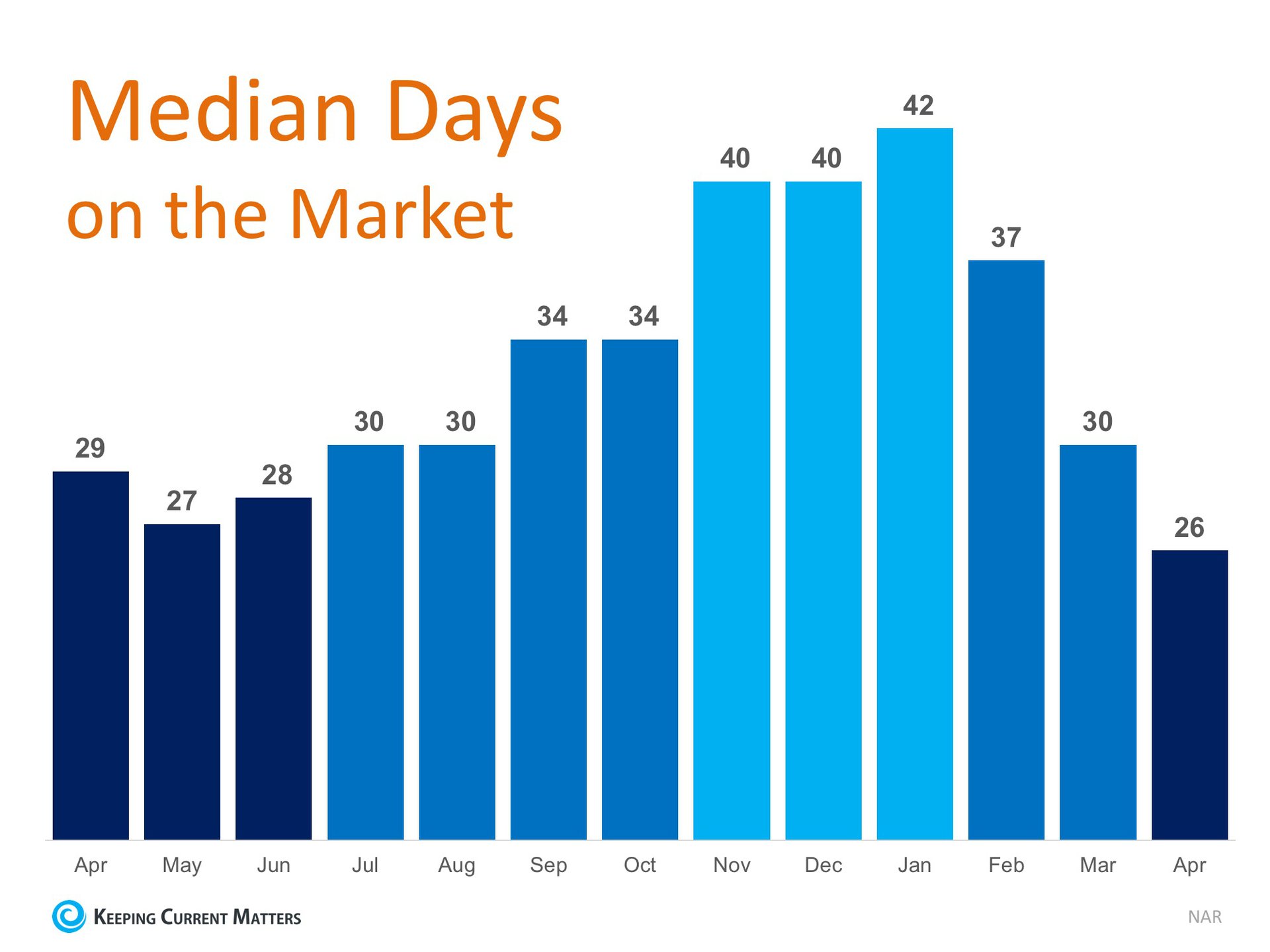
According to recently released data from the National Association of Realtors (NAR), the median number of days that a home spent on the market hit a new low of 26 days in April, as 57% of homes were on the market for under a month.
NAR’s Chief Economist, Lawrence Yun, had this to say,
“What is available for sale is going under contract at a rapid pace. Since NAR began tracking this data in May 2011, the median days a listing was on the market was at an all-time low in April, and the share of homes sold in less than a month was at an all-time high.”
Strong buyer demand, a good economy, and a low inventory of new and existing homes for sale created the perfect storm to accelerate the time between listing and signing a contract.
The chart below shows the median days on the market from April 2017 to April 2018:
Bottom Line
If you are a homeowner who is debating whether or not to list your home for sale, know that national market conditions are primed for a quick turnaround! Meet with a local real estate agent who can explain to you exactly what’s going on in your area, today!
Wednesday, June 20, 2018
Parents Say Kids' Opinions Matter Big When Buying a Home

A recent survey conducted by Harris Poll and released by SunTrust Mortgage found that “55% of homeowners with a child under the age of 18 at the time when they purchased their home said that the opinion of their offspring played a major role in their home buying decision.”
When the results were broken down by the parent’s age, millennials (those 18-36) led the way with 74% of homeowners saying that their child’s opinion was a factor in choosing which home to buy. Eighty-three percent of renters believe that their child’s opinion would be a deciding factor when looking to purchase a home.
So what features in a home are most important to kids?
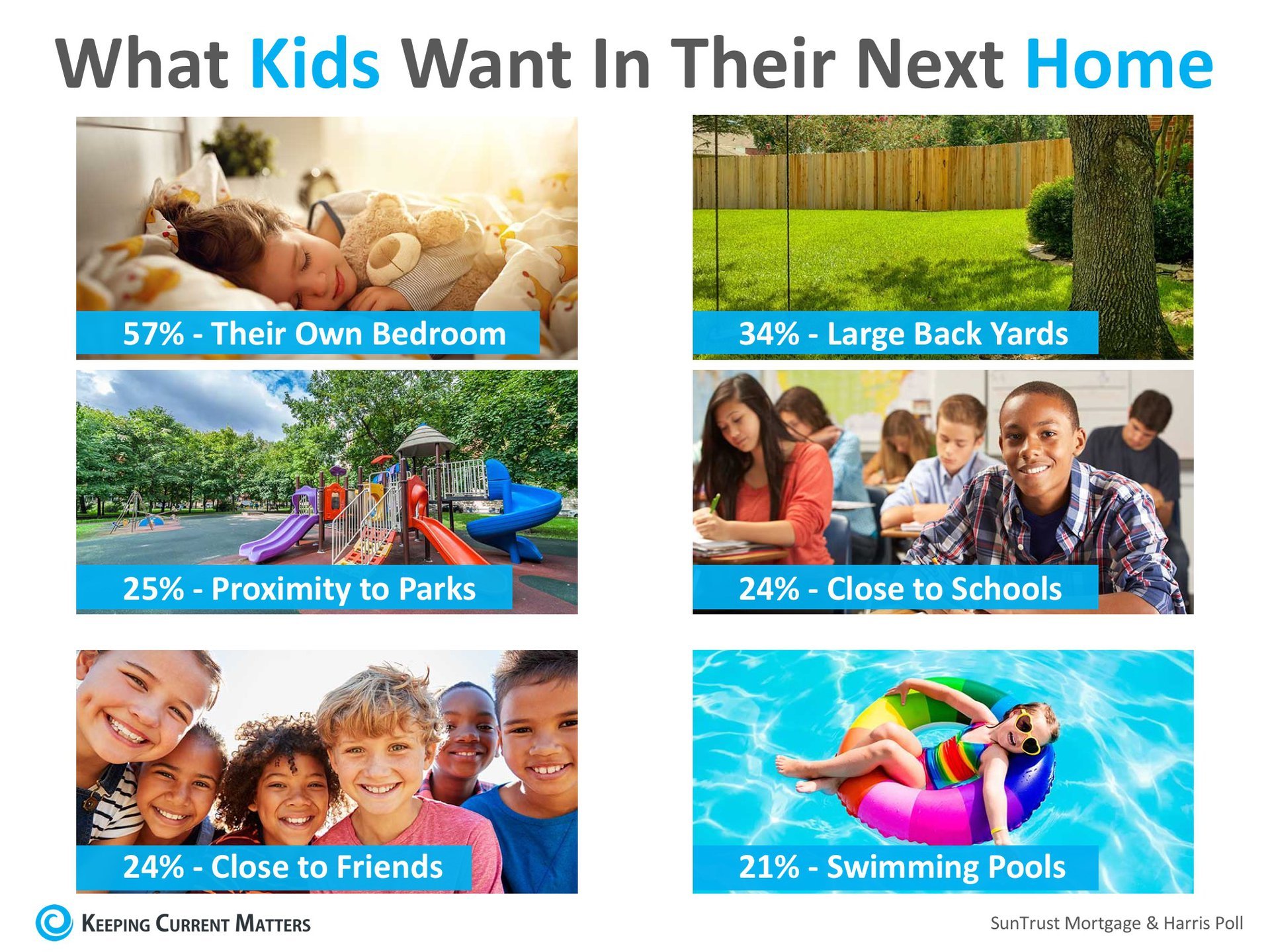
Coming in at 57%, it should come as no surprise that gaining their own bedrooms was the top most-desirable feature of any home for kids, followed by a large back yard to play in at 34%.
Todd Chamberlain, Head of Mortgage Banking at SunTrust explained the reasoning behind the survey,
“As a parent of two kids, I know from experience that including children in the home buying process is not only fun for the whole family, but also educational for our homebuyers of tomorrow.”
Bottom Line
If you’re thinking about selling your home this year, make sure to highlight all the kid-friendly features your home has to offer so that you can sway the real decision makers.
Monday, June 18, 2018
Millennials Are Skipping Starter Homes for Their Dream Homes

A new trend has begun to emerge. With home prices skyrocketing in the starter home category, many first-time homebuyers are skipping the traditional starter homes and moving right into their dream homes.
What’s a Starter Home?
According to the National Association of Realtors (NAR), simply put, a starter home is a one or two-bedroom home (sometimes even a small, three bedroom). “Prices vary widely by market but starters on average cost $150,000 to $250,000 while trade-up and premium homes cost upwards of $300,000.”
Finding Their Forever Homes Now
A recent CNBC article revealed that there are many factors that delayed older millennials (ages 25-35) from buying a home earlier in their lives. The aftereffects of the Great Recession teaming up with larger education costs forced many to either remain living in their parent’s homes or to rent.
With the economy continuing to improve, many millennials have been able to break into better-paying jobs which has helped spur down payment savings. As the dream of homeownership comes closer to reality, many millennials are saving for their forever homes.
According to the latest statistics from NAR, 30% of millennials bought homes for $300,000 or more this year (up from 14% in 2013). Diane Swonk, Chief Economist at Grant Thornton weighed in saying, “They rented for longer. Now they’re going to where they want to stay.”
More and more millennials are settling down, getting married, and starting families, which is a huge factor driving them to look for larger homes.
Increased competition in the starter home market has also been a driving force in waiting to afford their dream homes. Inventory in the starter home market is down 14.2% from last year, according to research from Trulia. This has driven prices up and has led to bidding wars.
Many first-time buyers who were originally looking for starter homes are realizing that for just a little bit more of an investment, they could afford trade-up or premium homes instead.
Bottom Line
If you plan on purchasing your first home this year, work with a local professional who can help you determine how much house you can afford. You may be pleasantly surprised.
Subscribe to:
Posts (Atom)