Thursday, March 29, 2018

Is a Major Home Renovation Worth It in the Long Run?

Is a Major Home Renovation Worth It in the Long Run? | Keeping Current Matters
Last week, we shared 7 Factors To Consider When Choosing A Home To Retire In.” For some homeowners, these seven factors can be taken into account with a home renovation, but is it worth it to remodel or change floor plans?

Let’s look at this example.

Let’s say you have a 4-bedroom colonial style home in a great school district. The neighborhood is amazing, and you are very comfortable there, but your kids are all grown up and the original benefits of the home no longer apply.
You’ve always wanted a huge master suite and are considering merging 3 of the smaller bedrooms on the second floor to achieve this dream.
In the short term, you are over the moon excited about your newly renovated oasis.
In the long term, when you go to sell your home down the road, you’ve now taken a 4-bedroom home in a great school district and turned it into a 2-bedroom home. Your pool of potential buyers has shrunk significantly and so has the value of your home (unless you are able to find someone who has the exact needs you have today!).
Why not consider listing your 4-bedroom home now and moving into a gorgeous 2-bedroom with a master suite? Your house can become a home for the next family looking for that perfect neighborhood with a great school district to raise their kids in!
You may even be able to achieve your dream in the same area you love, without having to give up your favorite restaurants and grocery stores.

Bottom Line

If you are debating a major renovation that would change the layout of your home, before you pick up that sledgehammer, meet with a local real estate professional who can show you the available listings in your area that might meet your needs today!

Wednesday, March 28, 2018

It's Tax Season... Use Your Refund to Jump Start Your Down Payment Savings!

It's Tax Season… Use Your Refund to Jump Start Your Down Payment Savings! | Keeping Current Matters
According to data released by the Internal Revenue Service (IRS), Americans can expect an estimated average refund of $2,840 this year when filing their taxes. This is down slightly from the average refund of $2,895, last year.
Tax refunds are often thought of as ‘extra money’ that can be used toward larger goals; for anyone looking to buy a home in 2018, this can be a great jump start toward a down payment!
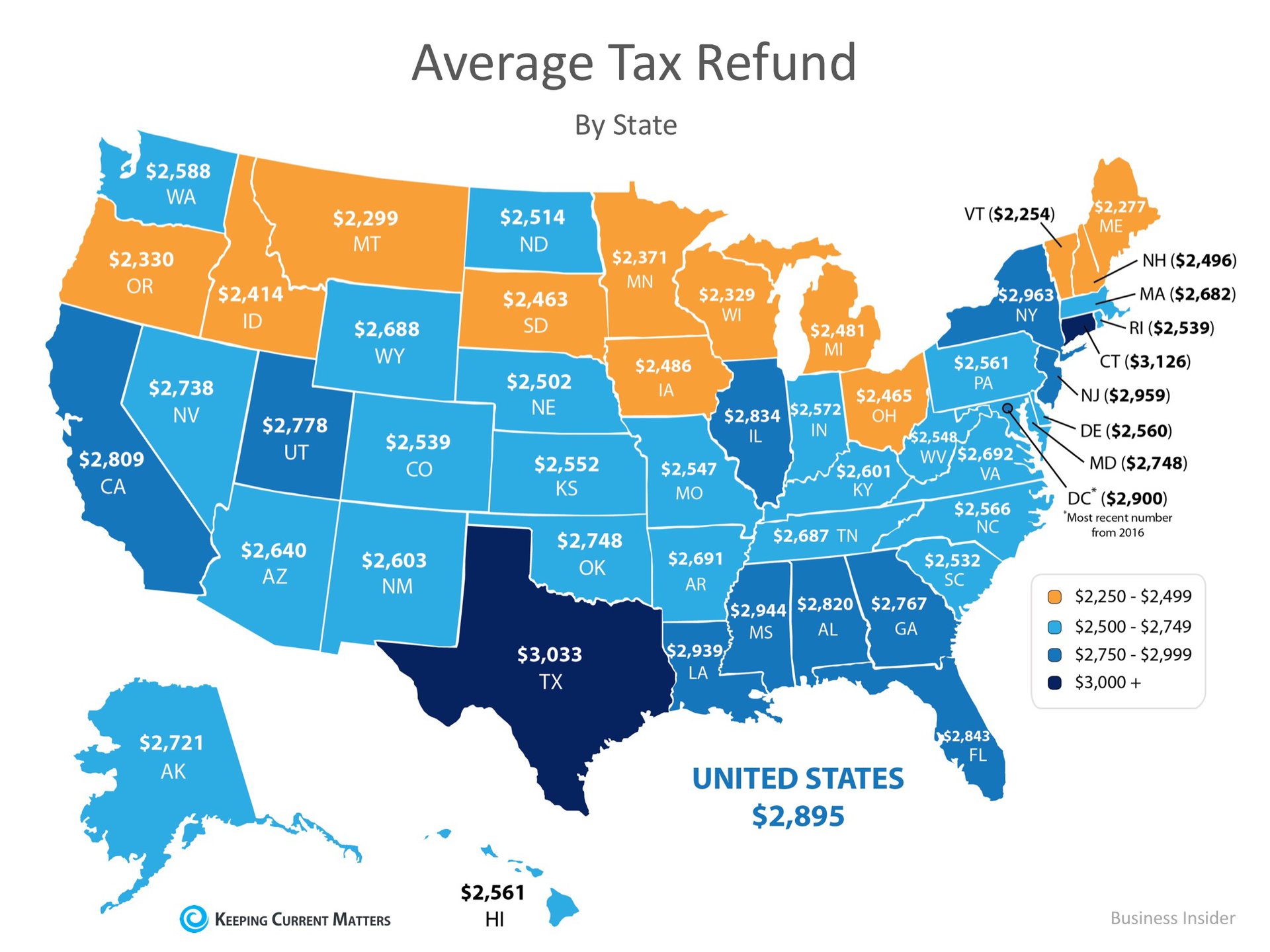
The map below shows the average tax refund Americans received last year by state. (The refunds received for the 2017 tax year should continue to reflect these numbers as the new tax code will go into effect for 2018 tax filings.)
It's Tax Season… Use Your Refund to Jump Start Your Down Payment Savings! | Keeping Current Matters
Many first-time buyers believe that a 20% down payment is required to qualify for a mortgage. Programs from the Federal Housing Authority, Freddie Mac, and Fannie Mae all allow for down payments as low as 3%, with Veterans Affairs Loans allowing many veterans to purchase a home with 0% down.

If you started your down payment savings with your tax refund check this year, how close would you be to a 3% down payment?

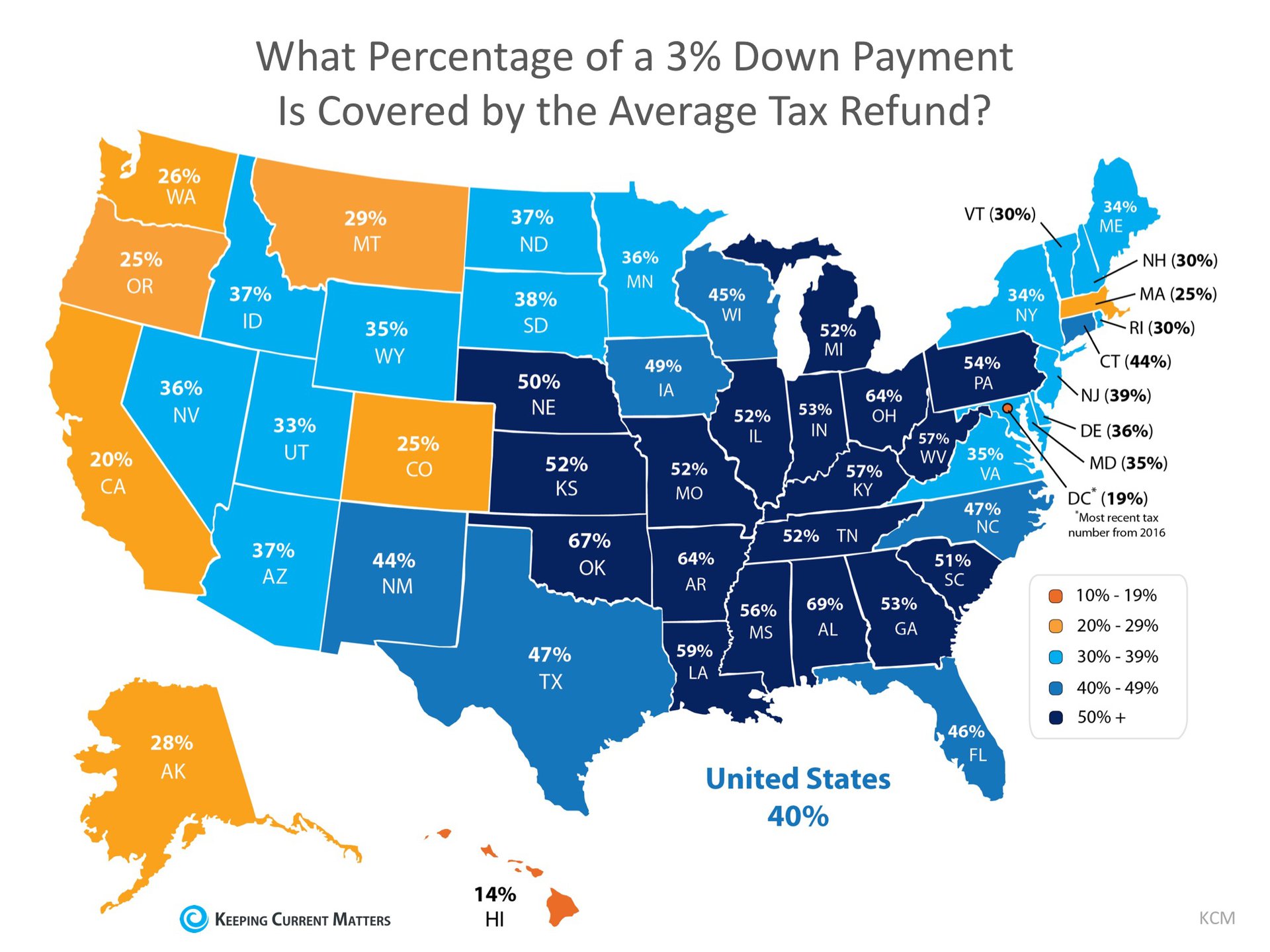
The map below shows what percentage of a 3% down payment is covered by the average tax refund by taking into account the median price of homes sold by state.
It's Tax Season… Use Your Refund to Jump Start Your Down Payment Savings! | Keeping Current Matters
The darker the blue, the closer your tax refund gets you to homeownership! For those in Alabama looking to purchase their first homes, their tax refund could potentially get them 69% closer to that dream!

Bottom Line

Saving for a down payment can seem like a daunting task. But the more you know about what’s required, the more prepared you can be to make the best decision for you and your family! This tax season, your refund could be your key to homeownership!

Monday, March 26, 2018

Are Home Values Really Overinflated?

Are Home Values Really Overinflated? | Keeping Current Matters
Last week, the National Association of Realtors (NAR) released their most recent Existing Home Sales Report. According to the report:
“The median existing-home price for all housing types in January was $240,500, up 5.8 percent from January 2017 ($227,300). January’s price increase marks the 71st straight month of year-over-year gains.”
Seventy-one consecutive months of price increases may have some concerned that current home values may be overinflated.
However, at the same time, Zillow issued a press release which revealed:
“If the housing bubble and bust had not happened, and home values had instead appreciated at a steady pace, the median home value would be higher than its current value.”
Here are two graphs that help show why home prices are exactly where they should be.
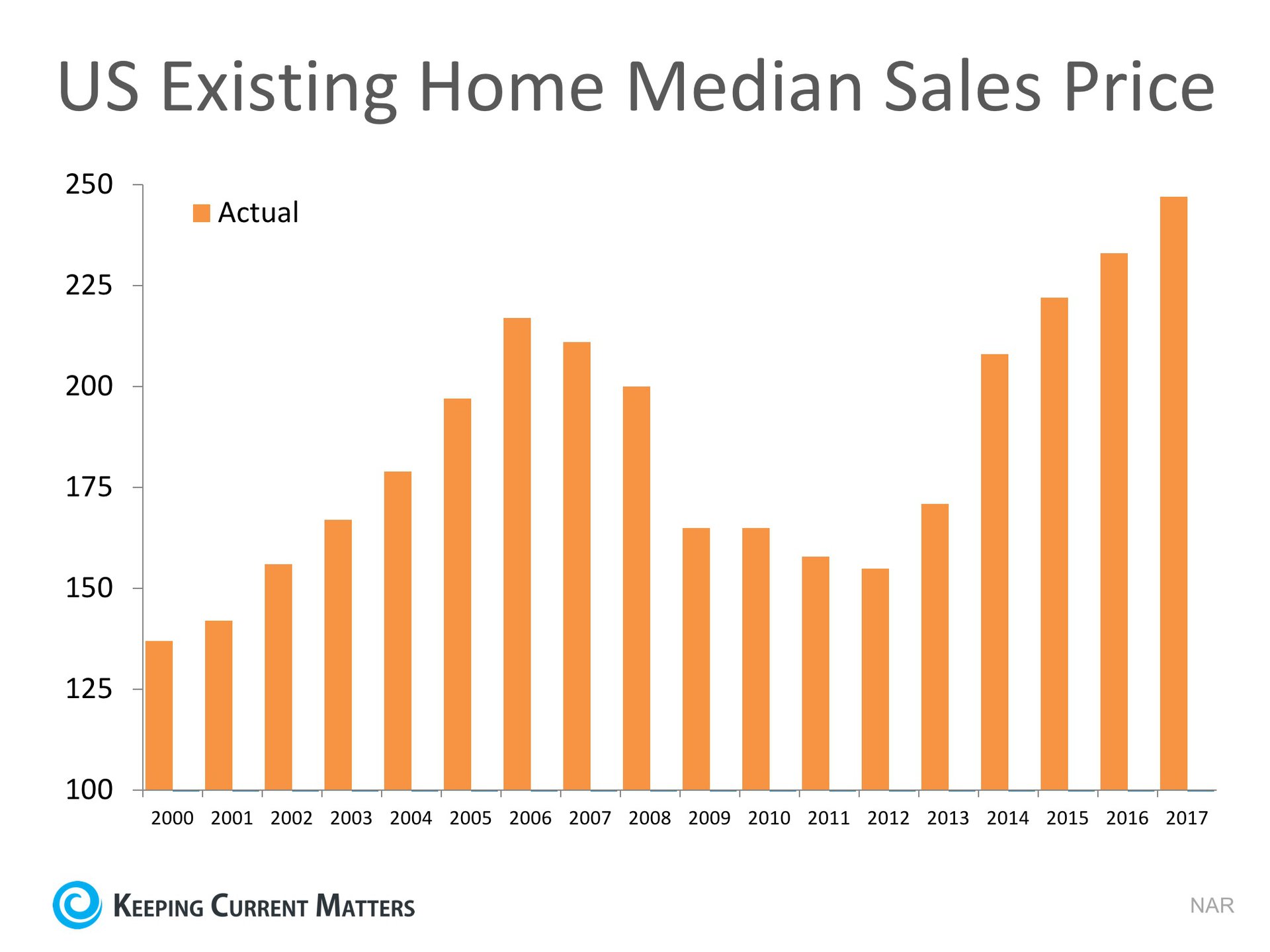
The first graph shows actual median home sales prices from 2000 through 2017.
Are Home Values Really Overinflated? | Keeping Current Matters
By itself, this graph could heighten concerns as it shows home values rose in the early 2000s, came tumbling down and are now headed up again. It gives the feel of a rollercoaster ride that is about to take another turn downward.
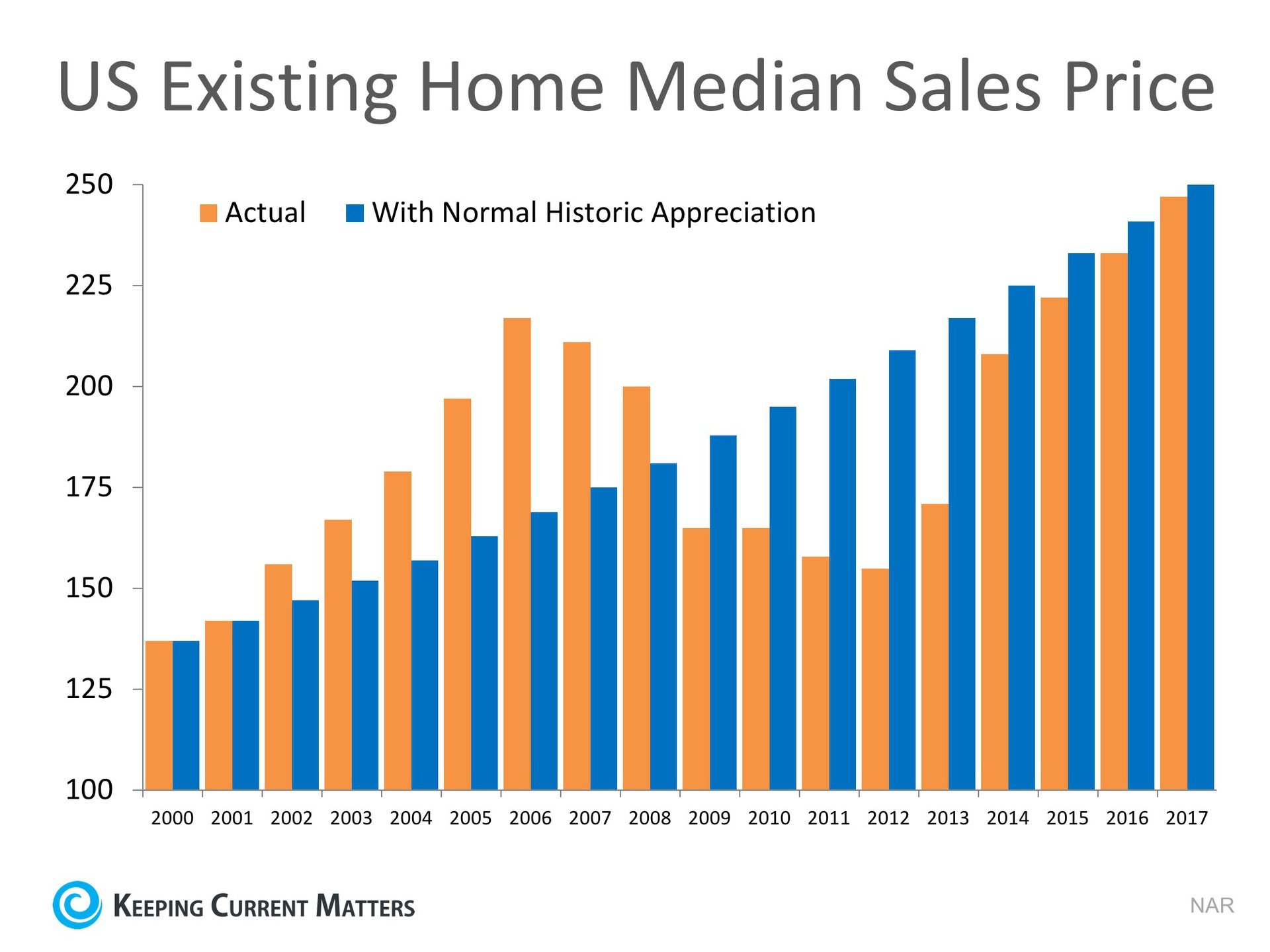
However, if we also include where prices would naturally be, had there not been a boom & bust, we see a different story.
Are Home Values Really Overinflated? | Keeping Current Matters
The blue bars on this graph represent were prices would be if they had increased by the normal annual appreciation rate (3.6%). By adding 3.6% to the actual 2000 price and repeating that for each subsequent year, we can see that prices were overvalued during the boom, undervalued during the bust, and a little bit LOWER than where they should be right now.

Bottom Line

Based on historic appreciation levels, we should be very comfortable that current home values are not overinflated.

Friday, March 23, 2018

Competition is Coming, Are You Thinking of Selling Your Home?

Competition is Coming, Are You Thinking of Selling Your Home? | Keeping Current Matters
The number of building permits issued for single-family homes is the best indicator of how many newly built homes will rise over the next few months. According to the latest U.S. Census Bureau and U.S. Department of Housing & Urban Development Residential Sales Report, the number of these permits were up 7.4% over last year.

How will this impact buyers?

More inventory means more options. Lawrence Yun, NAR’s Chief Economistexplained this is good news for the housing market – especially for those looking to buy:
“This rise in single-family housing construction will help tame home price growth, and the increase in multifamily units should continue to help slow rent growth.”

How will this impact sellers?

More inventory means more competition. Today, because of the tremendous lack of inventory, a seller can expect:
  1. A great price on their home as buyers outbid each other for it
  2. A quick sale as buyers have so little to choose from
  3. Fewer hassles as buyers don’t want to “rock the boat” on the deal
With an increase in competition, the seller may not enjoy these same benefits. As Chief Economist Nela Richardson, added:
“Because existing home inventory has been so low for so long, new construction is taking a larger share of the market…Builders meet the buyers and see the demand firsthand.”

Bottom Line

If you are considering selling your house, you’ll want to beat this new competition to market to ensure you get the most attention for your listing and the best price

Wednesday, March 21, 2018

4 Reasons Spring is a Great Time to Buy a Home!

4 Reasons Spring is a Great Time to Buy a Home! | Keeping Current Matters
Here are four great reasons to consider buying a home today instead of waiting.

Prices Will Continue to Rise

CoreLogic’s latest Home Price Index reports that home prices have appreciated by 6.6% over the last 12 months. The same report predicts that prices will continue to increase at a rate of 4.3% over the next year.
The bottom in home prices has come and gone. Home values will continue to appreciate for years. Waiting no longer makes sense.

Mortgage Interest Rates Are Projected to Increase

Freddie Mac’s Primary Mortgage Market Survey shows that interest rates for a 30-year mortgage hovered close to 4.0% in 2017. Most experts predict that rates will rise over the next 12 months. The Mortgage Bankers Association, Fannie Mae, Freddie Mac and the National Association of Realtors are in unison, projecting that rates will increase by nearly a full percentage point by this time next year.
An increase in rates will impact YOUR monthly mortgage payment. A year from now, your housing expense will increase if a mortgage is necessary to buy your next home.

Either Way, You Are Paying a Mortgage

There are some renters who have not yet purchased a home because they are uncomfortable taking on the obligation of a mortgage. Everyone should realize that unless you are living with your parents rent-free, you are paying a mortgage – either yours or your landlord’s.
As an owner, your mortgage payment is a form of ‘forced savings’ that allows you to have equity in your home that you can tap into later in life. As a renter, you guarantee your landlord is the person with that equity.
Are you ready to put your housing cost to work for you?

It’s Time to Move on with Your Life

The ‘cost’ of a home is determined by two major components: the price of the home and the current mortgage rate. It appears that both are on the rise.
But what if they weren’t? Would you wait?
Look at the actual reason you are buying and decide if it is worth waiting. Whether you want to have a great place for your children to grow up, you want your family to be safer, or you just want to have control over renovations, maybe now is the time to buy.

If the right thing for you and your family is to purchase a home this year, buying sooner rather than later could lead to substantial savings.

Monday, March 19, 2018

7 Factors to Consider When Choosing A Home to Retire In

7 Factors to Consider When Choosing A Home to Retire In | Keeping Current Matters
As more and more baby boomers enter retirement age, the question of whether or not to sell their homes and move will become a hot topic. In today’s housing market climate, with low available inventory in the starter and trade-up home categories, it makes sense to evaluate your home’s ability to adapt to your needs in retirement.
According to the National Association of Exclusive Buyers Agents (NAEBA), there are 7 factors that you should consider when choosing your retirement home.

1. Affordability

“It may be easy enough to purchase your home today but think long-term about your monthly costs. Account for property taxes, insurance, HOA fees, utilities – all the things that will be due whether or not you have a mortgage on the property.
Would moving to a complex with homeowner association fees actually be cheaper than having to hire all the contractors you would need to maintain your home, lawn, etc.? Would your taxes go down significantly if you relocated? What is your monthly income going to be like in retirement?

2. Equity

“If you have equity in your current home, you may be able to apply it to the purchase of your next home. Maintaining a healthy amount of home equity gives you a source of emergency funds to tap, via a home equity loan or reverse mortgage.”
The equity you have in your current home may be enough to purchase your retirement home with little to no mortgage. Homeowners in the US gained an average of over $14,000 in equity last year.

3. Maintenance

“As we age, our tolerance for cleaning gutters, raking leaves and shoveling snow can go right out the window. A condominium with low-maintenance needs can be a literal lifesaver, if your health or physical abilities decline.”
As we mentioned earlier, would a condo with an HOA fee be worth the added peace of mind of not having to do the maintenance work yourself?

4. Security

“Elderly homeowners can be targets for scams or break-ins. Living in a home with security features, such as a manned gate house, resident-only access and a security system can bring peace of mind.”
As scary as that thought may be, any additional security and an extra set of eyes looking out for you always adds to peace of mind.

5. Pets

“Renting won’t do if the dog can’t come too! The companionship of pets can provide emotional and physical benefits.”
Evaluate all of your options when it comes to bringing your ‘furever’ friend with you to a new home. Will there be necessary additional deposits if you are renting or in a condo? Is the backyard fenced in? How far are you from your favorite veterinarian?

6. Mobility

“No one wants to picture themselves in a wheelchair or a walker, but the home layout must be able to accommodate limited mobility.”
Sixty is the new 40, right? People are living longer and are more active in retirement, but that doesn’t mean that down the road you won’t need your home to be more accessible. Installing handrails and making sure your hallways and doorways are wide enough may be a good reason to look for a home that was built to accommodate these needs.

7. Convenience

“Is the new home close to the golf course, or to shopping and dining? Do you have amenities within easy walking distance? This can add to home value!”
How close are you to your children and grandchildren? Would relocating to a new area make visits with family easier or more frequent? Beyond being close to your favorite stores and restaurants, there are a lot of factors to consider.

Bottom Line

When it comes to your forever home, evaluating your current house for its ability to adapt with you as you age can be the first step to guaranteeing your comfort in retirement. If after considering all these factors you find yourself curious about your options, contact a local real estate professional who can evaluate your ability to sell your house in today’s market and get you into your dream retirement home!

Saturday, March 17, 2018

Moving up Is MORE Affordable Now Than Almost Any Other Time in 40 Years

If you are considering selling your current home, to either move up to a larger home or into a home in an area that better suits your current family needs, great news was just revealed.
Last week, Trulia posted a blog, Not Your Father’s Housing Market, which examined home affordability over the last 40+ years (1975-2016). Their research revealed that:
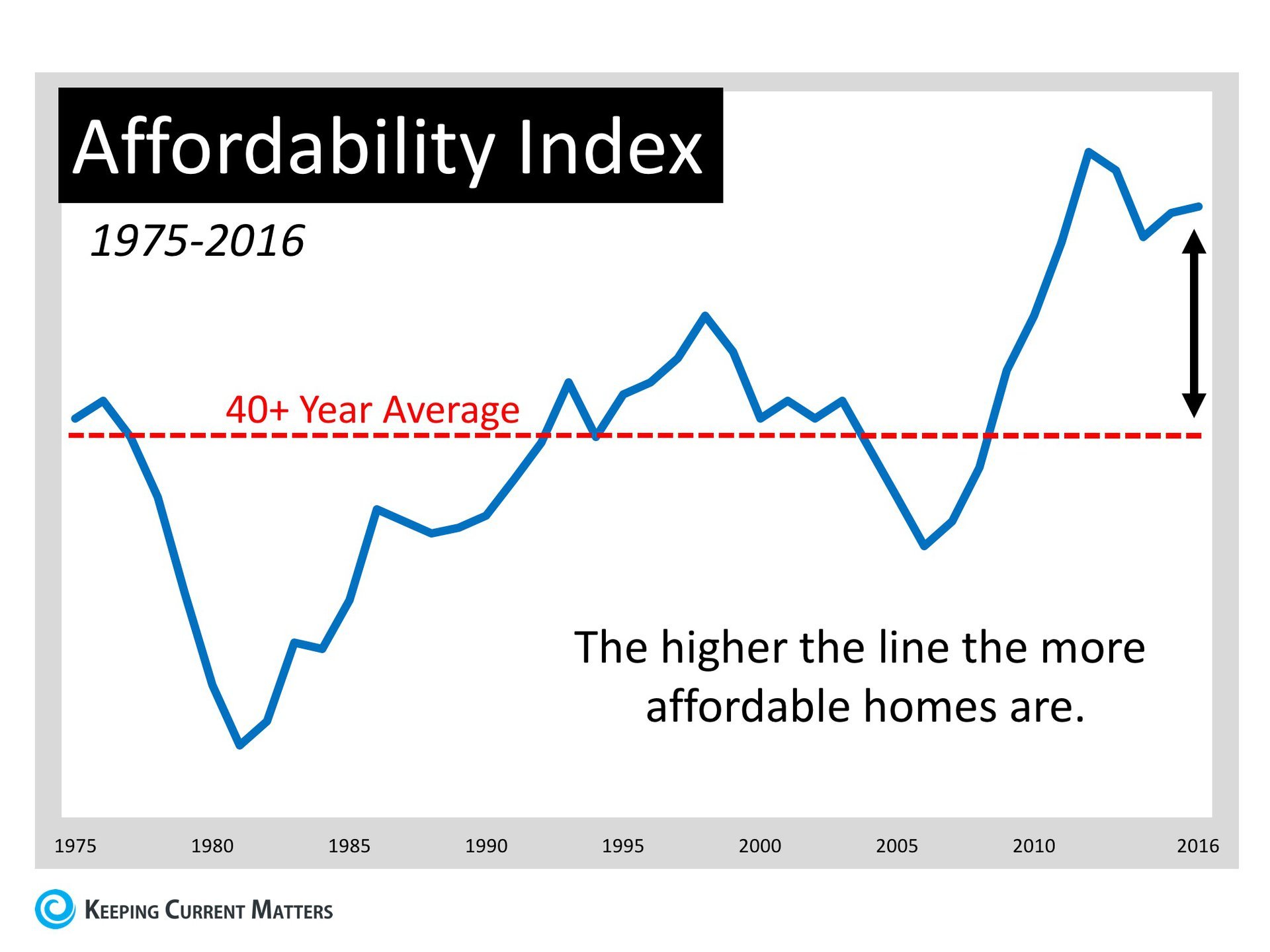
“Nationally, homes are just about the most affordable they’ve been in the last 40 years… the median household could afford a home 1.5 times more expensive than the median home price. In 1980, the median household could only afford about 3/4 of the median home price.
Despite relatively stagnant incomes, affordability has grown due to the sharp drop in mortgage rates over the last 30 years – from a high of over 16% in the 1980s to under 4% by 2016.
Of the nation’s 100 largest metros, only Miami became unaffordable between 1990 and 2016. Meanwhile, 22 metros have flipped from being unaffordable to becoming affordable in that same time frame.”
Here is a graph showing the Affordability Index compared to the 40-year average:
Moving up Is MORE Affordable Now Than Almost Any Other Time in 40 Years | Keeping Current Matters

The graph shows that housing affordability is better now than at any other time in the last forty years, except during the housing crash last decade.

(Remember that during the crash you could purchase distressed properties – foreclosures and short sales – at 20-50% discounts.)
There is no doubt that with home prices and mortgage rates on the rise, the affordability index will continue to fall. That is why if you are thinking of moving up, you probably shouldn’t wait.

Bottom Line

If you have held off on moving up to your family’s dream home because you were hoping to time the market, that time has come.