Thursday, March 15, 2018

New-Home Sales Skid in January

New-home sales skidded in January, with sales of new, single-family homes down 7.8 percent to 593,000, according to the U.S. Census Bureau and the Department of Housing and Urban Development (HUD). The average new-home sales price was $382,700, while the median was $323,000. New-home listing inventory was 301,000—6.1-months supply.
“The moderation in new-home sales may be attributable to the interest rate environment, which could be causing short-term market volatility,” said Michael Neal, senior economist for the National Association of Home Builders (NAHB), in a statement. “However, the underlying economic fundamentals for housing demand remain strong and we expect more prospective home buyers to enter the market in 2018.”
“New-home sales have taken a pause this month, but our builders are reporting confidence in the overall market and future sales conditions,” said Randy Noel, chairman of the NAHB. “With strong consumer demand for housing, we expect the sales numbers to move forward in the months ahead.”
“New-home sales may have come in lower than economists expected, but when we look at the bigger picture, inventory of new homes jumped to 301,000 units—the most since March 2009—which will lead to a healthier and more balanced housing market,” says Bill Banfield, executive vice president at Quicken Loans. “It’s worth noting, however, that new homes usually come with a bigger price tag, something that can turn away many first-time buyers.”
“Though both new-home sales and prices dipped for the second month in a row, these lower prices don’t negate earlier price gains that have put new homes out of reach for the majority of buyers,” says Joseph Kirchner, senior economist at realtor.com®. “This is disappointing given the importance of new construction in powering overall home sales.
“[This] report provides further evidence that builders are slowly shifting toward more moderately-priced homes,” Kirchner says. “The drop in sales may be due to saturation in the upper price range of the market, which should compel builders to follow the market and build more moderately-priced homes. We may be beginning to see this with the largest drop for new-home sales in homes priced above $500,000.”

Tuesday, March 13, 2018

Should I Wait Until Next Year to Buy? Or Buy Now? [INFOGRAPHIC]

Should I Wait until next Year to Buy? Or Buy Now? [INFOGRAPHIC] | Keeping Current Matters

Some Highlights:

  • The Cost of Waiting to Buy is defined as the additional funds it would take to buy a home if prices & interest rates were to increase over a period of time.
  • Freddie Mac predicts interest rates to rise to 5.1% by 2019.
  • CoreLogic predicts home prices to appreciate by 4.3% over the next 12 months.
  • If you are ready and willing to buy your dream home, find out if you are able to!

Monday, March 12, 2018

Housing Market Expected To "Spring Forward" This Year

Housing Market Expected To "Spring Forward" This Year | Keeping Current Matters
Just like our clocks this weekend in the majority of the country, the housing market will soon “spring forward!” Similar to tension in a spring, the lack of inventory available for sale in the market right now is what is holding back the market.
Many potential sellers believe that waiting until Spring is in their best interest, and traditionally they would have been right.
Buyer demand has seasonality to it, which usually falls off in the winter months, especially in areas of the country impacted by arctic temperatures and conditions.

That hasn’t happened this year.

Demand for housing has remained strong as mortgage rates have remained near historic lows. Even with the recent increase in rates, buyers are still able to lock in an affordable monthly payment. Many more buyers are jumping off the fence and into the market to secure a lower rate.
The National Association of Realtors (NAR) recently reported that the top 10 dates sellers listed their homes in 2017 all fell in April, May, or June.
Those who act quickly and list now could benefit greatly from additional exposure to buyers prior to a flood of more competition coming to market in the next few months.

Bottom Line

If you are planning on selling your home in 2018, meet with a local real estate professional to evaluate the opportunities in your market.

Saturday, March 10, 2018

Latest NAR Data Shows Now Is a Great Time to Sell!

Latest NAR Data Shows Now Is a Great Time to Sell! | Keeping Current Matters
We all realize that the best time to sell anything is when demand for that item is high, and the supply of that item is limited. Two major reports released by the National Association of Realtors (NAR) revealed information that suggests that now is a great time to sell your house.
Let’s look at the data covered in the latest REALTORS® Confidence Index and Existing Home Sales Report.

REALTORS® CONFIDENCE INDEX

Every month, NAR surveys “over 50,000 real estate practitioners about their expectations for home sales, prices and market conditions.” This month, the index showed (again) that homebuying demand continued to outpace the supply of homes available in January.
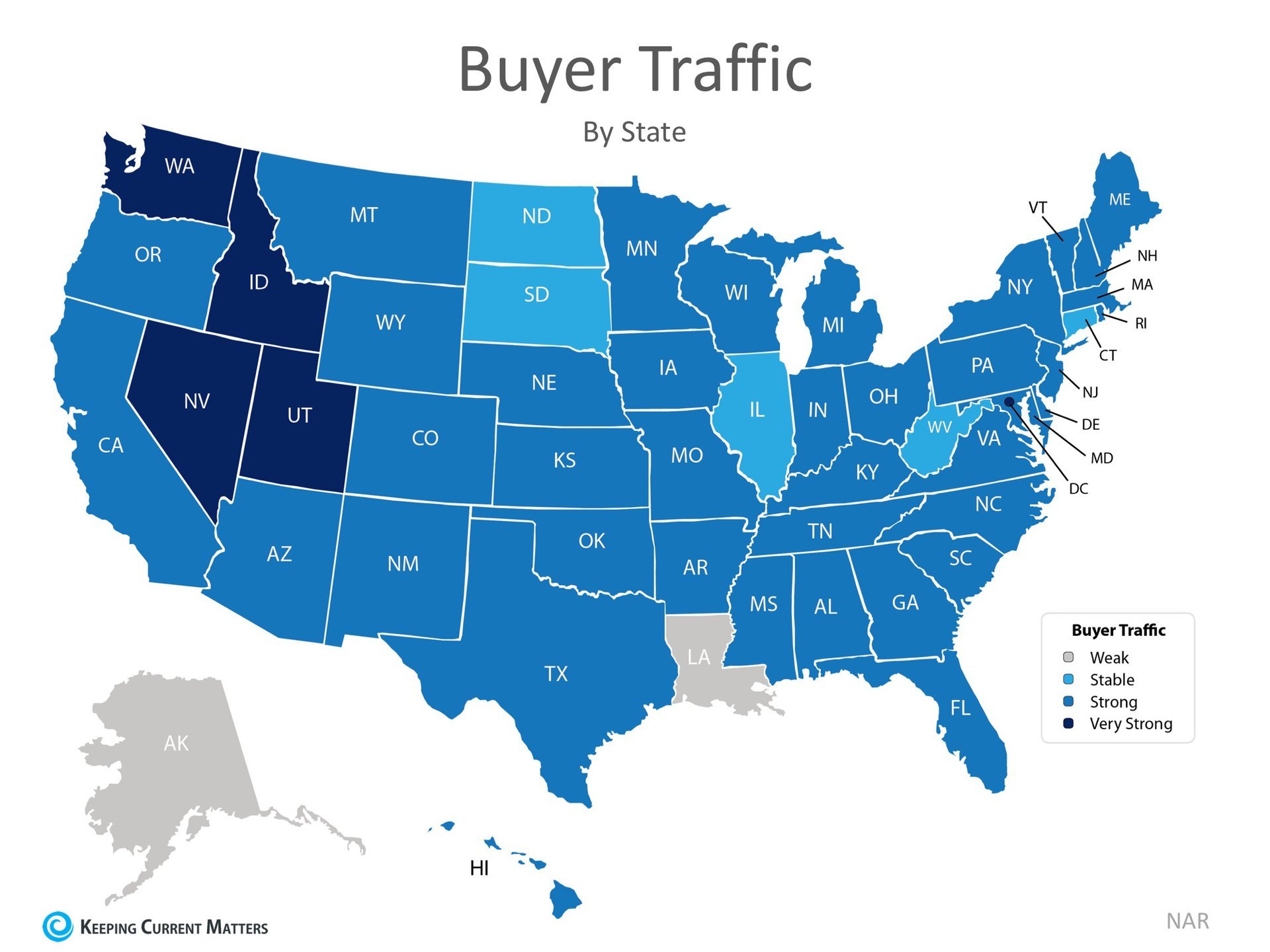
The map below illustrates buyer demand broken down by state (the darker your state, the stronger demand there is).
Latest NAR Data Shows Now Is a Great Time to Sell! | Keeping Current Matters
In addition to revealing high demand, the index also shows that compared to conditions in the same month last year, seller traffic conditions were ‘weak’ in 22 states, ‘stable’ in 25 states, and ‘strong’ in only 4 states (Alaska, Nevada, North Dakota & Utah).
Takeaway: Demand for housing continues to be strong but supply is struggling to keep up, and this trend is likely to continue throughout 2018.

THE EXISTING HOME SALES REPORT

The most important data revealed in the report was not sales but was instead the inventory of homes for sale (supply). The report explained:
  • Total housing inventory rose 4.1% from December to 1.52 million homes available for sale.
  • Unsold inventory is 9.5% lower than a year ago, marking the 32nd consecutive month with year-over-year declines.
  • This represents a 3.4-month supply at the current sales pace.
According to Lawrence Yun, Chief Economist at NAR:
“Another month of solid price gains underlines this ongoing trend of strong demand and weak supply. The underproduction of single-family homes over the last decade has played a predominant role in the current inventory crisis that is weighing on affordability.”
In real estate, there is a guideline that often applies; when there is less than a 6-month supply of inventory available, we are in a seller’s market and we will see appreciation. Between 6-7 months is a neutral market, where prices will increase at the rate of inflation. More than a 7-month supply means we are in a buyer’s market and should expect depreciation in home values.
As we mentioned before, there is currently a 3.4-month supply, and houses are going under contract fast. The Existing Home Sales Report shows that 43% of properties were on the market for less than a month when sold.
In January, properties sold nationally were typically on the market for 42 days. As Yun notes, this will continue unless more listings come to the market.
“While the good news is that Realtors in most areas are saying buyer traffic is even stronger than the beginning of last year, sales failed to follow course and far lagged last January’s pace. It’s very clear that too many markets right now are becoming less affordable and desperately need more new listings to calm the speedy price growth.”
Takeaway: Inventory of homes for sale is still well below the 6-month supply needed for a normal market and supply will ‘fail to catch up with demand’ if a ‘sizable’ supply does not enter the market.

Bottom Line

If you are going to sell, now may be the time to take advantage of the ready, willing, and able buyers that are still out searching for your house.

Friday, March 9, 2018

Mortgage Rates on FIRE! Home Prices Up in Smoke?

Mortgage Rates on FIRE! Home Prices Up in Smoke? | Keeping Current Matters
Mortgage interest rates have already risen by over a quarter of a percentage point in 2018. Many are projecting that rates could increase to 5% by the end of the year.

What impact will rising rates have on house values?

Many quickly jump to the conclusion that an increase in mortgage rates will have a detrimental impact on real estate prices as fewer buyers will be able to qualify for a loan. This seems logical; if there is less demand for housing then prices will drop.
However, in a good economy, rising mortgage rates increase demand as many prospective purchasers immediately jump off the fence to guarantee they get the lower rate.
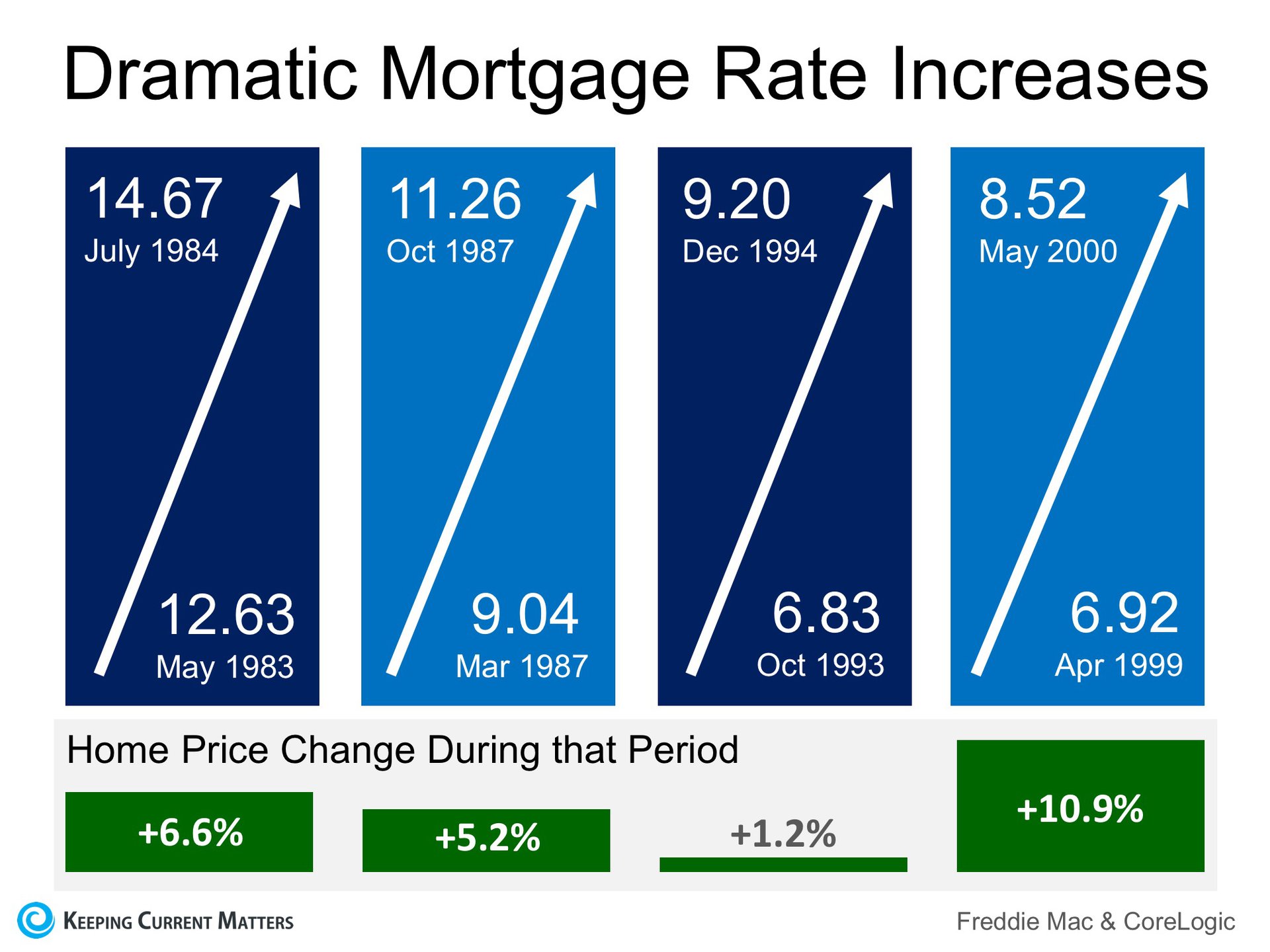
Let’s look at home prices the last four times mortgage rates increased dramatically.
Mortgage Rates on FIRE! Home Prices Up in Smoke? | Keeping Current Matters
In each case, home prices APPRECIATED and did not depreciate. No one is projecting as dramatic an increase in rates as the examples above. Most are projecting an increase of approximately 1% by the end of the year.
The last time mortgage rates increased by 1% over a twelve-month period was January 2013 (3.41%) to January 2014 (4.43%). What happened to house prices during that span? They appreciated by 9.8%.
Just two weeks ago, Rick Palacios Jr., Director of Research at John Burns Real Estate Consulting explained:
“Mortgage rates have risen 1% or more ten times in the last 43 years, with little impact on home sales and prices when the economy was also strong…Historically, rising confidence, solid job growth, and higher wages have more than offset reduced demand for housing resulting from higher mortgage rates.”

Bottom Line

When mortgage rates increase, history has shown that prices appreciate (and do not depreciate) during that same time span.

Tuesday, March 6, 2018

The Mortgage Process: What You Need to Know [INFOGRAPHIC] | Keeping Current Matters

Some Highlights:

  • Many buyers are purchasing a home with a down payment as little as 3%.
  • You may already qualify for a loan, even if you don’t have perfect credit.
  • Take advantage of the knowledge of your local professionals who are there to help you determine how much you can afford.

Thursday, March 1, 2018

2 Ways to Get the Most Money from The Sale of Your Home

2 Ways to Get the Most Money from The Sale of Your Home | Keeping Current Matters
Every homeowner wants to make sure they maximize their financial reward when selling their home. But how do you guarantee that you receive the maximum value for your house?
Here are two keys to ensure that you get the highest price possible.

1. Price it a LITTLE LOW

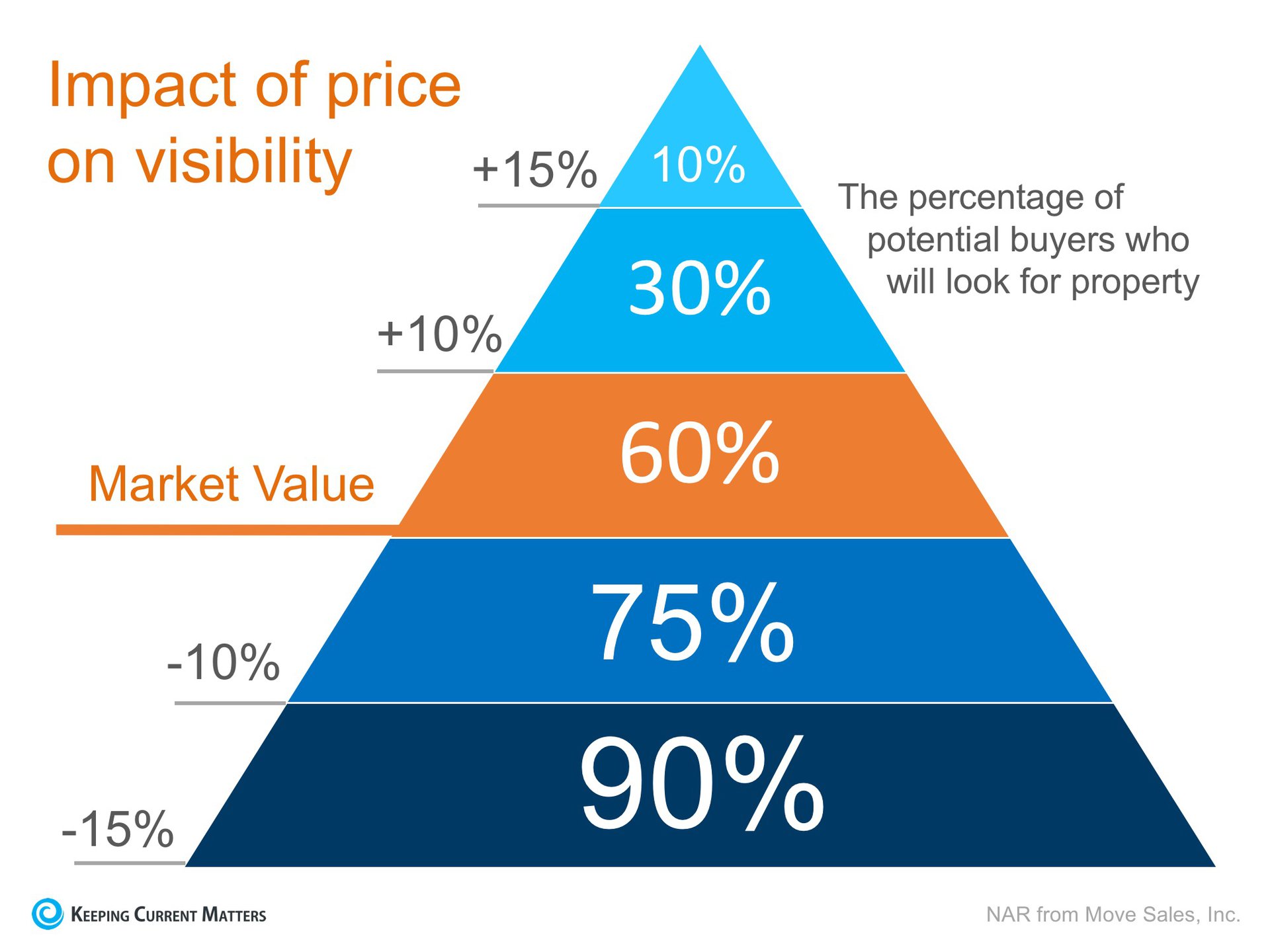
This may seem counterintuitive, but let’s look at this concept for a moment. Many homeowners think that pricing their homes a little OVER market value will leave them with room for negotiation. In actuality, this just dramatically lessens the demand for your house (see chart below).
2 Ways to Get the Most Money from The Sale of Your Home | Keeping Current Matters
Instead of the seller trying to ‘win’ the negotiation with one buyer, they should price it so that demand for the home is maximized. By doing this, the seller will not be fighting with a buyer over the price but will instead have multiple buyers fighting with each other over the house.
Realtor.com gives this advice:
“Aim to price your property at or just slightly below the going rate. Today’s buyers are highly informed, so if they sense they’re getting a deal, they’re likely to bid up a property that’s slightly underpriced, especially in areas with low inventory.”

2. Use a Real Estate Professional

This, too, may seem counterintuitive. The seller may think they would make more money if they didn’t have to pay a real estate commission. With this being said, studies have shown that homes typically sell for more money when handled by a real estate professional.
study by Collateral Analytics, reveals that FSBOs don’t actually save any money, and in some cases may be costing themselves more, by not listing with an agent.
In the study, they analyzed home sales in a variety of markets in 2016 and the first half of 2017. The data showed that:
“FSBOs tend to sell for lower prices than comparable home sales, and in many cases below the average differential represented by the prevailing commission rate.”
The results of the study showed that the differential in selling prices for FSBOs when compared to MLS sales of similar properties is about 5.5%. Sales in 2017 suggest the average price was near 6% lower for FSBO sales of similar properties.

Bottom Line

Price your house at or slightly below the current market value and hire a professional. This will guarantee that you maximize the price you get for your house.