Thursday, December 14, 2017

Why Is There So Much Paperwork Required to Get a Mortgage?

Why Is There So Much Paperwork Required to Get a Mortgage? | Keeping Current Matters
Why is there so much paperwork mandated by the lenders for a mortgage loan application when buying a home today? It seems that they need to know everything about you and requires three separate sources to validate each and every entry on the application form.
Many buyers are being told by friends and family that the process was a hundred times easier when they bought their home ten to twenty years ago.
There are two very good reasons that the loan process is much more onerous on today’s buyer than perhaps any time in history.

1. The government has set new guidelines that now demand that the bank proves beyond any doubt that you are indeed capable of paying the mortgage.

During the run-up to the housing crisis, many people ‘qualified’ for mortgages that they could never pay back. This led to millions of families losing their home. The government wants to make sure this can’t happen again.

2. The banks don’t want to be in the real estate business.

Over the last seven years, banks were forced to take on the responsibility of liquidating millions of foreclosures and also negotiating another million plus short sales. Just like the government, they don’t want more foreclosures. For that reason, they need to double (maybe even triple) check everything on the application.

However, there is some good news in the situation.

The housing crash that mandated that banks be extremely strict on paperwork requirements also allowed you to get a mortgage interest rate around 4%.
The friends and family who bought homes ten or twenty years ago experienced a simpler mortgage application process, but also paid a higher interest rate (the average 30-year fixed rate mortgage was 8.12% in the 1990s and 6.29% in the 2000s).
If you went to the bank and offered to pay 7% instead of around 4%, they would probably bend over backward to make the process much easier.

Bottom Line

Instead of concentrating on the additional paperwork required, let’s be thankful that we are able to buy a home at historically low rates.


Wednesday, December 13, 2017

The Real Reason Home Prices are Increasing

The Real Reason Home Prices are Increasing | Keeping Current Matters
There are many unsubstantiated theories as to why home values are continuing to increase. From those who are worried that lending standards are again becoming too lenient (data shows this is untrue), to those who are concerned that prices are again approaching boom peaks because of “irrational exuberance” (this is also untrue as prices are not at peak levels when they are adjusted for inflation), there seems to be no shortage of opinion.
However, the increase in prices is easily explained by the theory of supply & demand. Whenever there is a limited supply of an item that is in high demand, prices increase.
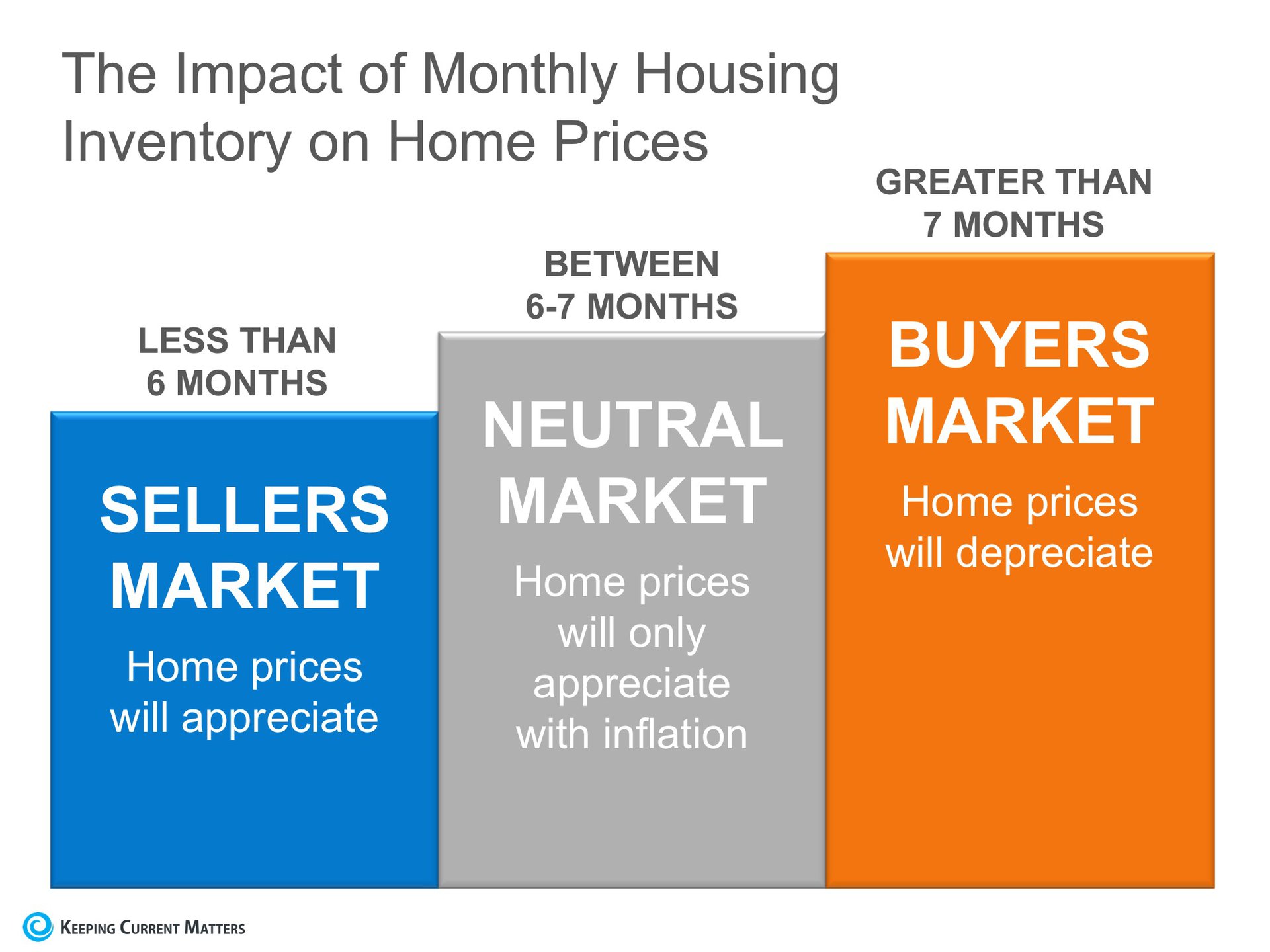
It is that simple. In real estate, it takes a six-month supply of existing salable inventory to maintain pricing stability. In most housing markets, anything less than six months will cause home values to appreciate and anything more than seven months will cause prices to depreciate (see chart 1).
The Real Reason Home Prices are Increasing | Keeping Current Matters
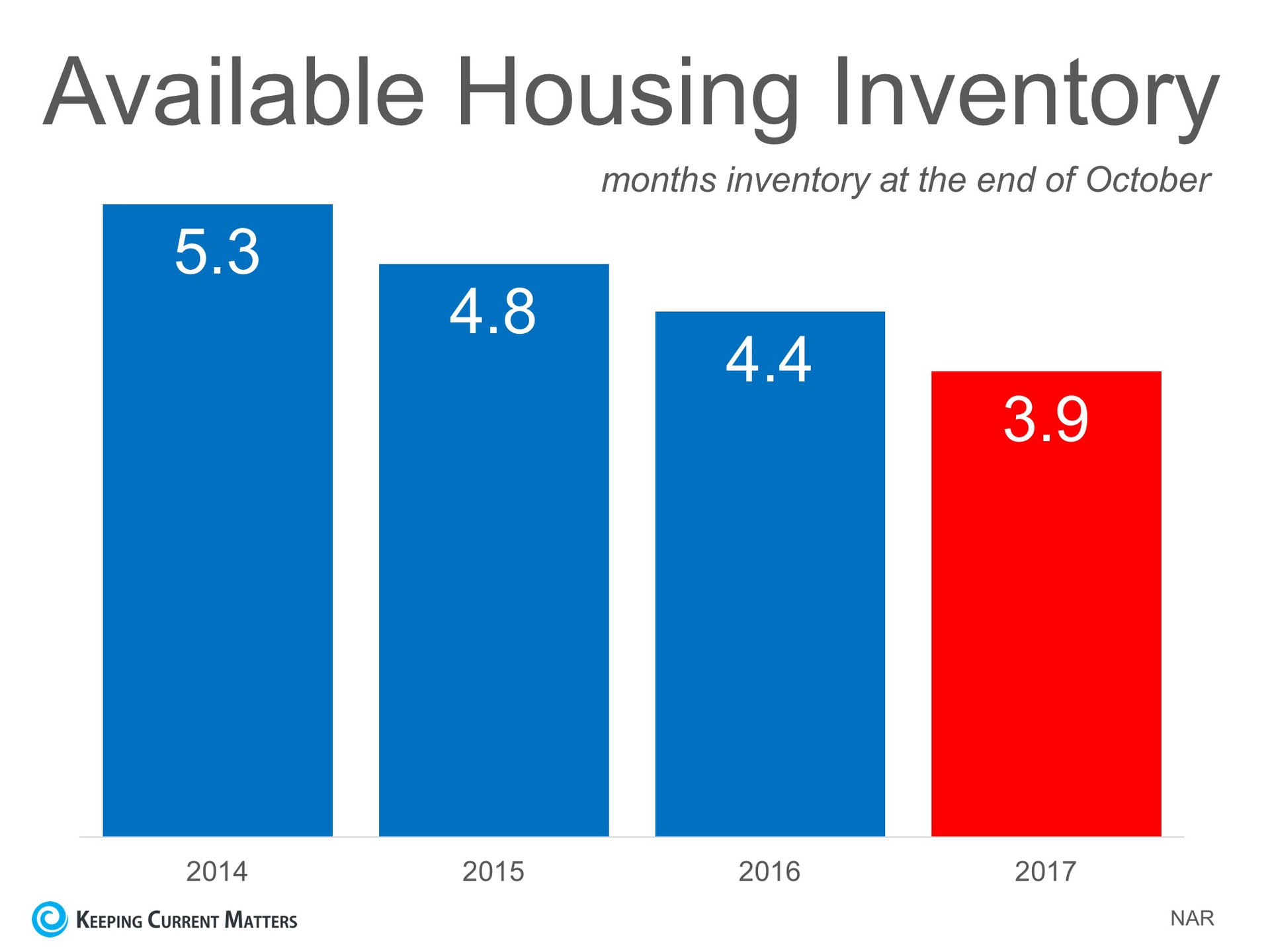
According to the Existing Home Sales Report from the National Association of Realtors (NAR), the monthly inventory of homes has been below six months for the last four years (see chart 2).
The Real Reason Home Prices are Increasing | Keeping Current Matters

Bottom Line

If buyer demand outpaces the current supply of existing homes for sale, prices will continue to appreciate. Nothing nefarious is taking place. It is simply the theory of supply & demand working as it should.

Monday, December 11, 2017

Mortgage Interest Rates Are Going Up... Should I Wait to Buy?


Mortgage Interest Rates Are Going Up... Should I Wait to Buy?

Mortgage Interest Rates Are Going Up… Should I Wait to Buy? | Keeping Current Matters
Mortgage interest rates, as reported by Freddie Mac, have increased over the last several weeksFreddie Mac, along with Fannie Mae, the Mortgage Bankers Association and the National Association of Realtors, is calling for mortgage rates to continue to rise over the next four quarters.
This has caused some purchasers to lament the fact that they may no longer be able to get a rate below 3.5%. However, we must realize that current rates are still at historic lows.
Here is a chart showing the average mortgage interest rate over the last several decades:
Mortgage Interest Rates Are Going Up… Should I Wait to Buy? | Keeping Current Matters

Bottom Line

Though you may have missed getting the lowest mortgage rate ever offered, you can still get a better interest rate than your older brother or sister did ten years ago, a lower rate than your parents did twenty years ago, and a better rate than your grandparents did forty years ago.

Wednesday, December 6, 2017

Low Interest Rates Have a High Impact on Your Purchasing Power

Low Interest Rates Have a High Impact on Your Purchasing Power | Keeping Current Matters
According to Freddie Mac’s latest Primary Mortgage Market Survey, interest rates for a 30-year fixed rate mortgage are currently at 3.92%, which is still near record lows in comparison to recent history!
The interest rate you secure when buying a home not only greatly impacts your monthly housing costs, but also impacts your purchasing power.
Purchasing power, simply put, is the amount of home you can afford to buy for the budget you have available to spend. As rates increase, the price of the house you can afford will decrease if you plan to stay within a certain monthly housing budget.
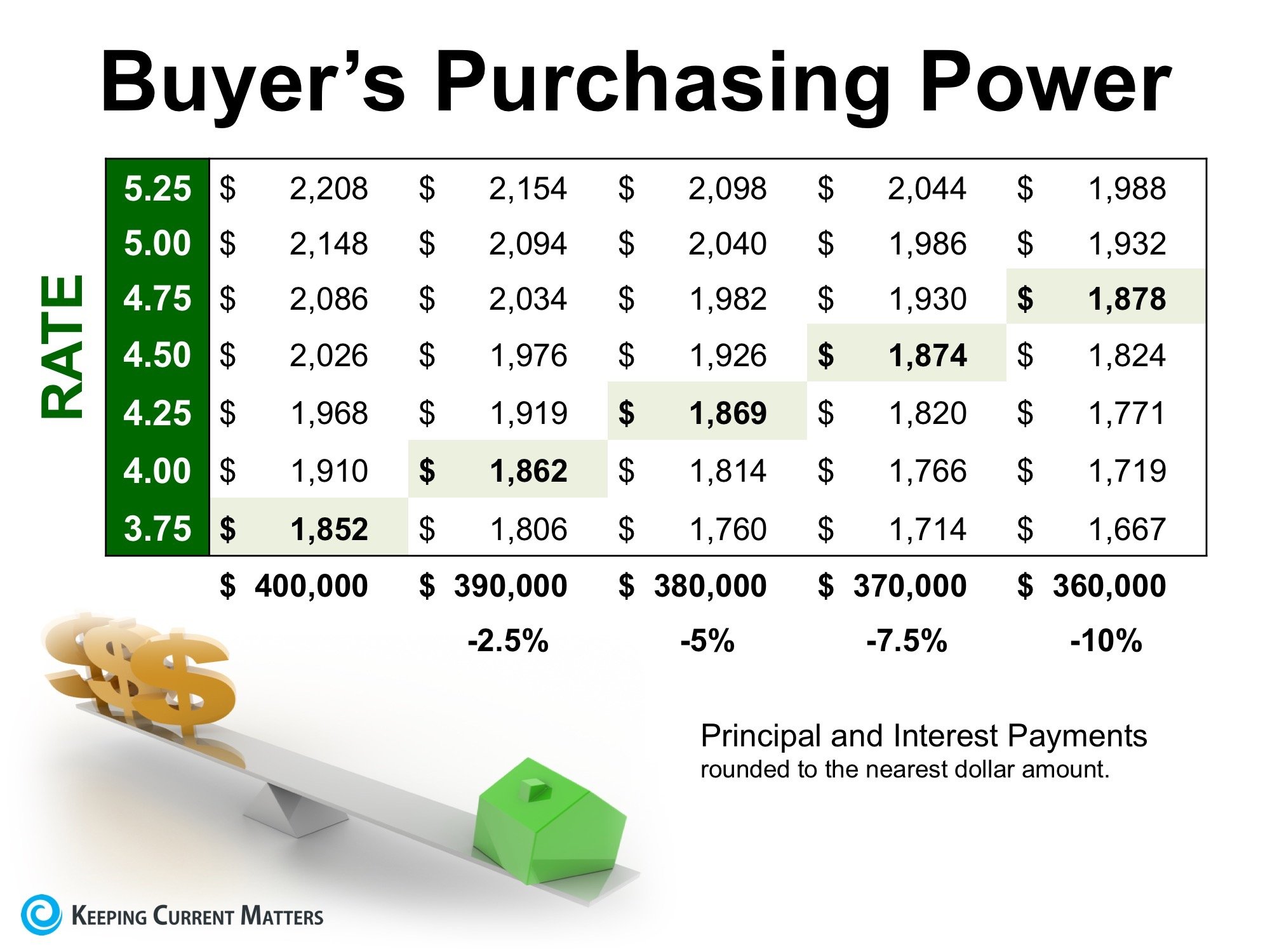
The chart below shows what impact rising interest rates would have if you planned to purchase a home within the national median price range, and planned to keep your principal and interest payments between $1,850-$1,900 a month.
Low Interest Rates Have a High Impact on Your Purchasing Power | Keeping Current Matters
With each quarter of a percent increase in interest rate, the value of the home you can afford decreases by 2.5% (in this example, $10,000). Experts predict that mortgage rates will be closer to 5% by this time next year.

Act now to get the most house for your hard-earned money.

Monday, December 4, 2017

7 Reasons to List Your Home This Holiday Season

7 Reasons to List Your Home This Holiday Season | Keeping Current Matters
Every year at this time, many homeowners decide to wait until after the holidays to put their homes on the market for the first time, while others who already have their homes on the market decide to take them off until after the holidays.

Here are seven great reasons not to wait:

  1. Relocation buyers are out there. Many companies are still hiring throughout the holidays and need their employees in their new positions as soon as possible.
  2. Purchasers who are looking for homes during the holidays are serious buyers and are ready to buy now.
  3. You can restrict the showings on your home to the times you want it shown. You will remain in control.
  4. Homes show better when decorated for the holidays.
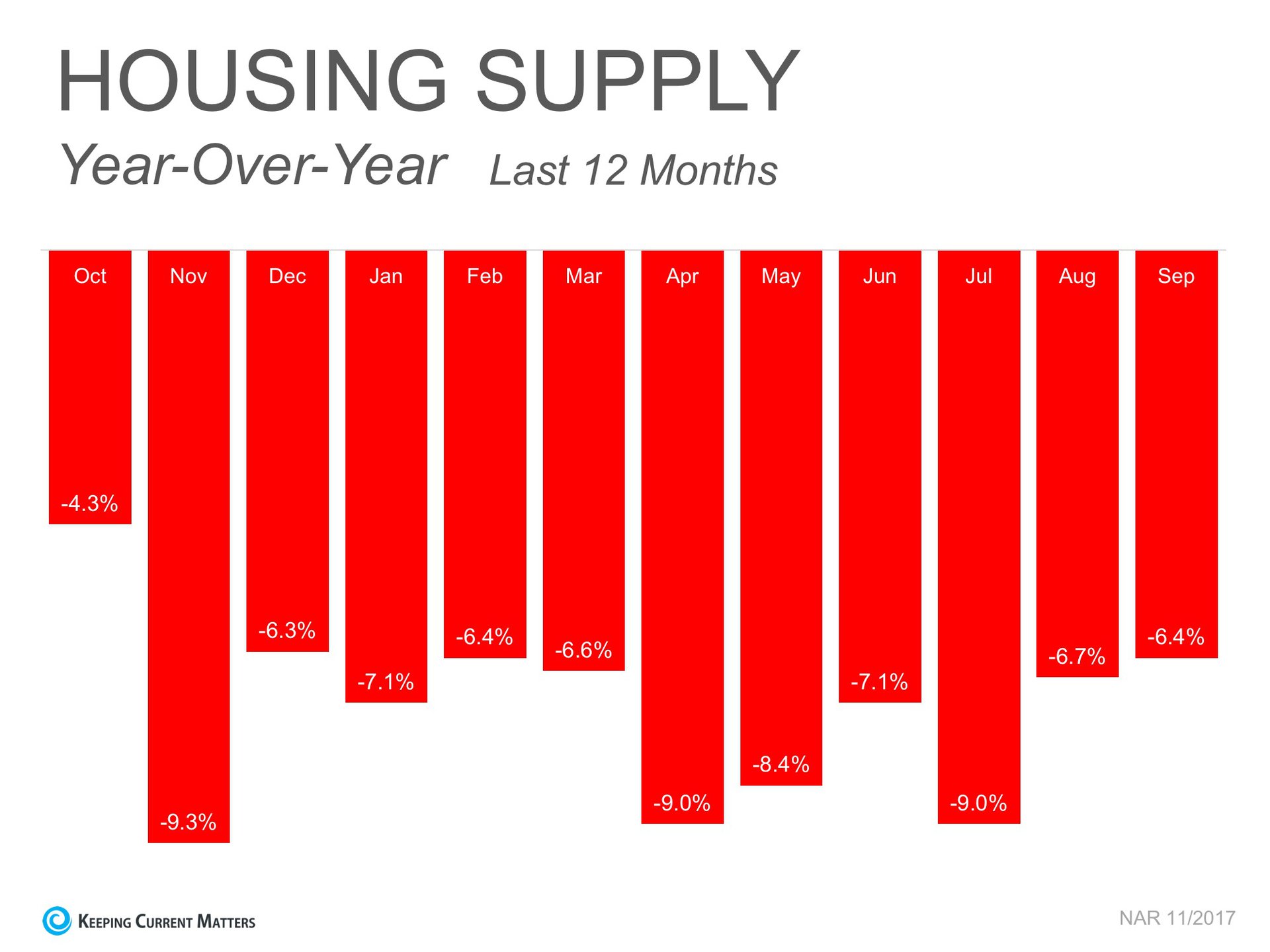
  5. There is less competition for you as a seller right now. Let’s take a look at listing inventory as compared to the same time last year:
7 Reasons to List Your Home This Holiday Season | Keeping Current Matters
  1. The desire to own a home doesn’t stop when the holidays come. Buyers who were unable to find their dream home during the busy spring and summer months are still searching!
  2. The supply of listings increases substantially after the holidays. Also, in many parts of the country, new construction will continue to surge reaching new heights in 2018, which will lessen the demand for your house.

Bottom Line

Waiting until after the holidays to sell your home probably doesn’t make sense.

Friday, December 1, 2017

Access is an Important Factor in Getting Your House SOLD!

Access is an Important Factor in Getting Your House SOLD! | Keeping Current Matters
So, you’ve decided to sell your house. You’ve hired a real estate professional to help you with the entire process, and they have asked you what level of access you want to provide to potential buyers.
There are four elements to a quality listing. At the top of the list is Access, followed by Condition, Financing, and Price. There are many levels of access that you can provide to your agent so that he or she can show your home.

Here are five levels of access that you can give to buyers, along with a brief description:

  1. Lockbox on the Door – this allows buyers the ability to see the home as soon as they are aware of the listing, or at their convenience.
  2. Providing a Key to the Home – although the buyer’s agent may need to stop by an office to pick up the key, there is little delay in being able to show the home.
  3. Open Access with a Phone Call – the seller allows showings with just a phone call’s notice.
  4. By Appointment Only (example: 48-Hour Notice) – Many buyers who are relocating for a new career or promotion start working in that area prior to purchasing their home. They often like to take advantage of free time during business hours (such as their lunch break) to view potential homes. Because of this, they may not be able to plan their availability far in advance or may be unable to wait 48 hours to see the house.
  5. Limited Access (example: the home is only available on Mondays or Tuesdays at 2pm or for only a couple of hours a day) – This is the most difficult way to be able to show your house to potential buyers.
In a competitive marketplace, access can make or break your ability to get the price you are looking for, or even sell your house at all.

Homeowners: Your House Must Be Sold TWICE

Homeowners: Your House Must Be Sold TWICE | Keeping Current Matters
In today’s housing market, where supply is very low and demand is very high, home values are increasing rapidly. Many experts are projecting that home values could appreciate by another 5%+ over the next twelve months. One major challenge in such a market is the bank appraisal.
If prices are surging, it is difficult for appraisers to find adequate, comparable sales (similar houses in the neighborhood that recently closed) to defend the selling price when performing the appraisal for the bank.
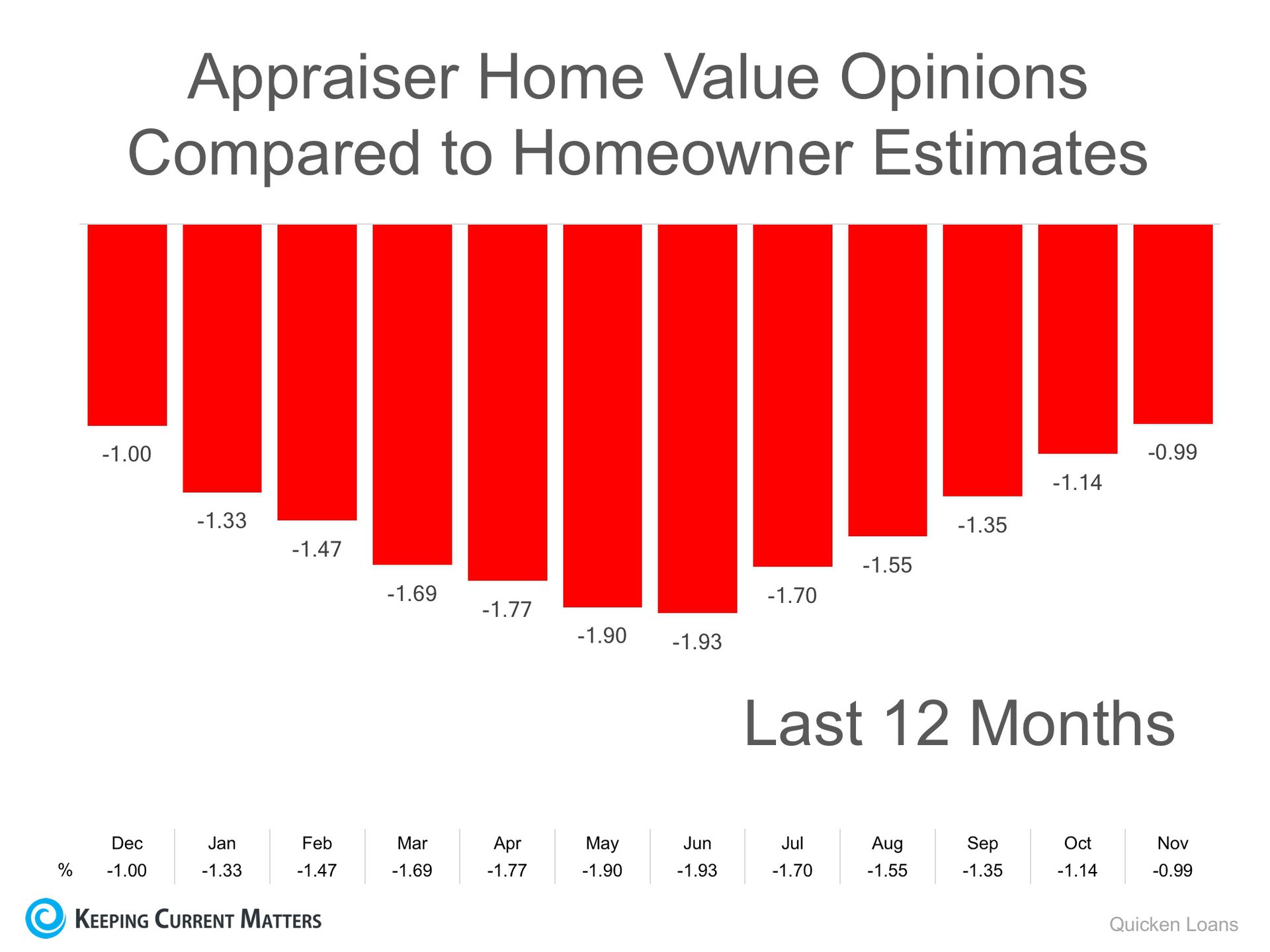
Every month in their Home Price Perception Index (HPPI), Quicken Loans measures the disparity between what a homeowner who is seeking to refinance their home believes their house is worth, and an appraiser’s evaluation of that same home.
Bill Banfield, Executive VP of Capital Markets at Quicken Loans urges anyone looking to buy or sell in today’s market to remember the impact of this challenge:
“Based on the HPPI, it appears homeowners in the markets where prices are rising faster than the national average – like Denver, Seattle and San Francisco – are continuing to underestimate just how quickly home values are rising, so the average appraisal is higher than homeowner estimate.
On the inverse of that, homeowners in areas where the values aren’t rising as fast may think they are rising faster than they are, leading to the appraisal lagging the estimate.”
The chart below illustrates the changes in home price estimates over the last 12 months.
Homeowners: Your House Must Be Sold TWICE | Keeping Current Matters

Bottom Line

Every house on the market must be sold twice; once to a prospective buyer and then to the bank (through the bank’s appraisal). With escalating prices, the second sale might be even more difficult than the first. If you are planning on entering the housing market this year, meet with an experienced professional who can guide you through this and any other obstacles that may arise.