The Effect of Student Loan Debt on
Homeownership
Writers and politicians are very concerned about
increasing costs of college and student loans on
the average young person. The amount of
outstanding student debt in the US is now $1.25
trillion, and debt is a prerequisite in getting a
degree and joining the labor force. This has
coincided with a decline in homeownership in the
US to a period we haven’t seen in the 60s, with
similar low rates for young buyers. As home
prices are higher in California, expenses that hurt
young people's ability to save translate into more
drastic effects on Millennial homeownership in
California.
A recent C.A.R. poll showed that almost 60% of
California Millennials said that they were very
concerned about their overall debt; further student
loans were rated as the most worrisome type of
debt. In the U.S. as a whole, student loans have
replaced credit cards as the second most amount
of debt held (behind mortgage debt).
Do higher levels of loan debts affect
homeownership? As it turns out, having a college
degree is a much bigger determinant of
homeownership than the amount or existence of
student debt and that the weak labor market since
the Great Recession has affected homeownership
more than debt. Between the recession and now,
the rate of homeownership dropped from 35% to
26% for degree holding millennials, and from 23%
to 17% for non-degree holding millennials.
There is ample evidence that student loans hinder
the ability to accumulate wealth and thus delays
homeownership. But over the long term this evens
out. People who have successfully completed
college degrees have higher earnings over their
lifetimes than those without. While non-degree seekers
own more homes than degree seekers in their early
20s, by the time they turn 27, that reverses. By the age
of 30, people who graduated with student debt have
the same homeownership rates as people who
graduated debt free.
The amount student loan debt is much less than what
is often written about in the media. The typical
borrower has an average debt of $25k, with a median
of $13k. Thirteen percent of borrowers have more
than $50k of debt, and 3% of borrowers have more
than $100k (a majority of these borrowers have also
gone to graduate school).
C.A.R. asked millennials who have purchased whether
they thought that student loans were delaying their
homeownership. Of millennials who were most worried
about debt, 76% claimed that it kept them from
homeownership; but only 25% of all millennials said
that it was. When Millennial home purchasers were
asked same question, 27% said that debt delayed
purchasing. Homeownership and student loans are
linked, but not in as drastic a way that many writers
worry about.

 So you've decided to sell your house. You've hired a real estate professional to help you with the entire process and they have asked you what level of access you want to provide to potential buyers. There are four elements to a quality listing. At the top of the list is Access, followed by Condition, Financing and Price. There are many levels of access that you could provide to your agent to be able to show your home.

 The National Association of Realtors, The Mortgage Bankers' Association, Freddie Mac and Fannie Mae are all projecting that home sales will increase in 2017. Here is a chart showing what each entity is projecting in sales for this year and the next.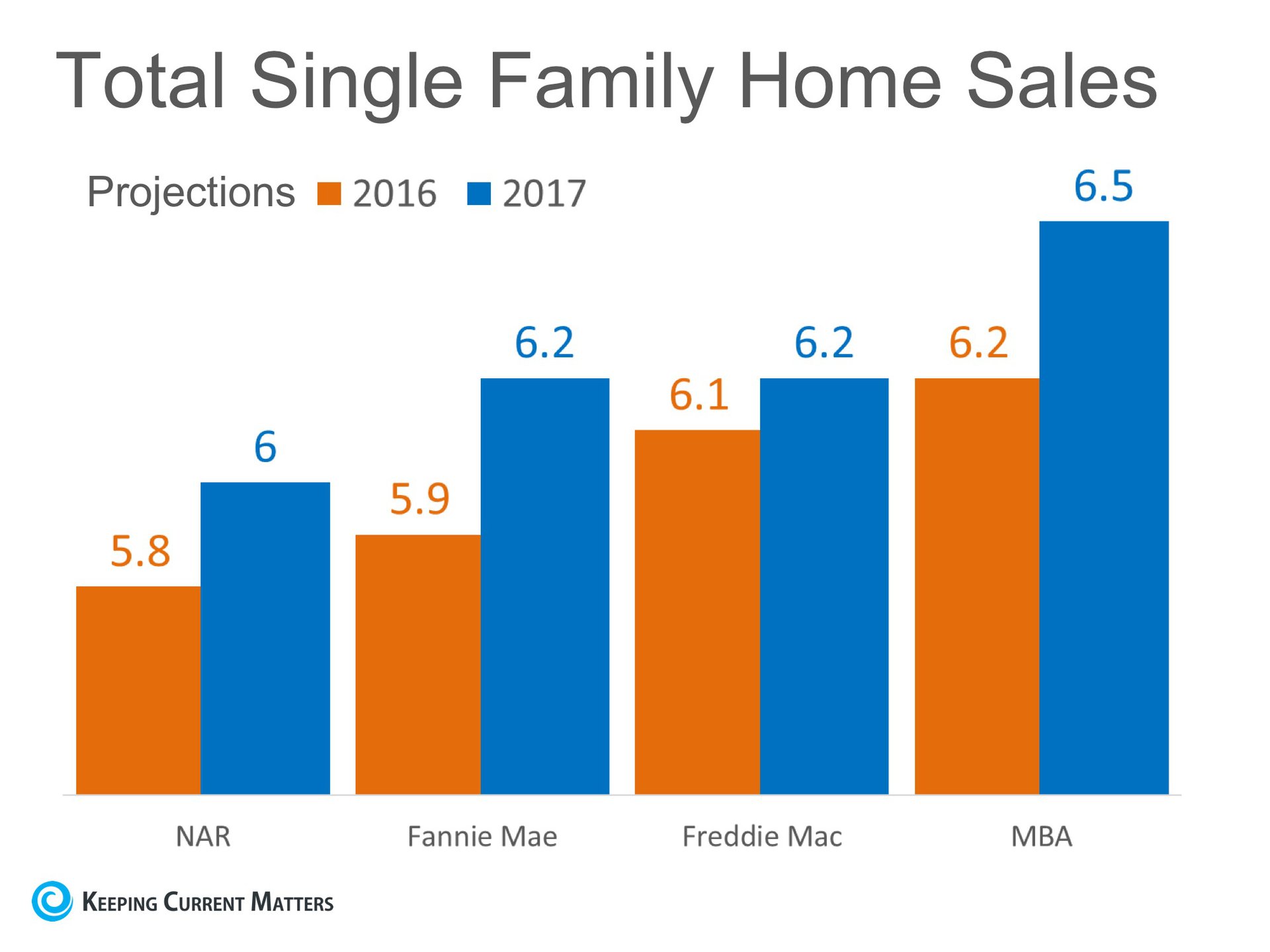
 There are many potential homebuyers, and even sellers, who believe that you need at least a 20% down payment in order to buy a home, or move on to their next home. Time after time, we have dispelled this myth by showing that there are many loan programs that allow you to put down as little as 3% (or 0% with a VA loan). If you have saved up your down payment and are ready to start your home search, one other piece of the puzzle is to make sure that you have saved enough for your closing costs. Freddie Mac
 ![Mortgage Rates by Decade Compared to Today [INFOGRAPHIC] | Keeping Current Matters](http://www.keepingcurrentmatters.com/wp-content/uploads/2016/10/20161007-Mortgage-Rates-KCM.jpg)