WASHINGTON (August 31, 2016) — Pending home sales expanded in most of the country in July and reached their second highest reading in over a decade, according to the National Association of Realtors®. Only the Midwest saw a dip in contract activity last month.
The
Pending Home Sales Index,
* a forward-looking indicator based on contract signings, rose 1.3 percent to 111.3 in July from a downwardly revised 109.9 in June and is now 1.4 percent higher than July 2015 (109.8). The index is now at its second highest reading this year after April (115.0).
Lawrence Yun, NAR chief economist, says a sizable jump in the West lifted pending home sales higher in July. “Amidst tight inventory conditions that have lingered the entire summer, contract activity last month was able to pick up at least modestly in a majority of areas,” he said. “More home shoppers having success is good news for the housing market heading into the fall, but buyers still have few choices and little time before deciding to make an offer on a home available for sale. There’s little doubt there’d be more sales activity right now if there were more affordable listings on the market.”
Adds Yun, “The index in the West last month was the highest in over three years 1 largely because of stronger labor market conditions. If homebuilding increases in the region to tame price growth and alleviate the ongoing affordability concerns, the healthy rate of job gains should support more sales.”
Recent residential construction data shows that the size and costs of new homes has moved downward over the past year. According to Yun, this is an early indication that homebuilders are beginning to shift away from building larger, more expensive homes for the upper end of the market to focusing more on properties geared for buyers in the middle and lower price tiers.
“Realtors® in several high-cost areas have been saying for quite a while that there is robust demand for single-family starter homes and townhomes at an affordable price point for young buyers,” adds Yun. “The homeownership rate won’t move up from its over 50-year low 2without a meaningful boost from first-time buyers, whose participation has yet to noticeably increase so far this year despite mortgage rates near all-time lows 3.”
Existing-home sales this year are forecast to be around 5.38 million, a 2.8 percent increase from 2015 and the highest annual pace since 2006 (6.48 million). After accelerating to 6.8 percent a year ago, national median existing-home price growth is forecast to slightly moderate to around 4 percent.
Regional Breakdown
The PHSI in the Northeast moved up 0.8 percent to 96.8 in July, and is now 1.1 percent above a year ago. In the Midwest the index decreased 2.9 percent to 105.8 in July, and is now 1.1 percent lower than July 2015.
Pending home sales in the South inched higher (0.8 percent) to an index of 123.9 in July and are now 0.4 percent higher than last July. The index in the West surged 7.3 percent in July to 108.7, and is now 6.2 percent above a year ago.
The National Association of Realtors®, “The Voice for Real Estate,” is America’s largest trade association, representing 1.1 million members involved in all aspects of the residential and commercial real estate industries.
# # #
1 The PHSI in the West in July was the highest since June 2013.
2 According to the U.S. Census Bureau, the homeownership rate is currently at 62.9 percent, which is the lowest since 1965.
3 According to the Realtors® Confidence Index, sales to first-time buyers in 2016 have averaged 31 percent through July; they were 30 percent in 2015. NAR’s 2015 Profile of Home Buyers and Sellers, representing transactions purchased between July 2014 and June of 2015, found that first-time buyers were 32 percent, the lowest since 1987 (30 percent). The average share in the survey’s 34-year history is 39 percent.
* The Pending Home Sales Index is a leading indicator for the housing sector, based on pending sales of existing homes. A sale is listed as pending when the contract has been signed but the transaction has not closed, though the sale usually is finalized within one or two months of signing.
The index is based on a large national sample, typically representing about 20 percent of transactions for existing-home sales. In developing the model for the index, it was demonstrated that the level of monthly sales-contract activity parallels the level of closed existing-home sales in the following two months.
An index of 100 is equal to the average level of contract activity during 2001, which was the first year to be examined. By coincidence, the volume of existing-home sales in 2001 fell within the range of 5.0 to 5.5 million, which is considered normal for the current U.S. population.
NOTE: NAR’s third quarter Housing Opportunities and Market Experience (HOME) survey will be released September 14, Existing-Home Sales for August will be reported September 22, and the next Pending Home Sales Index will be September 29; all release times are 10:00 a.m. ET.
![Mortgage Rates by Decade Compared to Today [INFOGRAPHIC] | Keeping Current Matters](http://www.keepingcurrentmatters.com/wp-content/uploads/2016/10/20161007-Mortgage-Rates-KCM.jpg)

 In today's market, with home prices rising and a lack of inventory, some homeowners may consider trying to sell their home on their own, known in the industry as a For Sale by Owner (FSBO). There are several reasons why this might not be a good idea for the vast majority of sellers. Here are the top five reasons:
 When a homeowner decides to sell their house, they obviously want the best possible price with the least amount of hassles. However, for the vast majority of sellers, the most important result is to actually get the home sold. In order to accomplish all three goals, a seller should realize the importance of using a real estate professional. We realize that technology has changed the purchaser's behavior during the home buying process. For the past three years, 92% of all buyers have used the internet in their home search according to the National Association of Realtors' most recent Profile of Home Buyers & Sellers. However, the report also revealed that 95% percent of buyers that used the internet when searching for a home purchased their home through either a real estate agent/broker or from a builder or builder's agent.Only 2% purchased their home directly from a seller whom the buyer didn't know. Buyers search for a home online, but then depend on an agent to find the actual home they will buy (53%), to negotiate the terms of the sale & price (48%), or to help understand the process (60%). The plethora of information now available has resulted in an increase in the percentage of buyers that reach out to real estate professionals to "connect the dots." This is obvious, as the percentage of overall buyers who used an agent to buy their home has steadily increased from 69% in 2001.
 There is no doubt that getting a mortgage is easier today than it was right after the housing crash a decade ago. However, the easing of credit availability has led to some questioning of whether or not we are headed for another housing crisis. Let's put everything into the proper perspective.
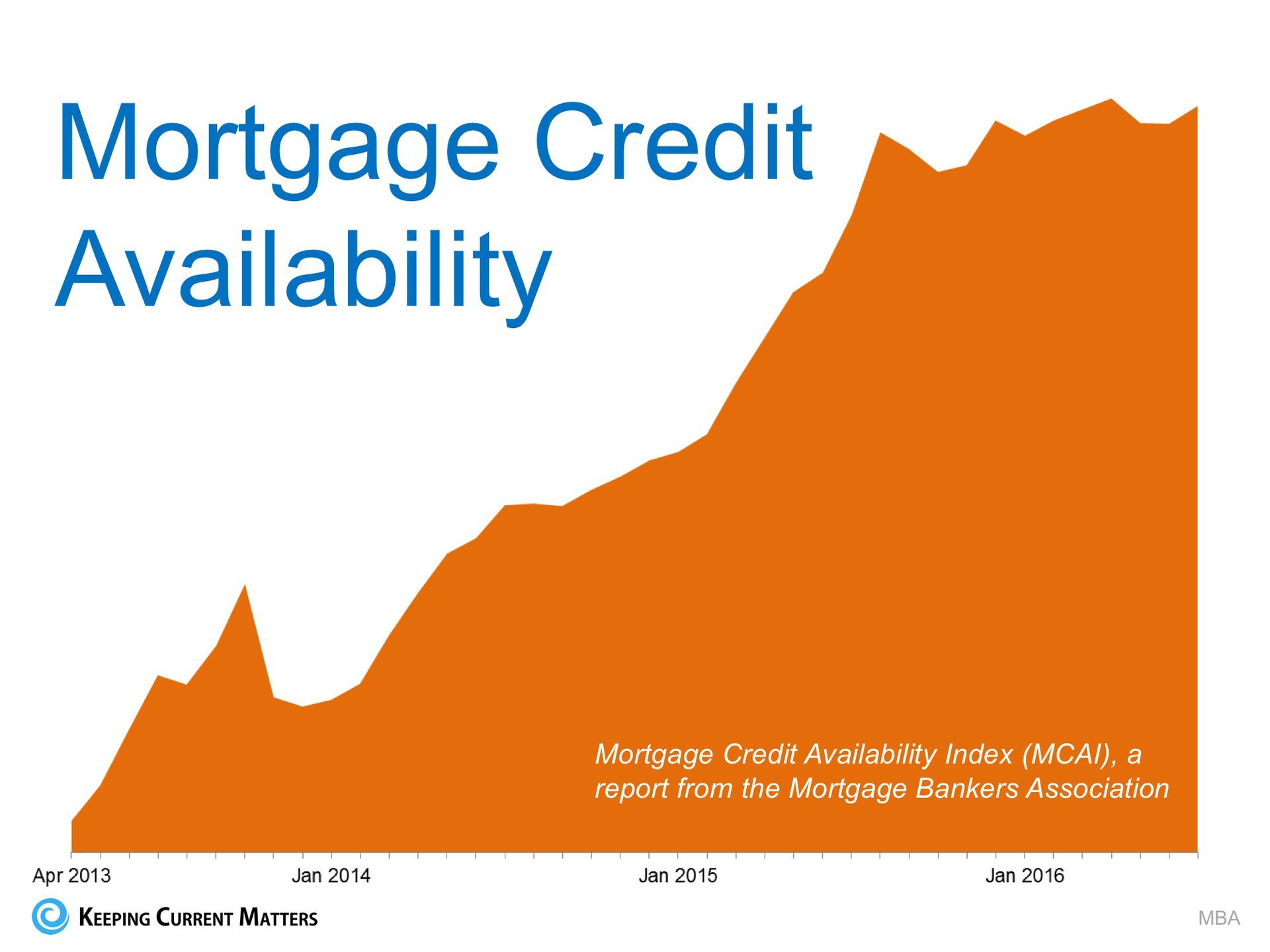 However, if we look further back at the index we see quite a different story.
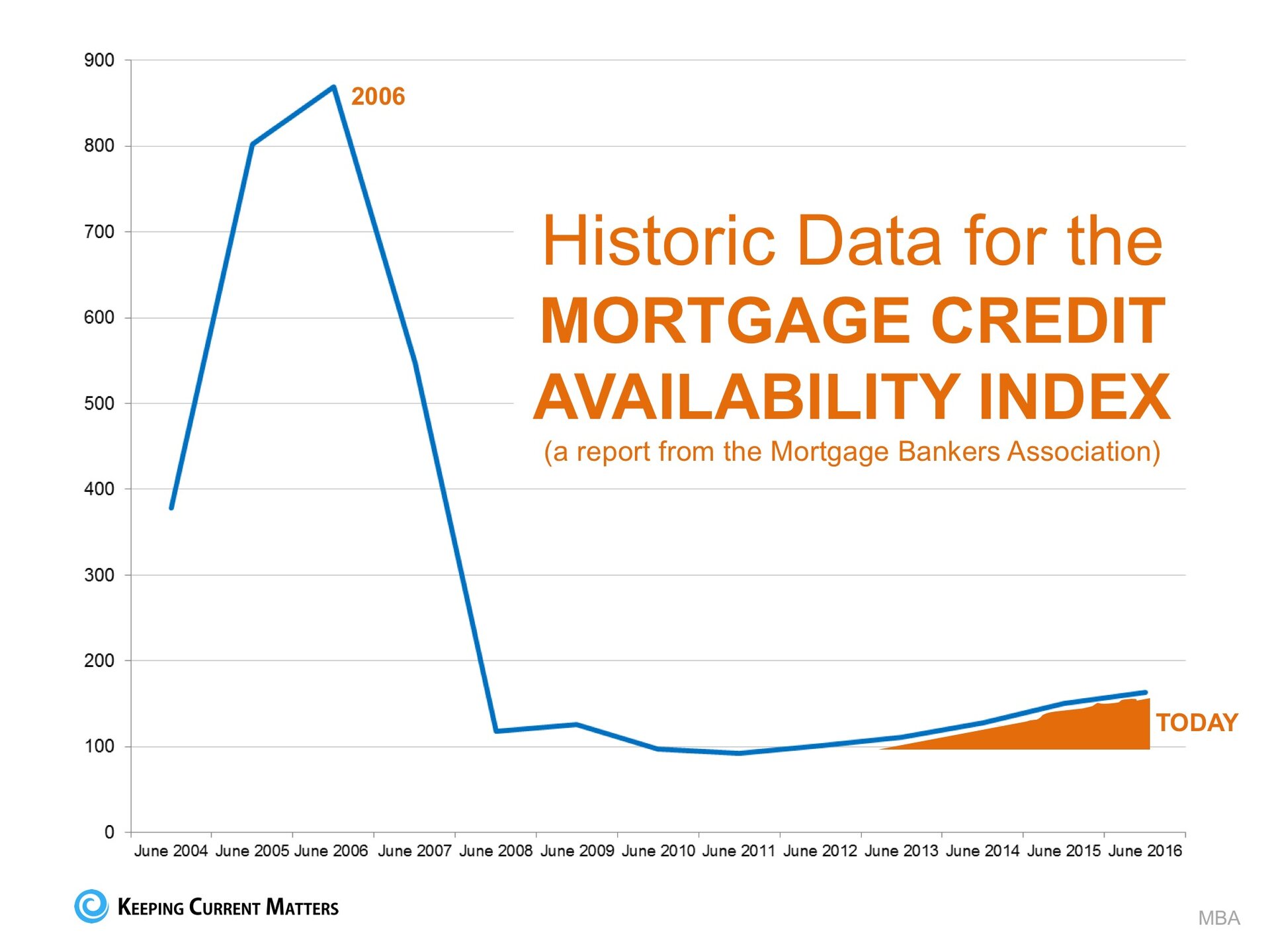 As this visual easily illustrates, today's index is nowhere near the levels it shot up to in 2006.
 In many markets across the country, the amount of buyers searching for their dream homes greatly outnumbers the amount of homes for sale. This has led to a competitive marketplace where buyers often need to stand out. One way to show you are serious about buying your dream home is to get pre-qualified or pre-approved for a mortgage before starting your search. Even if you are in a market that is not as competitive, knowing your budget will give you the confidence of knowing if your dream home is within your reach. Freddie Mac lays out the advantages of pre-approval in the My Home section of their website:
