Friday, April 15, 2016

Home Office
These days, more and more people are taking the bold step of doing at least part of their job at home. A 30-second commute has a lot of appeal, and people are increasingly opting to work at home because it allows them flexibility to attend to family joys and responsibilities. But as anyone who has been down this road can tell you, working at home has its down side as well. By planning wisely and upgrading appropriately, you can make your home office an excellent work environment — one in which you'll be both comfortable and motivated.

Home Offices That Fit Your Lifestyle and Work Habits
Home office needs will differ based on work habits and lifestyle. Many people prefer to locate their offices away from the rest of their living space, and they may find attics, basements and rooms over detached garages idyllic places to create a residential office. Parents who need to work while monitoring their kids may want something more centralized or scalable within the home. And some people may use office spaces for writing, reading, musical composition and other activities. Hiring an interior designer with experience designing residential office spaces can be invaluable in designing the right space to fit your needs.
Custom Desks, Chairs and Furniture
You might be able to find acceptable office desks and chairs at your local furniture store, but you also might want to think of your home office as more of an investment. Many people use their offices every day, or nearly every day. To maximize productivity and minimize stress, joint pain and poor posture, you may want to splurge on a custom-built desk and an ergonomic office chair. A finish carpenter can deliver all sorts of custom amenities that, while seemingly indulgent, are smart investments for one of the most productive areas of your home and your work life.
If there's any chance you'll have visits from colleagues, your boss, vendors, partners, clients or others, you must pay special attention to the kind of statement your work environment makes. When appropriate and possible, have a separate outside entrance so that visitors don't have to traipse through private family spaces to get to your office. It's difficult to project a sense of professionalism when you have to pick up toys or laundry en route to your meeting. In most traditional office environments, you’d use a conference room for meetings. If you keep your work area neat, and there's room for another table, you may be able to create your own mini conference area.

Ideally, the office area should have a dedicated bathroom off limits to family members. This makes it easy to keep it clean and clutter-free. If you can't swing a separate bathroom, consider designating one of the family bathrooms for office use — and also adding storage to minimize clutter and make it easier to keep clean as well.
It usually makes sense to have at least one separate phone line exclusively for your office. If you use the Internet, fax machine or e-mail extensively, additional lines are a good idea. A separate business line allows you to have a professional voicemail or answering machine message. It also gives you the option of using call forwarding if you occasionally work from another location. A designated business line also makes it easier to keep youngsters from intercepting your important business calls. And at the end of the day, you can leave the business line to the answering machine or voicemail without missing calls from friends and family.

Another common issue with home offices is electrical power. Copiers, laser printers and computers use a lot of juice. Check with an electrician about adding a couple of circuits so that you don't have to worry about tripping the circuit breaker every time you make a photocopy. Not only is it convenient to have an experienced electrician handling this type of work, it's important to hire a qualified electrician to ensure your safety and that of your family and your home. Many office spaces weren't designed to handle load-bearing circuits and advanced electrical devices.
No matter how well designed your workspace is, you'll have to establish basic ground rules for yourself, your family and even your visitors. If you find yourself making continual raids on the refrigerator, you may need to establish a rule for yourself that limits trips to the kitchen to meal times. A separate business phone line isn't much use if family members routinely turn to it when the main family line is tied up, and your "conference room" won't serve its purpose if it becomes a hideaway for empty boxes, half-finished puzzles and spare camping equipment either.

Monday, April 11, 2016

Save or Spend?


49.2 Percent Of Surveyed Americans Will Save Their Tax Refund

April may start off with some lighthearted fools jokes, but the month turns very serious right around the 15th. As Americans work feverishly to submit their taxes by midnight on April 15, or the extended deadline this year of Monday, April 18, due to the Emancipation Day holiday in Washington, D.C. (Maine and Mass. taxpayers actually have until April 19, due to Patriots’ Day). Regardless of if taxpayers filed in January or wait to file in mid-April, the IRS anticipates that more than 150 million tax returns will be filed this year, and 70 percent of the nation’s workforce will happily await a tax refund from Uncle Sam. Last year’s average tax refund amount totaled $2,797 dollars.
If you’re expecting a tax refund this year, what do you plan to do with it? According to the National Retail Federation’s (NRF) annual Tax Returns Survey, 49.2 percent (the highest percentage in the survey’s history) of taxpayers plan to save their tax refund rather than spend it right away. Here are some of the most common ways people choose to use their tax refund:
Risky Spending
According to the NRF survey, 8.3 percent of taxpayers are planning for big splurges with their tax refund. Many people still like to treat their refund as a gift or free money from the government, instead of remembering that these dollars belonged to them all along. So in celebration, some taxpayers spend their entire refund on lavish vacations, expensive merchandise and/or tons of individual retail purchases. While it may feel good at the time to reward yourself — with money that was always yours — you might be putting yourself at higher risk for experiencing buyer’s remorse. After all, once it’s gone … it’s gone!
Business as Usual
On the flip side, 22.4 percent reported that they plan to simply deposit their refund into the bank and continue on with business as usual, budgeting for groceries, gas, family expenditures, car payments, household bills, etc. Think about it this way: when you return damaged or unwanted merchandise to a store and receive a cash refund, you probably don’t think of it as free cash to liberally spend on anything. You likely deposit it back into your bank, or your wallet, and use it to pay for the next necessity. Likewise, if a tax refund is treated as just what it is — a refund of your annual earnings held by the government — it will make sense for some taxpayers to just add the money to their everyday funds and continue on as normal. While these taxpayers may not experience the thrill of instant-gratification spending, they are preventing any regrets due to impulse buying.
Smart Financing
NRF CEO Matthew Shay said in a press release, “Americans this year see refund season as a time to improve their financial health by using their refunds to get ahead on savings goals, pay down debt and plan for purchases in the future. Money saved is spending potential down the road.”
In fact, 34.9 percent of the NRF study’s respondents indicated that they intend to use their refund to pay down debt. Some other popular financial-saving decisions that many taxpayers use their refund for, include:
  • Having an Emergency Fund — Making it twelve months without incurring any unexpected expenses can prove a hard feat for anyone. So using your tax refund to either start, replenish or grow your emergency fund is a positively safe and smart decision.
  • Increasing Retirement Savings — Putting money into a retirement savings account is always a good decision, as the more you save, the more financially secure you’ll be in the future.
  • Opening an Extra Savings Account — An extra savings account can become a money hero for the expected and unexpected special events in life, such as weddings, anniversary trips, senior care for aging family, etc. Don’t be afraid to think ahead and start saving money for those unique times.
  • Growing a College Fund — If you’ve got children, you might consider adding to or starting college funds. College may still be a long way off for junior, but growing a college fund now could mean the difference between him pursuing his dreams with your help, or taking up permanent residency on your living room sofa.
  • Building a Young Adult’s Savings Account — For older dependents that are earning an income, consider helping them open a Roth IRA account that will help them begin investing in their own financial future. Eligible dependents can contribute up to $5,500 dollars, or the amount of their annual income, whichever is lower.
Smart Spending
If you like the idea of saving, but you also feel like your tax refund is burning a hole in your pocket, you might find enjoy some smart spending. Smart spending includes decisions that have a high probability of leading to a more positive financial future, like:
  • Investing in a Home — I bet it’s no surprise that PrimeLending’s favorite smart refund spending idea is to use those extra dollars as a down payment on a new home. With home loan options that fit a wide range of budgets, some requiring as little as 3% down, and today’s low interest rates, it’s a great time to purchase. Check out our Why 2016 Is The Year To Quit Renting and Buy blog for more on the benefits of homeownership.
  • Taking Care of Repairs — If there are costly repairs to your home, vehicle or other lifestyle necessities, consider using your tax refund to take care of everything. You won’t regret it, especially when all of your repair worries are behind you.
  • Giving to Others — It always feels good to help others in need. Donate some of your tax refund to your favorite local charity. You’ll be helping your community, plus setting yourself up with a tax benefit for your 2016 tax return.
  • Shopping the Sales Rack — Treat yourself a little bit, but just don’t overdo it! Remember that this is your hard-earned money. So celebrate yourself with some light pampering, and allocate the rest to smart saving and smart spending.

Saturday, April 2, 2016

How Much Does it Cost to Install Landscaping?

Whether you are moving into a new home, or updating the grounds of the home you already live in, landscaping can dramatically change the look of your house and property. You may like a neatly trimmed lawn or prefer a wild and overgrown look, you may live in an arid climate and need to xeriscape, or you may like finely manicured rosebushes. No matter how you choose to landscape, there is a professional out there whose specialty is exactly the look you want!
The cost of landscaping varies greatly but most homeowners report spending between $1,586 and $5,015. Before you call the pros, though, here are a few things to think about that will affect your individual landscaping project's cost that may have you spending more or less than the average.

How large is your property?

The single largest factor in the cost of your new landscaping installation is the size of your property. If your house sits on a huge lot, and you're not sure if you can afford to landscape the entire area, talk to your professional landscaper about the possibility of landscaping it in sections. A professional landscaper and gardener will be able to tell you the best approach for this. For example, if there are plants that take a longer time to come to maturity you may be able to plant them first and when they are reaching their peak landscape another section that grows in faster so that everything looks perfect at the same time.

Do you want a lawn?

Lawns are not expensive to plant. Enough grass seed to cover your property is far less expensive than exotic plants or other features. however, lawns need careful maintenance, and plenty of water, especially at the beginning to get them established. So you may feel a lawn is a simple and affordable way to go, but it may take more money in the long run in terms of water, time and labor

Xeriscaping Option

Xeriscaping is a style of landscaping that utilizes plants, shrubs, ground covers and rocks that need very little water to thrive. The cost of installing a xeriscaped yard is often more than simply planting grass and flowers. However, once established the maintenance and water costs are kept low by design.

Patio Installation

Patios or decks are a great addition to your landscaping plan as they provide a relaxing place for you to enjoy your new lawn and garden, as well as a great place to entertain friends. The overall cost will depend on the materials you choose. For example, Cement block or brick patios may be more affordable than flagstone or granite tiles. Talk to your installer about the uses of your patio and what the best material might be.

Flower Options

If a flower garden is important to you, let your landscaper know this at the beginning of the process. Many people want a landscaper to design their lawns and gardens but enjoy tending to their own flowers and planting new ones each year. If this is the case for you, ask that the space be made for flower or vegetable gardens. You just want to make sure that space has been set aside for this from the start.

Water and Irrigation

Don't spend time and money on beautiful landscaping if you have not taken water and irrigation issues into account first. Installing a sprinkler system, leveling the ground to avoid run off, and planning which plants, shrubs or flowers will get more and less water are all precautions that may take more time and money in the short term but will benefit you in the long run. You want to give your lawns and gardens the best chance to thrive.

Thursday, March 31, 2016

The Top 5 Reasons You Should Not For Sale By Owner

 In today's market, with homes selling quickly and prices rising, some homeowners might consider trying to sell their home on their own, known in the industry as a For Sale by Owner (FSBO). There are several reasons this might not be a good idea for the vast majority of sellers. Here are five of those reasons: 1. There Are Too Many People to Negotiate With Here is a list of some of the people with whom you must be prepared to negotiate if you decide to For Sale By Owner:
  • The buyer who wants the best deal possible
  • The buyer’s agent who solely represents the best interest of the buyer
  • The buyer’s attorney (in some parts of the country)
  • The home inspection companies, which work for the buyer and will almost always find some problems with the house
  • The appraiser if there is a question of value
2. Exposure to Prospective Purchasers Recent studies have shown that 89% of buyers search online for a home. That is in comparison to only 20% looking at print newspaper ads. Most real estate agents have an internet strategy to promote the sale of your home. Do you? 3. Results Come from the Internet Where do buyers find the home they actually purchased?
  • 44% on the internet
  • 33% from a Real Estate Agent
  • 9% from a yard sign
  • 1% from newspaper
The days of selling your house by just putting up a sign and putting it in the paper are long gone. Having a strong internet strategy is crucial. 4. FSBOing has Become More and More Difficult The paperwork involved in selling and buying a home has increased dramatically as industry disclosures and regulations have become mandatory. This is one of the reasons that the percentage of people FSBOing has dropped from 19% to 8% over the last 20+ years. The 8% share represents the lowest recorded figure since NAR began collecting data in 1981. 5. You Net More Money when Using an Agent Many homeowners believe that they will save the real estate commission by selling on their own. Realize that the main reason buyers look at FSBOs is because they also believe they can save the real estate agent’s commission. The seller and buyer can’t both save the commission. Studies have shown that the typical house sold by the homeowner sells for $210,000 while the typical house sold by an agent sells for $249,000. This doesn’t mean that an agent can get $39,000 more for your home as studies have shown that people are more likely to FSBO in markets with lower price points. However, it does show that selling on your own might not make sense.

Bottom Line

Before you decide to take on the challenges of selling your house on your own, sit with a real estate professional in your marketplace and see what they have to offer.

Monday, March 28, 2016

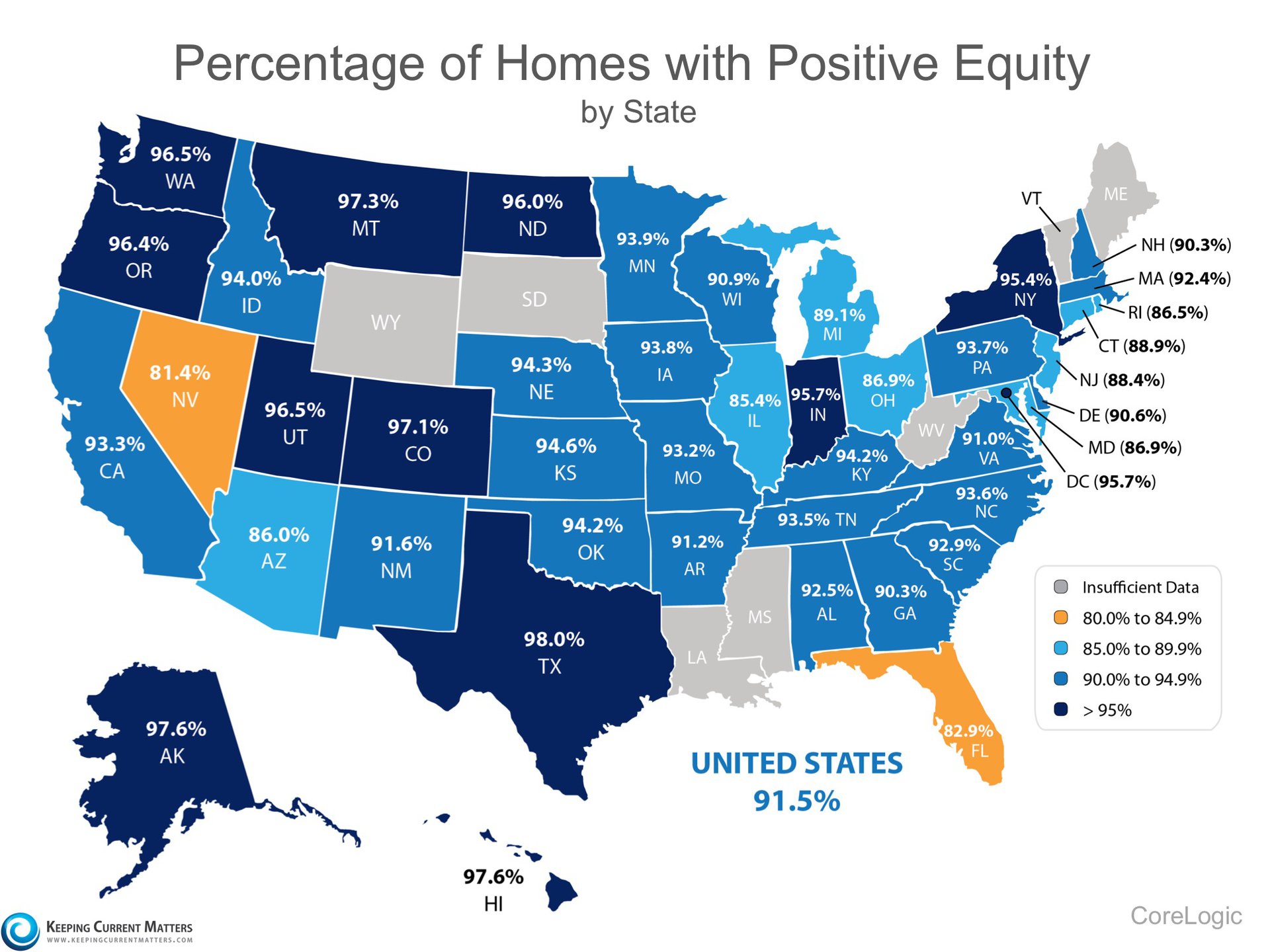
91.5% of Homes in the US have Positive Equity

91.5% of Homes in the US have Positive Equity


91.5% of Homes in the US have Positive Equity | Keeping Current Matters CoreLogic’s latest Equity Report revealed that one million borrowers regained equity in their homes in 2015. The outlook for 2016 remains positive as well, as an additional 850,000 properties would regain equity if home prices rose another 5% this year. 

The study also revealed:

  • 95% of homes valued over $200,000 now have a positive equity position
  • 87% of homes valued under $200,000 have entered a positive position
  • The 11.5% growth in home equity in Q4 marked the 13th consecutive quarter of double digit gains
Below is a map showing the percentage of homes with a mortgage, in each state, that have positive equity. (The states in gray have insufficient data to report.)91.5% of Homes in the US have Positive Equity | Keeping Current Matters

Significant Equity Is On The Rise

Anand Nallathambi, President & CEO of CoreLogic, believes this is great news for the “long-term health of the U.S. economy.” He went on to say:
“The number of homeowners with more than 20% equity is rising rapidly. Higher prices driven largely by tight supply are certainly a big reason for the rise, but continued population growth, household formation and ultralow interest rates are also factors.”
Of the 91.5% of homeowners with positive equity in the US, 72.6% have significant equity (defined as more than 20%). This means that nearly three out of four homeowners with a mortgage could use the equity in their current home to purchase a new home now. The map below shows the percentage of homes with a mortgage, in each state, with significant equity.91.5% of Homes in the US have Positive Equity | Keeping Current Matters

Bottom Line

If you are one of the many homeowners who is unsure of how much equity you have in your home and are curious about your ability to move, meet with a local real estate professional who can help evaluate your situation.

Wednesday, March 23, 2016

Home Improvement Projects for Under $1,000

paint door
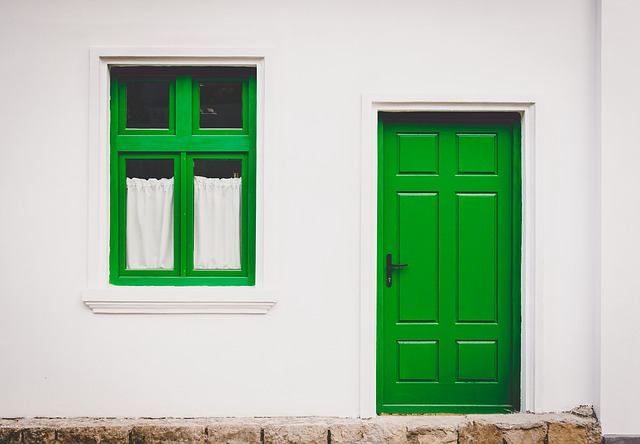
Just like the paint on the rest of your home, your front door can be subject to things like peeling, cracking and fading over time. The freeze/thaw cycle in the winter can make this even more obvious, as can things like salt or ice melt getting splashed on the door by slush as people make their way indoors. Repainting your door is fairly easy and inexpensive, and can really give your home’s curb appeal a big boost.
Cost
The average cost of painting a front door is about $100 per door. The total cost ranges from about $20 for a DIY job to $300 for high-end doors and paint jobs.
Money Saving Tips
The best way to save money on front door paint jobs is to invest in high quality enamel paints for the job. They’re less likely to need touch ups as frequently as other paints, which means you need to paint less often. If you’re comfortable painting the door yourself, tackling this job DIY can really save you a lot of money as well. Just be sure to use a primer and two coats of paint to ensure you’re doing it right.
DIY Considerations
Most people can comfortably tackle the job of painting themselves. The only time you may want to leave it to the professionals is if you have a door with windows, glass inserts, or a lot of carvings and features that may take a specialized approach.

Stain Your Deck
stain your deck
All that snow, ice and freezing rain hitting your deck this winter could have done a lot of damage to the stain and finish of the wood. Stain is necessary not only to keep your deck looking great, it also helps prevent the wood from absorbing moisture and rotting over time. So if your deck has begun to peel and show the wood through in places, it’s time to put on a new coat of stain. Doing so will not only help protect your deck from the elements, it will also improve your home’s curb appeal.
Cost
The average cost of staining a deck is around $2 a square foot, assuming a deck of around 500 square feet. In most cases the cost will not be any higher than $400 for the total job.
Money Saving Tips
Your deck will need to be power washed before it can be stained, and this needs time to dry before the stain can be applied. Save time and money by doing the power washing yourself; schedule the professionals to come in after the deck has had a chance to dry. If you’re comfortable with tackling the job yourself, DIY can also save you professional fees, as most pros will take about 4-5 hours to do the job, and charge for their time.
DIY Considerations
Most able bodied homeowners will be able to tackle this job on their own. Keep in mind that you will need to rent or purchase a power washer to thoroughly clean the deck. You’ll also need to remove old, peeling stain, and apply at least two coats to ensure good coverage.
Air Duct Cleaning
air ducts
After running your furnace all winter, it’s a good idea to get your air ducts cleaned come spring. This is particularly crucial if you’ve had any work done indoors over the past year, as construction dust and debris can build up in your ducts, reducing your HVAC system’s efficiency. Likewise, if you or your family suffer from allergies, cleaning out the ducts periodically can help improve your air quality.
Cost
The average cost of having your ducts cleaned is between $300 and $500 for a professional cleaning. The total range of costs is between $200 for cleaning the ducts in a small house to $900 for older ductwork that may need some upgrades done at the same time.
Money Saving Tips
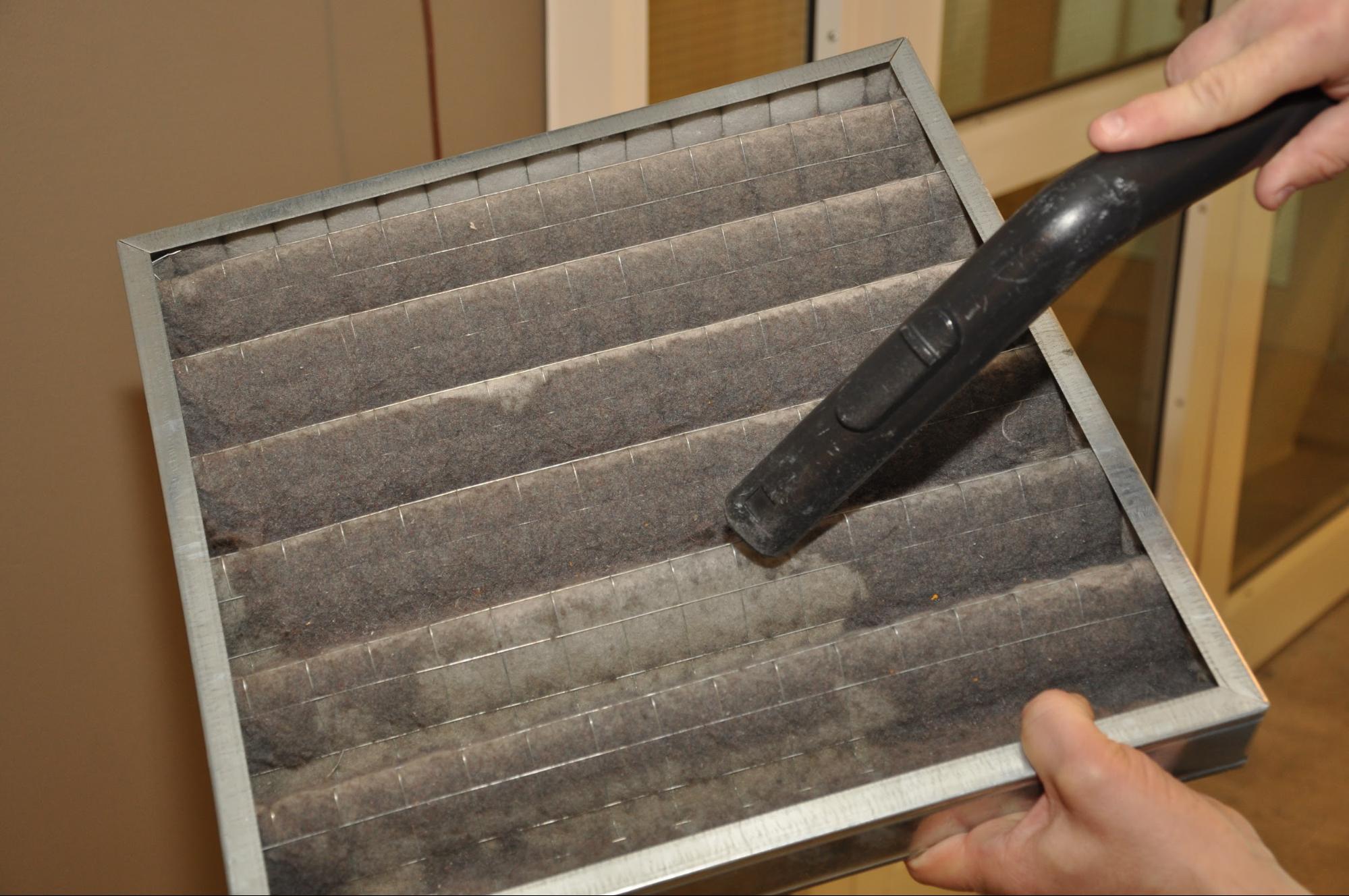
Change your filter regularly on your HVAC system to help prevent dust and dirt build up in your ducts. You should change these seasonally at a minimum, but some brands recommend changing them monthly. Remove your filter and hold it up to the light; if you can’t see through it, it’s time to replace it. Clean and wipe down your grates periodically as well to help get rid of buildup that could be falling into the ducts, necessitating their cleaning.
DIY Considerations
Special equipment and knowledge is required to clean out the ducts properly. While you could possibly clean around the openings and the grates, cleaning the ducts themselves should be left to the professionals.
Fertilize Your Lawn
Grass
Help bring your lawn back to life after a cold, snowy winter with fertilizer. Fertilizing your lawn helps feed it with nutrients it needs to grow. Some fertilizers can also help eliminate weeds, and improve the overall quality of your lawn at the same time, so it requires less water or maintenance in the future.
Cost
The average cost to fertilize your lawn is around $.03 a square foot, assuming a 6,000 square foot lawn. The total costs range from around $.02 a square foot for a DIY job to $.04 a square foot during the peak season.
Money Saving Tips
Make the most of your lawn fertilization by ensuring that you water your lawn either early in the morning or late in the evening to prevent the sun from drying out both your grass and the fertilizer at the same time. If you have your lawn professionally serviced regularly, ask about bundling in fertilization with other services such as mowing to help reduce costs.
DIY Considerations
Nearly any able bodied homeowner should be able to tackle this job. All you need is a spreader and the ability to traverse your entire lawn. If you have a lot of steep hills or other issues, however, it may be better to hire a professional.
Keeping your home looking and functioning well in the springtime doesn’t have to cost a fortune. Follow these tips to help ensure your home looks and functions its best this year. For more cost savings, visit these Cost Guides.