A foreign person that sells or exchanges a U.S. real property interest is subject to a required withholding under the Foreign Investment in Real Property Tax Act of 1980 (FIRPTA). A U.S. real property interest includes sales of interests in parcels of real property.
Currently, FIRPTA requires that 10 percent of the gross sales price be withheld and remitted to the IRS within 20 days after the date of transfer. However, pursuant to a new law, the required withholding will change in February, 2016.
The Protecting Americans from Tax Hikes Act of 2015, which became law on December 18, 2015 (the “PATH Act”) requires a 15% withholding for all closings on or after February 16, 2016, unless the sales price is between $300,001 and $1 million and the buyer acquires the property as a principal residence, in which case only 10% will be required to be withheld.
Additionally, Treasury Decision 9082 (effective November 4, 2003) requires all foreign sellers of U.S. real property to have a Taxpayer Identification Number (TIN) to pay the required withholding or to request a reduced tax withholding. Individuals who do not qualify for Social Security Numbers (SSN) may – by filing form W-7 – obtain Individual Taxpayer Identification Numbers (ITINs) to meet the requirement to supply a TIN.
What is the definition of “foreign person” under FIRPTA?
FIRPTA defines a “foreign person” as a non-resident alien individual, a foreign corporation that has not made an election under section 897(i) of the Internal Revenue Code to be treated as a domestic corporation, a foreign partnership, a foreign trust, or a foreign estate. The term “foreign person” does not include a resident alien individual.
Who is required to withhold and remit the withholding to the IRS?
The buyer/transferee and certain agents of the buyer are responsible for withholding the required amount.
How and when is the withholding paid?
The tax must be reported and paid using IRS Form 8288, which must be filed with the IRS by the 20th day after the date of the transfer.
Are there any exceptions to the withholding requirement?
Yes, there are numerous exceptions to the withholding requirement. The most common exceptions are as follows:
1. Buyer acquires the property for use as a home and the sales price is not more than $300,000;
2. Seller provides a certification stating under penalty of perjury that they are not a foreign person;
3. Seller obtains a withholding certificate from the IRS that excuses the withholding;
4. Seller provides the buyer a notice of non-recognition stating that no recognition of gain or loss on the transfer is required because of a provisions in the IRC Code or U.S. tax treaty; or
5. The amount the seller realizes from the disposition is zero.
For a comprehensive list of the exceptions, see the following IRS link:
https://www.irs.gov/Individuals/International-Taxpayers/Exceptions-from-FIRPTA-Withholding
How does the seller obtain a Withholding Certificate?
A transferor looking to reduce or eliminate the FIRPTA withholding amount must file a Form
8288-B, Application for Withholding Certificate for Disposition by Foreign Persons of U.S. Real Property Interests. Form 8288-B requires a TIN. Thus, a transferor who does not qualify for an SSN may attach Form W-7 (application for TIN) with Form 8288-B. Foreign sellers should be aware that it takes the IRS 90 days to respond to an Application.
What is a notice of non-recognition?
A notice of non-recognition is a written notice given by the seller to the buyer stating that no recognition of any gain or loss on the transfer is required because of a non-recognition provision in the Internal Revenue Code – e.g. IRS section 1031 – or a provision in a U.S. tax treaty. The buyer is required to file a copy of the notice with the IRS by the 20th day after the date of transfer. The notice must contain the seller’s TIN. There is no promulgated form for this notice.
A buyer is personally liable under FIRPTA if there is ultimately any actual tax liability to the seller resulting from the sale. The IRS can assess the full withholding amount or the seller's actual tax liability on the sale, whichever is less, plus interest and penalties. Thus, a buyer should never close a sale in reliance on a notice of non-recognition transaction except on the advice of a CPA, attorney, or other tax advisor because personal liability can result from reliance on an improper notice of non-recognition.
What if the seller applies for a Withholding Certificate to excuse withholding and the application is still pending at the time of the disposition?
If an application for a Withholding Certificate is submitted to the IRS on or before the date of a
transfer and the application is still pending on the date of transfer, the withholding tax must be withheld, but it does not have to be paid and reported until 20 days after the withholding certificate or notice of denial is mailed by the IRS. It is important to note that if the seller’s principal purpose in applying for a withholding certificate is to delay paying the withholding, the buyer/transferee will be subject to interest and penalties.
How does withholding affect a seller’s 1031 exchange?
A seller in a 1031 exchange may use proceeds only to pay necessary expenses of sale or for the purchase of replacement property. Amounts expended for other items will be taxable. Thus, it is important for foreign sellers to recognize that using proceeds to pay the FIRPTA has a taxable consequence because FIRPTA is not considered a necessary expense of sale. To avoid this result, sellers should bring in cash to the closing agent to pay for the FIRPTA withholding, thus allowing all proceeds generated by the sale to be used in the exchange.
For more information on 1031 exchanges, please visit www.orexco1031.com or call 1-800-738-1031.

Saturday, January 23, 2016

Thursday, January 21, 2016
Are You Wondering What It Takes To Buy Your First Home?
 There are many people sitting on the sidelines trying to decide if they should purchase a home or sign a rental lease. Some might wonder if it makes sense to purchase a house before they are married and have a family. Others may think they are too young. And still others might think their current income would never enable them to qualify for a mortgage. We want to share what the typical first time homebuyer actually looks like based on the National Association of REALTORS most recent Profile of Home Buyers & Sellers. Here are some interesting revelations on the first time buyer: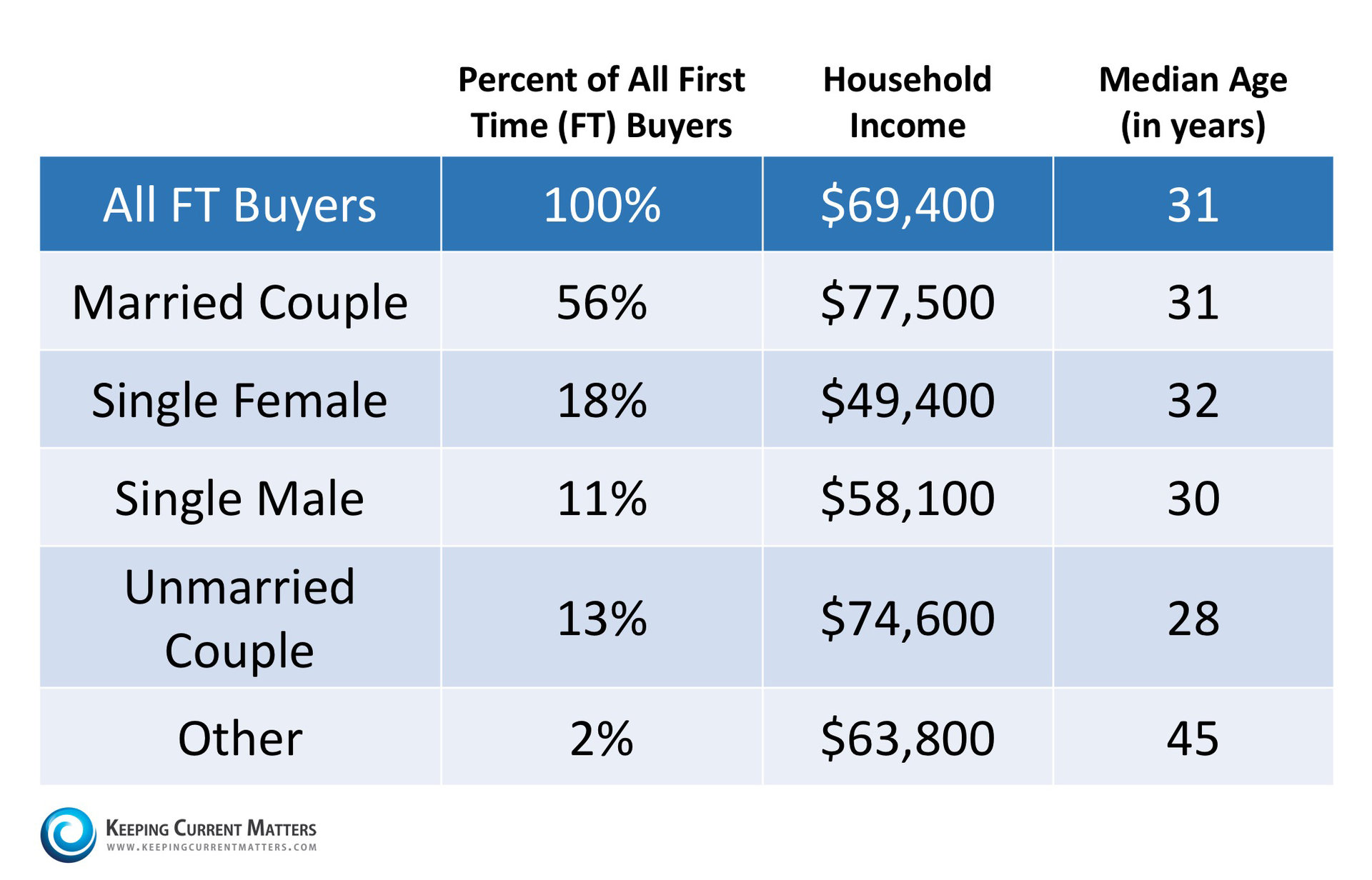
Bottom Line
You may not be much different than many people who have already purchased their first home. Meet with a local real estate professional today who can help determine if your dream home is within your grasp.Saturday, January 16, 2016
Home Equity Increasing as Home Prices Rise
![Home Equity Increasing as Home Prices Rise [INFOGRAPHIC] | Keeping Current Matters](http://www.keepingcurrentmatters.com/wp-content/uploads/2015/12/Equity-Infographic-KCM.jpg)
Some Highlights:
- 91.9% of homes in the US have positive equity
- 256,000 homes regained equity in the third quarter of 2015
- 37.5 million homes have significant equity (defined as more than 20%)
Thursday, January 14, 2016

Monday, January 11, 2016
 If you are debating purchasing a home right now, you are probably getting a lot of advice. Though your friends and family will have your best interest at heart, they may not be fully aware of your needs and what is currently happening in the real estate market. Answering the following 3 questions will help you determine if now is actually a good time for you to buy in today’s market.
1. Why am I buying a home in the first place?
This truly is the most important question to answer. Forget the finances for a minute. Why did you even begin to consider purchasing a home? For most, the reason has nothing to do with money. A study by the Joint Center for Housing Studies at Harvard University reveals that the four major reasons people buy a home have nothing to do with money. They are:- A good place to raise children and for them to get a good education
- A place where you and your family feel safe
- More space for you and your family
- Control of that space
2. Where are home values headed?
According to the latest Home Price Index from CoreLogic, home values are projected to increase by 5.3% over the next 12 months. What does that mean to you? Simply put, if you are planning on buying a home that costs $250,000 today, that same home will cost you an additional $13,250 if you wait till next year. Your down payment will need to be higher as well to account for the higher home price.3. Where are mortgage interest rates headed?
A buyer must be concerned about more than just prices. The ‘long term cost’ of a home can be dramatically impacted by even a small increase in mortgage rates. The Mortgage Bankers Association (MBA), the National Association of Realtors and Freddie Mac have all projected that mortgage interest rates will increase by approximately three-quarters of a percent over the next twelve months as you can see in the chart below: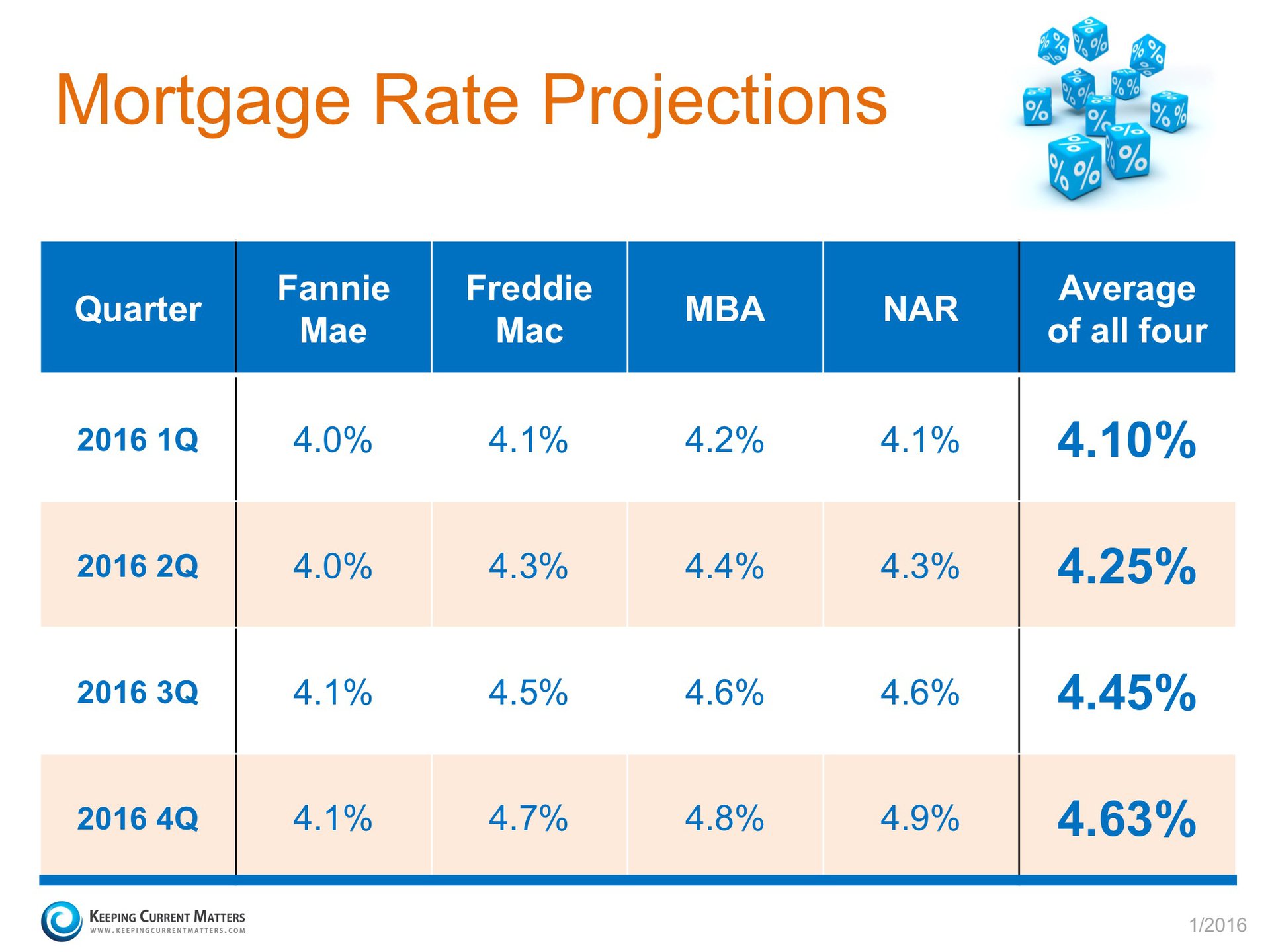
Bottom Line
Only you and your family will know for certain if now is the right time to purchase a home. Answering these questions will help you make that decision.Thursday, January 7, 2016
Thinking of Selling Your Home? Get Ready to Negotiate!
 Now that the market has showed signs of recovery, some sellers may be tempted to try and sell their home on their own (FSBO) without using the services of a real estate professional. Real estate agents are trained and experienced in negotiation. In most cases, the seller is not. The seller must realize their ability to negotiate will determine whether they can get the best deal for themselves and their family. Here is a list of some of the people with whom the seller must be prepared to negotiate if they decide to FSBO:
- The buyer who wants the best deal possible
- The buyer’s agent who solely represents the best interest of the buyer
- The buyer’s attorney (in some parts of the country)
- The home inspection companies, which work for the buyer and will almost always find some problems with the house.
- The termite company if there are challenges
- The buyer’s lender if the structure of the mortgage requires the sellers’ participation
- The appraiser if there is a question of value
- The title company if there are challenges with certificates of occupancy (CO) or other permits
- The town or municipality if you need to get the COs permits mentioned above
- The buyer’s buyer in case there are challenges on the house your buyer is selling
- Your bank in the case of a short sale
Bottom Line
The percentage of sellers who have hired a real estate agent to sell their home has increased steadily over the last 20 years. Meet with a professional in your local market to see the difference they can make in easing the process.Tuesday, January 5, 2016
Do You Know The Difference Your Interest Rate Makes?
![Do You Know The Difference Your Interest Rate Makes? [INFOGRAPHIC] | Keeping Current Matters](http://www.keepingcurrentmatters.com/wp-content/uploads/2015/12/Cost-of-Interest-KCM.jpg)
Some Highlights:
- Interest rates have come a long way in the last 30 years.
- The interest rate you secure directly impacts your monthly payment and the amount of house that you can afford.
- Experts predict that rates will increase by 3/4 a percent over the next 12 months.
- Secure a low rate now to get the most house for your money.
Subscribe to:
Posts (Atom)