Wednesday, July 15, 2015

Should I Rent My House Instead of Selling It?

Should I Rent My House Instead of Selling It?  | Keeping Current Matters
The results of Fannie Mae’s June 2015 National Housing Survey, were just released showing that more and more homeowners are warming up to the idea that now may be a great time to sell their home. The amount of respondents that stated that now is a good time to sell rose three percentage points to a survey high of 52%; which may translate to a healthier market as more homes are listed in the coming months. At the same time “the percentage of respondents who expect home rental prices to go up rose to 59% – a new survey high.” Doug Duncan, senior vice president and chief economist at Fannie Mae, gave this insight: “The expectation of higher rents is a natural outgrowth of increasing household formation by newly employed individuals putting upward pressure on rental rates.” There is a chance that those who believe rental prices will rise may consider renting their house rather than selling it at this time. However, if you have no desire to actually become an educated investor in this sector, you may be headed for more trouble than you were looking for. Are you ready to be a landlord? Before renting your home, you should answer the following questions to make sure this is the right course of action for you and your family.

10 Questions to ask BEFORE renting your home

  1. How will you respond if your tenant says they can’t afford to pay the rent this month because of more pressing obligations? (This happens most often during holiday season and back-to-school time when families with children have extra expenses).
  2. Because of the economy, many homeowners cannot make their mortgage payment. What percentage of tenants do you think cannot afford to pay their rent?
  3. Have you interviewed experienced eviction attorneys in case a challenge does arise?
  4. Have you talked to your insurance company about a possible increase in premiums as liability is greater in a non-owner occupied home?
  5. Will you allow pets? Cats? Dogs? How big a dog?
  6. How will you actually collect the rent? By mail? In person?
  7. Repairs are part of being a landlord. Who will take tenant calls when necessary repairs come up?
  8. Do you have a list of craftspeople readily available to handle these repairs?
  9. How often will you do a physical inspection of the property?
  10. Will you alert your current neighbors that you are renting the house?

Bottom Line

Renting out residential real estate historically is a great investment. However, it is not without its challenges. Make sure you have decided to rent the house because you want to be an investor, not because you are hoping to get a few extra dollars by postponing a sale.

Monday, July 13, 2015

What is a Housing Bubble? Is One Forming?

What is a Housing Bubble? Is One Forming? | Keeping Current Matters
The recent talk of Greece and its financial challenges has some questioning whether the U.S. could also return to the crisis we experienced in 2008. Some are looking at the rise in real estate values and wondering whether we are in the middle of another housing price bubble.

What actually is a price bubble?

Here is the definition according to Jack M. Guttentag, Professor of Finance Emeritus at the Wharton School of the University of Pennsylvania:
“A price bubble is a rise in price based on the expectation that the price will rise. Sooner or later something happens to erode confidence in continued price increases, at which point the bubble bursts and prices drop. What makes it a price bubble is that the cause of the price increase is an expectation that the price will increase, which sooner or later must reverse itself.”
Does Professor Guttentag believe we are in another housing bubble? In a recent article, he explained:
“My view is that we are a long way from another house price bubble. Home buyers, lenders, investors and regulators now understand that a nationwide decline in house prices is possible -- because we recently lived through one.”

What are home prices doing?

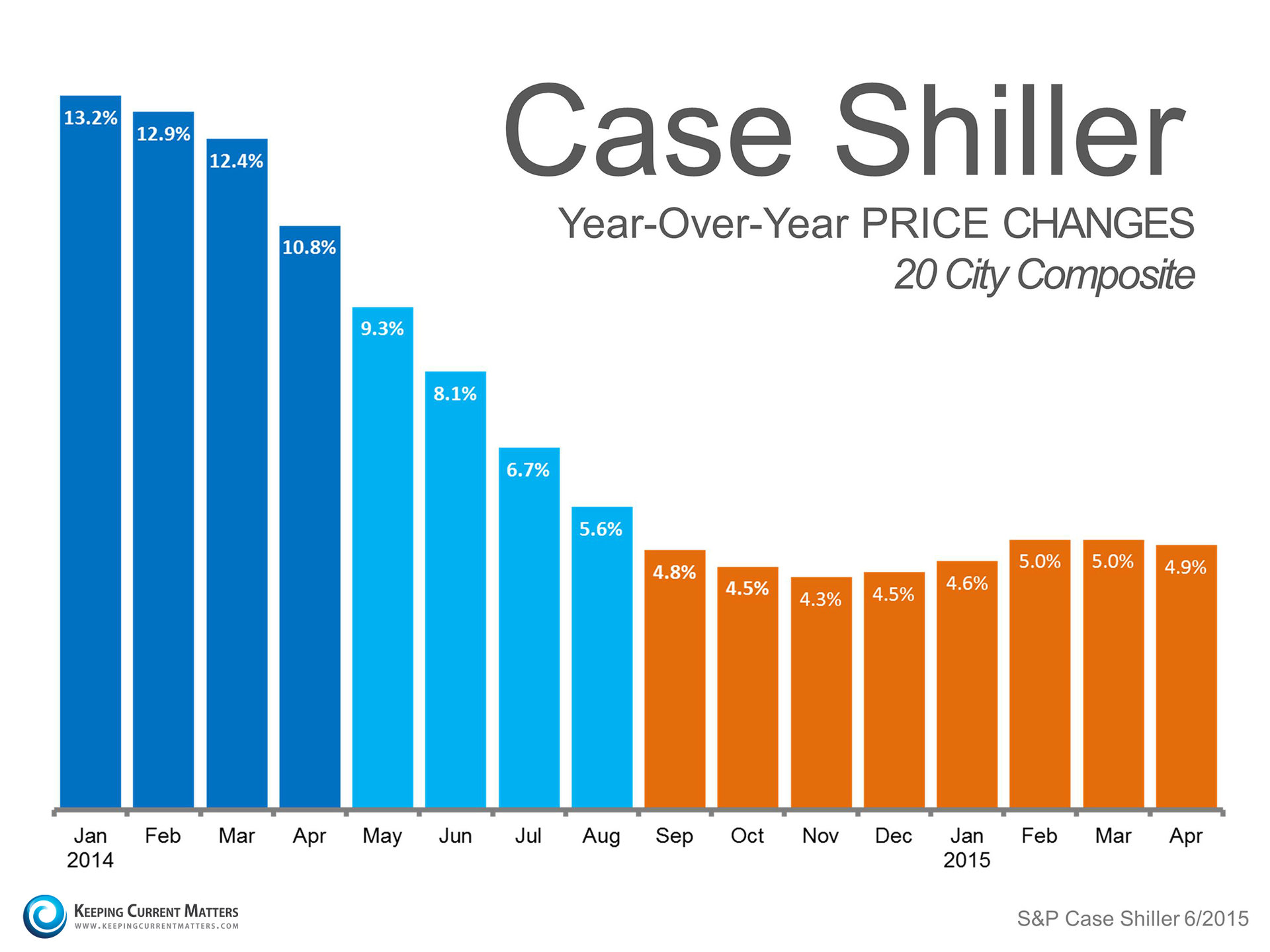
Though home values are continuing to appreciate, the acceleration of the increases has slowed to year-over-year numbers which reflect a healthy housing market. Here is a chart showing year-over-year appreciation since January of last year:Case Shiller Price Changes | Keeping Current MattersWe can see that appreciation rates have dropped from double digit numbers to more normal rates of 5% or lower.

Bottom Line

We think Nick Timiraos of the Wall Street Journal put it best in a recent tweet:
“Predictions of a new national home price bubble look unfounded for now, according to data.”

Monday, July 6, 2015

13 Small Savings that Make a Major Impact

Trying to stick to your budget? Here are 13 small savings ideas that make a major impact.
DOWNLOAD FREE PRINTABLEPREVIEW DOWNLOAD
   

13 Small Savings That Make a Major Impact
We’ve all heard this advice before: if you want to save money, you need to cut back on spending, save your receipts, and balance your budget on a regular basis. While this is sound and practical advice, it’s not as easy as it seems. So whether you are saving to buy a new home, saving for a great vacation, or just trying to add to your “emergency fund,” the following areas will help you to identify senseless spending:

Save with DIY landscaping. Do your research, and landscape with plants that require little maintenance. Use a barrel to collect rainwater, and use it when watering your lawn.
Create visual reminders. Create a visual reminder for things, like debt or the cost of something you’re saving for. Seeing these numbers on a regular basis will help you commit to cutting back.
Keep lists. To cut down on groceries, make a list. Use this same strategy when buying clothing to decrease spending and ensure you buy what you need, rather than what looks good in the store.
Eliminate paper. Instead of buying paper towels and napkins, opt for dish towels and cloth napkins.
Lower utility bills. Close closet doors so you don’t heat or cool unnecessary spaces. Challenge yourself to only one month of A/C use in the summer, or use your fireplace during colder months so you can lower your heat. Install things like ceiling fans and light dimmers for an economical and environmental impact. Cut out your landline; bundle your home, phone, and internet for a cheaper price; or consider cutting your cable. There are many alternatives that will allow you to continue watching your favorite TV shows and movies for a lower monthly bill.
Plan out everything. Planning your weekly meals will help you eliminate dining out. Plan for and balance your monthly entertainment activities to avoid overspending.
Avoid bank fees. Total the amount of fees you’ve incurred over the past six months to a year (including ATM fees), and consider changing accounts or even banks to eliminate unnecessary costs.
Shop smarter. Making a grocery list is a no-brainer, but many grocery store websites now allow you to create a list online and will give you a total for all of your purchases. This method allows you to make substitutions when necessary, and stick to the sales, as well as your budget. And, when you’re trying to cut down your grocery bill, cut out the meat. Even if it’s only one day per week, it will have an effect on your overall spending.
Balance entertainment spending. Everyone needs to blow off steam, but there are many savings sites out there that can help keep expenses down by offering deals or coupons.
Cut back on transportation costs. Carpooling to and from work, even if only for one or two days a week, can save a lot on gas and car maintenance. Pick a mutual location, and invite as many coworkers as you can.
Do the math. Everyone knows that it’s far cheaper to BYO coffee rather than stop for a cup on the way to the office, but don’t believe that single-cup, at-home coffee machines are more economical. To really save, stick to a good, old-fashioned pot of coffee.
Break your piggy bank. This may sound more like advice for college students, but the effects will surprise you: save your loose change! Clean out your car, gather change from the bottom of your purse, and check your pockets. Designate a jar, and don’t cash it until it’s full.
Reconsider your necessities. If you are accustomed to getting your hair trimmed every six weeks, push it out for eight or ten weeks at a time, or trim it up yourself. The same applies to pet grooming. Ask yourself, “Is this a want or a need?”
Whether your saving up for your first home or a home renovation, budgeting doesn’t have to be a burden. Start right in your home with these 13 small savings, and audit your energy costs as an easy way to start saving for any project, large or small. When saving for a home, there are certain steps to follow that we’ve outlined in our roadmap to homeownership that can make the process easier for any first-time home buyer.

- See more at: http://americanlifestylemag.com/sharable/move7009/#sthash.VAMnPj6p.B7PYswk7.dpuf

The Impact of Rising Prices on Home Appraisals

The Impact of Rising Prices on Home Appraisals | Keeping Current Matters
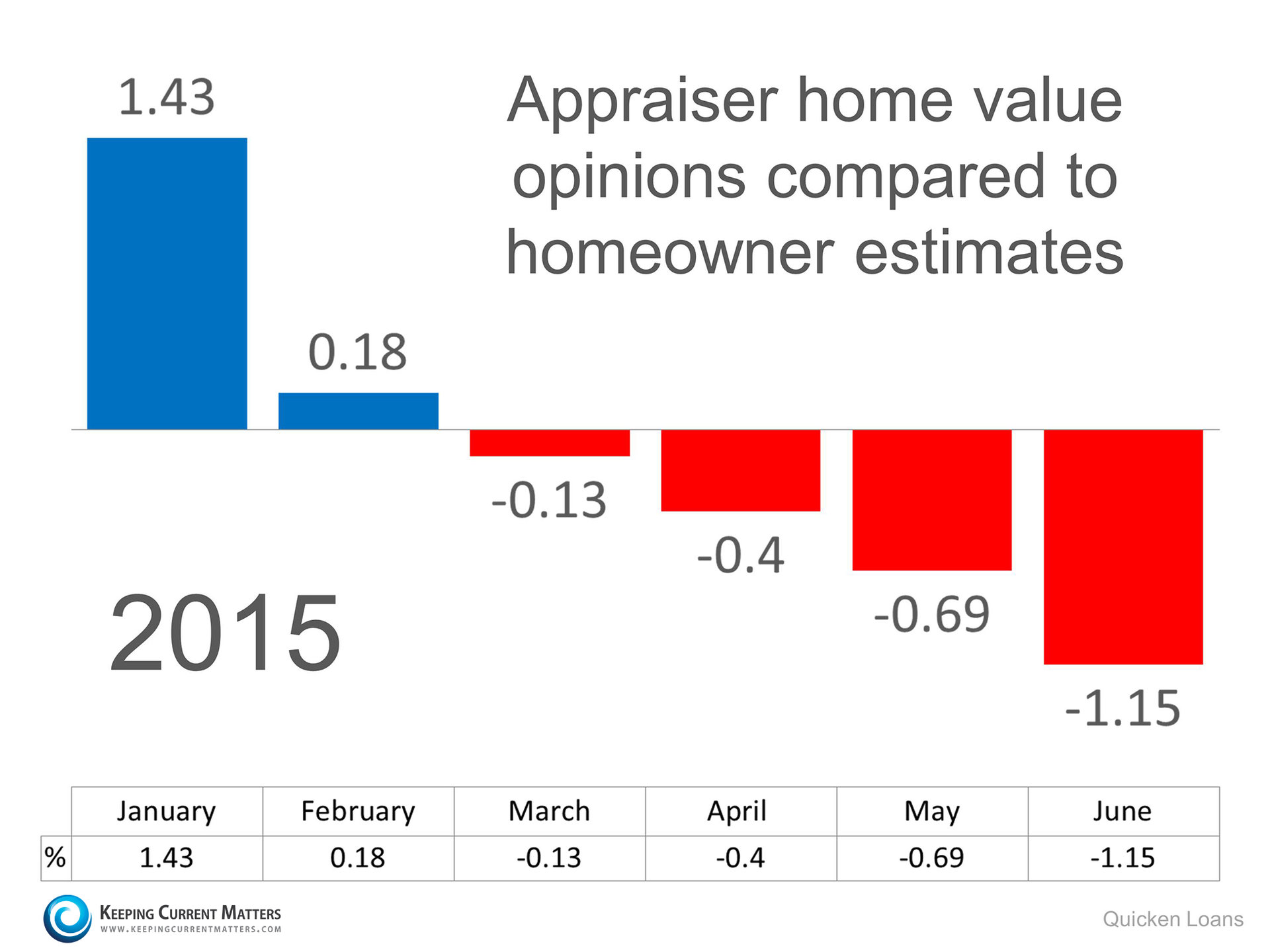
The fact that residential home prices are increasing substantially in most regions of the country is music to the ears of homeowners. However, if you are in the process of selling your home, make sure you realize the major challenge a hot real estate market creates. Each house must be sold twice; once to a buyer and a second time to an appraiser who represents the bank that will grant the purchaser a mortgage to buy the home (unless it is an “all cash” purchase). In a real market with escalating prices, the second sale may be the more difficult. And a recent survey by Quicken Loans reveals that the gap between what a homeowner believes is the value of their home compared to an appraiser is widening.Appraisal vs. Homeowner Value | Keeping Current MattersThis could lead to an increase in the percentage of real estate transactions being challenged by a ‘short’ appraisal (where the appraiser value is less than the contracted price of the home).

Bottom Line

Whether you are a buyer or a seller, you must be prepared for this possibility as it may result in a renegotiation of the price of the home.

Tuesday, June 23, 2015

Landscaping Projects for Every Budget

Landscaping Projects for Every Budget
Summer is here. That means it's time to wrap up the interior projects and turn your attention to the great outdoors. Now’s the perfect time to get going on your landscaping projects.
One of the best things you can do for your lawn is to rake and clear away debris. This breaks up thatch that starves the soil of vital nutrients and water. Most of the time, this can be done by hand; however, if the thatch is thick, you’ll want to rent a power rake or hire a pro to take care of the job for you. You’ll spend about $250, but the results will be worth it.

Once you’ve got your yard cleaned, it’s time to apply seed to any bare spots. Doing so now will allow the seed to establish before the temps get too hot. When your lawn is established, go ahead and apply fertilizer and herbicide. Just be sure to check the packaging for application instructions. The last thing you want to do is over-apply and burn your lawn.

Finally, if you have a sprinkler system and are looking to trim your water bills, you can replace your old sprinkler heads with new, water-efficient heads for about $5 each. Replacing sprinkler heads is a pretty straightforward job that’s doable for even novice DIYers. You can save even more money by checking to see if your water provider is offering rebates.
If you’ve been thinking about laying sod, spring is the time to do it. Spring's cooler temps and consistent moisture help sod take root much quicker than it would if it were laid in the summer. While it’s a relatively simple job, laying sod correctly requires a good deal of prep work. It is also labor intensive, especially if you have to remove existing turf. Depending on the size of your job, you’ll probably find that it’s a project you’d rather leave to the pros.

So, how much will the job cost you? That depends on whether you’re picking it up and installing it yourself, having it delivered and installing it yourself, or having it delivered and installed. Sod farms charge by the square foot, charging you less when you order more. For small DIY jobs, you can expect to spend about $0.50 a square foot. On average, most homeowners spend about $2,000 to have a full yard professionally sodded.

Another great project to tackle in the spring is the planting of trees and shrubs. As with sod, cooler temps and an abundance of moisture are critical to a tree’s ability to take root. Don’t make the mistake of waiting until the temps get hot. Do so, and there’s a good chance your trees won’t make it through summer. What’s more, you’ll find that your options are far more abundant early in the season. Tree prices get more expensive as the size of the tree increases, so be prepared to spend more if you want instant shade.
You might have heard that by spending 5-10 percent of your home’s value on major landscaping improvements you can increase your home’s value between 5 and 15 percent. While that might seem like a lot of money to spend on landscaping, the results are worth it. So, what should you do? Here are a few projects worth considering.

An underground sprinkler system might not be the world’s greatest invention, but we’d argue that it’s one of the most convenient. While a sprinkler system won’t fundamentally change the look of your yard, it will make it easier to maintain. Gone are the days of waking up early to water. What’s more, a sprinkler system takes the guesswork out of watering by adjusting watering times based on weather conditions, saving water and saving you money. The size of your yard will determine installation cost, but on average, you can expect to spend about $2,677 to have a sprinkler system installed.

Last but not least, one of the smartest things you can do if you’re planning major changes to your landscaping is to hire a certified landscape designer. For about $5,244, a professional will carefully design a landscaping plan that complements your home and delivers the look and functionality you’re looking for. Just keep in mind that installation is typically not included in the price. On average, you can expect to spend an additional $4,000 on installation.