|
Posted: 08 Jan 2014 04:00 AM PST
Most experts are calling for an increase in mortgage interest rates in 2014. However, we believe the increase will be more dramatic than is being projected. We believe rates will be closer to 6% than 5% by year’s end.
The Fed announced last month that they would be pulling back some of their stimulus package which has helped the housing market by keeping long term mortgage rates at historic lows for the last few years. This should come as no surprise as the KCM Blog has been warning of this likelihood over the last several months. 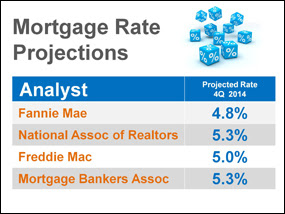 Above are the most recent projections of where rates will be at the end of 2014 by the four major agencies. However, we believe that the government is not afraid to shoot right past these levels. Doug Duncan, chief economist for Fannie Mae, this past summerannounced: “I don’t think the Fed ultimately would be troubled with a 6.5% mortgage rate.” And Frank Nothaft, Freddie Mac VP and chief economist, at virtually the same time explained: "As the economy continues to improve, we expect to see continued upward movement in long-term interest rates… At today’s house prices and income levels, mortgage rates would have to be nearly 7 percent before the U.S. median priced home would be unaffordable to a family making the median income in most parts of the country.” Only time will tell. However, we feel that rates will be in the 5.75-6% range by year’s end. |

Monday, January 13, 2014
Predictions for 2014: Interest Rates Will Increase Significantly

Friday, January 3, 2014
Thursday, January 2, 2014
Tapering Signals Year-End Economic Strength Indicators Point to Greater Recovery for 2014
Tapering Signals Year-End Economic Strength
Indicators Point to Greater Recovery for 2014
Tapering Signals Year-End Economic Strength - Indicators Point to Greater Recovery for 2014
The big "will-they or won't they" ended last month with the Fed's mid-December announcement that it would begin tapering its economic stimulus efforts. Federal Reserve Chairman Ben Bernanke's decision to scale back on Bond and Treasury purchases by $10 billion signaled that the economy has showed sufficient ability to play on its own, albeit, on a kid leash.
The Fed's ambivalence towards tapering dominated central banking discussions and created market volatility for most of 2013. Janet Yellen, the Fed's current vice chairman and President Barack Obama's nominee to succeed Bernanke, voted in favor of the policy action, which was bolstered by promising figures in the labor and housing markets.
The Year in Housing
Housing gained traction in 2013 amid job gains and rising stock values. Residential construction starts soared in November to a five-year high, explaining why builder optimism last month matched its highest level since 2005.
Despite robust new construction, sales of previously-owned homes declined for the third consecutive month in November to the lowest level this year, as rising home loan rates and a limited supply of existing properties discouraged homebuyers. Rates could rise even further with Fed tapering.
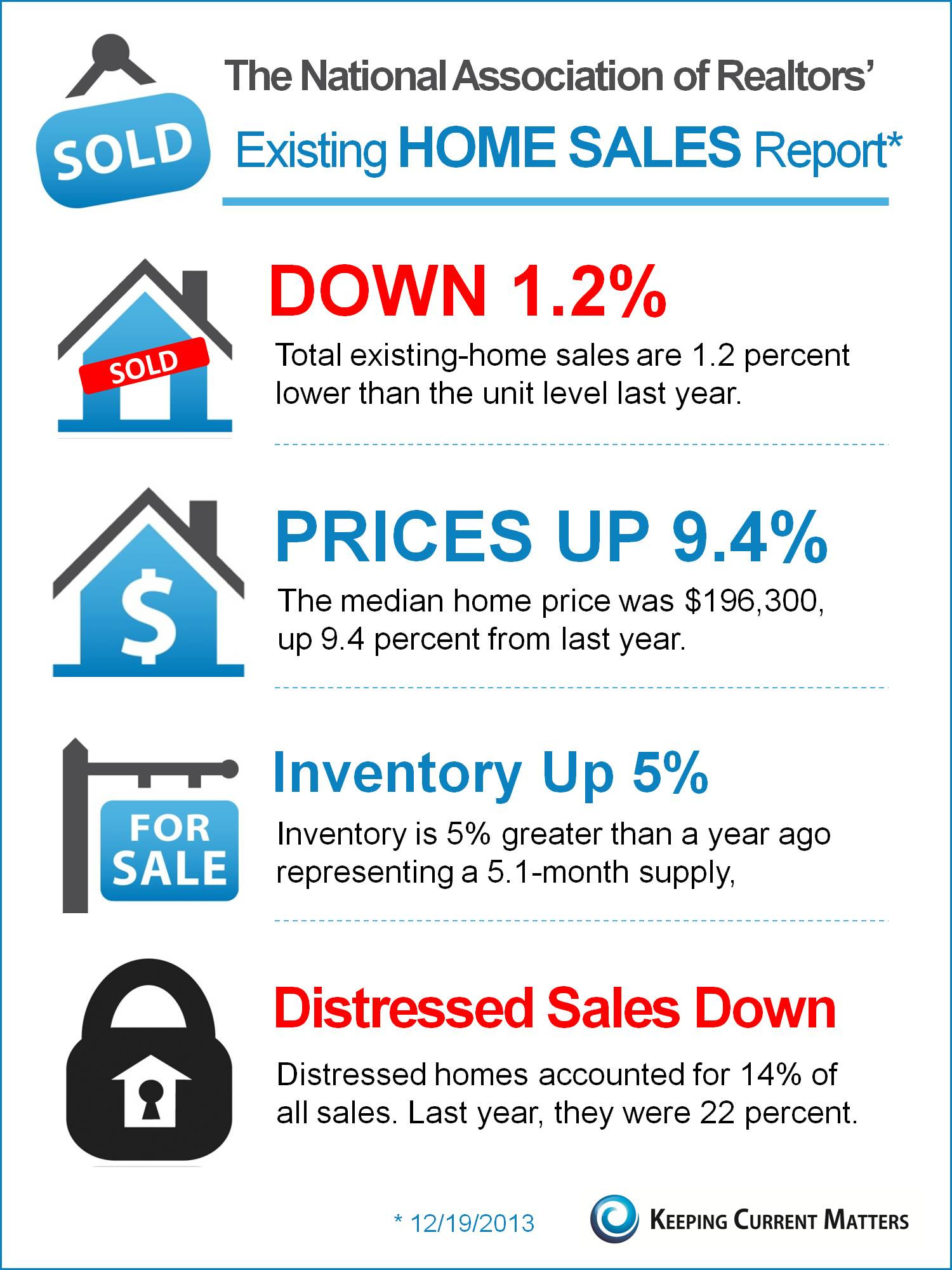
Purchases overall dropped 4.3 percent to a 4.9 million annual rate, in a mid-December report from the National Association of Realtors. The report also showed that the median price of an existing home rose 9.4 percent to $196,300 from $179,400 one year ago. The group still projects 2013 will be the best year for the industry in seven years, with an estimated 5.1 million properties sold. Rising prices and borrowing costs may have put homes out of reach for many first-time buyers and the partial federal government shutdown in October may have delayed some purchase decisions.
The Year in Jobs
A five-year low in unemployment and a boost in job hirings helped prompt Fed tapering. In what was largely typical year-end activity, applications for U.S. unemployment benefits rose in early December to an almost nine-month high, according to the Labor Department. Gains in payrolls on the other hand lifted consumer confidence and prospects for retailers during the holidays. The U.S. Automotive industry is also hiring, with sales at their best pace since 2007, according to data from Ward Automotive Group.
Indicators Point to Greater Recovery for 2014
Tapering Signals Year-End Economic Strength - Indicators Point to Greater Recovery for 2014
The big "will-they or won't they" ended last month with the Fed's mid-December announcement that it would begin tapering its economic stimulus efforts. Federal Reserve Chairman Ben Bernanke's decision to scale back on Bond and Treasury purchases by $10 billion signaled that the economy has showed sufficient ability to play on its own, albeit, on a kid leash.
The Fed's ambivalence towards tapering dominated central banking discussions and created market volatility for most of 2013. Janet Yellen, the Fed's current vice chairman and President Barack Obama's nominee to succeed Bernanke, voted in favor of the policy action, which was bolstered by promising figures in the labor and housing markets.
The Year in Housing
Housing gained traction in 2013 amid job gains and rising stock values. Residential construction starts soared in November to a five-year high, explaining why builder optimism last month matched its highest level since 2005.
Despite robust new construction, sales of previously-owned homes declined for the third consecutive month in November to the lowest level this year, as rising home loan rates and a limited supply of existing properties discouraged homebuyers. Rates could rise even further with Fed tapering.
Purchases overall dropped 4.3 percent to a 4.9 million annual rate, in a mid-December report from the National Association of Realtors. The report also showed that the median price of an existing home rose 9.4 percent to $196,300 from $179,400 one year ago. The group still projects 2013 will be the best year for the industry in seven years, with an estimated 5.1 million properties sold. Rising prices and borrowing costs may have put homes out of reach for many first-time buyers and the partial federal government shutdown in October may have delayed some purchase decisions.
The Year in Jobs
A five-year low in unemployment and a boost in job hirings helped prompt Fed tapering. In what was largely typical year-end activity, applications for U.S. unemployment benefits rose in early December to an almost nine-month high, according to the Labor Department. Gains in payrolls on the other hand lifted consumer confidence and prospects for retailers during the holidays. The U.S. Automotive industry is also hiring, with sales at their best pace since 2007, according to data from Ward Automotive Group.
Saturday, December 28, 2013
LOS ANGELES (Dec. 23) – Seasonal factors, combined with shrinking housing affordability, cooled California pending home sales from both the previous month and year in November, the CALIFORNIA ASSOCIATION OF REALTORS® (C.A.R.) reported today.
Pending home sales data:
California pending home sales fell in November, with the Pending Home Sales Index (PHSI)* dropping 13.6 percent in November to 93.8, down from a revised 108.6 in October, based on signed contracts. The monthly decline was the first double-digit drop in nearly a year. Pending sales were down 9.4 percent from the 103.5 index recorded in November 2012. Pending home sales are forward-looking indicators of future home sales activity, providing information on the future direction of the market.
Distressed housing market data:
The share of equity sales – or non-distressed property sales – grew in November, marking the fifth straight month that equity sales have been more than 80 percent of total sales. The share of equity sales in November increased to 86.4 percent, up from 85.4 percent in October. Equity sales made up 64.6 percent of sales in November 2012.
Conversely, the combined share of all distressed property sales shrank in November, dropping from 14.6 percent in October to 13.6 percent in November. Distressed sales were down by nearly two-thirds from a year ago, when the share was 35.4 percent. Twenty-one of the 38 reported counties showed a month-to-month decrease in the share of distressed sales, with Santa Clara County having the lowest share at 4 percent.
Of the distressed properties, the share of short sales was 8.8 percent in November, down from 9.5 percent in October. November’s figure was nearly a third of the 23.3 percent recorded in November 2012 and remains at the lowest levels since January 2009.
The share of REO sales edged down in November to 4.4 percent from 4.7 percent in October. It was the fourth straight month that REOs made up less than 5 percent of sales. REOs made up only 11.8 percent of all sales in November 2012.
Housing inventory levels improved slightly for the second consecutive month but were still extremely low. The Unsold Inventory Index for equity sales inched up from 3.4 months in October to 3.6 months in November. The supply of REOs rose from 2.7 months in October to 3.4 months in November, and the supply of short sales increased from 3.6 months in October to 4.2 months in November.
Pending home sales data:
California pending home sales fell in November, with the Pending Home Sales Index (PHSI)* dropping 13.6 percent in November to 93.8, down from a revised 108.6 in October, based on signed contracts. The monthly decline was the first double-digit drop in nearly a year. Pending sales were down 9.4 percent from the 103.5 index recorded in November 2012. Pending home sales are forward-looking indicators of future home sales activity, providing information on the future direction of the market.
Distressed housing market data:
The share of equity sales – or non-distressed property sales – grew in November, marking the fifth straight month that equity sales have been more than 80 percent of total sales. The share of equity sales in November increased to 86.4 percent, up from 85.4 percent in October. Equity sales made up 64.6 percent of sales in November 2012.
Conversely, the combined share of all distressed property sales shrank in November, dropping from 14.6 percent in October to 13.6 percent in November. Distressed sales were down by nearly two-thirds from a year ago, when the share was 35.4 percent. Twenty-one of the 38 reported counties showed a month-to-month decrease in the share of distressed sales, with Santa Clara County having the lowest share at 4 percent.
Of the distressed properties, the share of short sales was 8.8 percent in November, down from 9.5 percent in October. November’s figure was nearly a third of the 23.3 percent recorded in November 2012 and remains at the lowest levels since January 2009.
The share of REO sales edged down in November to 4.4 percent from 4.7 percent in October. It was the fourth straight month that REOs made up less than 5 percent of sales. REOs made up only 11.8 percent of all sales in November 2012.
Housing inventory levels improved slightly for the second consecutive month but were still extremely low. The Unsold Inventory Index for equity sales inched up from 3.4 months in October to 3.6 months in November. The supply of REOs rose from 2.7 months in October to 3.4 months in November, and the supply of short sales increased from 3.6 months in October to 4.2 months in November.
Thursday, December 19, 2013

Monday, December 16, 2013
Good News for the Economy = Bad News for Rates
 The economy is improving. As an example, the latest employment report showed that the unemployment rate hit a five-year low. We must realize that, as the economic news gets better, the government will consider whether or not to continue the programs they put in place to stimulate the economy. One such program is the Fed’s purchasing of assets which has led to historically low long-term mortgage rates.
Analysts at Capital Economics noted in a recent HousingWire article:
"The 203,000 increase in November's non-farm payrolls, along with the drop in the unemployment rate to a five-year low of 7.0%, gives the Fed all the evidence it needs to begin tapering its asset purchases at the next FOMC meeting later this month."
Whether such ‘tapering’ occurs this month or early next year is questionable. The fact that mortgage rates will spike when it does occur is more a guarantee.
Here are the thoughts of a few Fed presidents regarding whether it is in fact time to cut back on this stimulus program:
James Bullard, President of the Federal Reserve Bank of St. Louis
“To the extent that key labor market indicators continue to show cumulative improvement, the likelihood of tapering asset purchases will continue to rise. The Committee’s 2012 criterion of substantial improvement in labor markets gets easier and easier to satisfy on a cumulative basis as labor markets continue to heal…Based on labor market data alone, the probability of a reduction in the pace of asset purchases has increased.”
Richard Fisher, President of the Federal Reserve Bank of Dallas
“In my view, we at the Fed should begin tapering back our bond purchases at the earliest opportunity…I consider this strategy desirable on its own merit: I would feel more comfortable were we to remove ourselves as soon as possible from interfering with the normal price-setting functioning of financial markets.”
Jeffrey Lacker, President of the Federal Reserve Bank of Richmond
“I expect discussion about the possibility of reducing the pace of asset purchases. The key issue, in my view, is the extent to which the benefits of further monetary stimulus are likely to outweigh the costs.”
If you are thinking about purchasing a home, buying before the tapering will probably mean a lower mortgage interest rate than if you waited.
Sunday, December 8, 2013
SHORT SALES NOT SUBJECT TO STATE OR FEDERAL INCOME TAX FOR CANCELLATION OF DEBT
SHORT SALES NOT SUBJECT TO STATE OR FEDERAL INCOME TAX FOR CANCELLATION OF DEBT
Short sales in California are generally not subject to state or federal income tax for cancellation of debt. The Franchise Tax Board (FTB) issued a letter yesterday stating that, as nonrecourse obligations, short sales in California are not subject to state income tax for cancellation of debt. The FTB's position conforms with the federal treatment of short sales stated in an IRS letter as we previously reported on November 15. These letters will provide welcome relief for short sale sellers given that the tax break for a qualified principal residence under the federal Mortgage Forgiveness Debt Relief Act of 2007 will expire at the end of this year, and similar protection under California law already expired in 2012. The FTB letter includes transactions that closed in 2012 but, as always, sellers should consult with their own tax professionals.
According to the recent FTB letter, “a California taxpayer would not have cancellation of indebtedness where the taxpayer was involved in a short sale pursuant to CCP section 580e.” Section 580e of the California Code of Civil Procedure (CCP) generally protects borrowers from owing a deficiency after a short sale of a residential property with one-to-four units, including both first and junior trust deeds. Exceptions include fraud, waste, cross-collateralized loans, and borrowers that are corporations, LLCs, or limited partnerships. For more information, C.A.R. members may refer to our legal article on Short Sale Deficiencies.
As with the IRS letter, the FTB letter states that even if no cancellation of debt income is owed, a taxpayer may nevertheless have capital gains to the extent that the outstanding debt exceeds the tax basis for the property. A principal residence, however, is generally excluded from capital gains tax up to $250,000 for single taxpayers and $500,000 for married couples filing joint returns (under 26 U.S.C. § 121).
Subscribe to:
Posts (Atom)